Sunday, 27 September 2020

The 500 - #403 - "Pronounced 'Lĕh-'nérd 'Skin-'nérd" - Lynyrd Skynyrd

I was inspired by a podcast called The 500 hosted by Los Angeles-based comedian Josh Adam Meyers. His goal, and mine, is to explore Rolling Stone's 2012 edition of The 500 Greatest Albums of All Time. 

Album # 403

Album Title: Pronounced 'Lĕh-'nérd 'Skin-'nérd
Artist: Lynyrd Skynyrd
Genre: Southern Rock, Hard Rock, Blues Rock
Recorded: Studio One, Doraville, Georgia
Released: August, 1973
My age at release: 8
How familiar was I with it before this week: Very
Song I am putting on my Spotify Mix: Tuesday's Gone
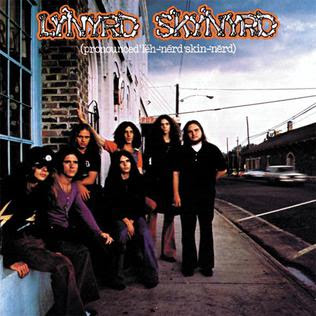
Pronounced 'Lĕh-'nérd 'Skin-'nérd by Lynyrd Skynyrd
This decision to buy this record, in the spring of 1985, was one I distinctly remember. I had eyed it for some time at my favourite record shop, Dr. Disc, in downtown London, but was reluctant to make the purchase. I was deep in my Progressive Rock phase and 
Lynyrd Skynyrd, a southern rock group, was a great departure from my tastes. I was also under the misguided impression that the band might be racist.
Movie Poster from The Blues Brothers
I suspect this thinking could be traced back to the movie The Blues Brothers which has been a favourite since my youth. In it, the protagonists Jake and Elwood Blues are travelling across the state in an effort to save their childhood orphanage by reuniting their band to play a fundraiser. En route, and broke, they secure a gig at a rural honky-tonk saloon under false pretenses. When they ask the bartender what kind of music is played in the bar, she replies: "Oh, we got both kinds. We got country and western."
In the film, the Blues Brothers Band would go on to perform their gig on a small stage behind chicken wire -- set up to shield the performers from the beer bottles that were hurled from the drunk and raucous crowd. 

This served to reinforce an opinion I had cultivated from television and film in the 1970s -- most people from the south, especially those who liked country and western music, were simple, violent and racist. They were, after all, the people who had gone to war in order to maintain slavery and who harranged Kwai Chang Caine weekly on Kung Fu. I suppose I should have been more troubled that the Chinese character was played by an Irish-American actor.
The 70s Television & Film that influenced
my opinion on The South
Sure, there were exceptions, the "good ol' boys" from Dukes of Hazzard and Burt Reynold's Bo Darville from the Smokey and the Bandit films. In both cases, charismatic protagonists were forced to battle the inherently corrupt lawmakers or establishment. They were, clearly, the exception.

Consequently, I was taken by surprise when I gave side one my first listen. I was familiar with Freebird, the album's epic final track, which featured the blistering guitar solo that had first drawn me to the band. However, the rest of the record was new territory.

I Ain't the One, the album's opening track was an absolute rocker and it was followed by the beautiful ballad, Tuesday's Gone. However, it was the the third track, Gimme Three Steps, that won me over. The lyrics, based on a true event lead singer Ronnie Van Zant experienced, weave a comedic tale about a young man who was... 

"cutting a rug in a place called The Jug with a girl named Linda Lou. When in walked a man with a gun in his hand and he was looking at you know who." 

Upon realizing it is Linda's boyfriend, the startled narrator pleads for a three-step head start toward the door, hoping to escape the situation. In some ways, the songwriter was embracing the stereotypes I had about people in the south -- where you could get shot for accidently dancing with the wrong girl. However, cleverly, he had turned the story into a comedic romp where no one actually gets hurt.

I was wowed and the record worked its way into my playing rotation frequently after. As I've matured, my inherent bias toward folk from the southern U.S. has softened. At the very least, I recognize it is there and I've become more accepting of everyone -- even if they only listen to Country and Western music.  


Monday, 14 September 2020

The 500 - #404 - Dr. John's Gumbo - Dr. John

I was inspired by a podcast called The 500 hosted by Los Angeles-based comedian Josh Adam Meyers. His goal, and mine, is to explore Rolling Stone's 2012 edition of The 500 Greatest Albums of All Time. 

Album # 404

Album Title: Dr. John's Gumbo 
Artist: Dr. John
Genre: Rhythm & Blues, New Orleans Blues
Recorded: Sound City Studios, Los Angeles
Released: April, 1972
My age at release: 6
How familiar was I with it before this week: Somewhat
Song I am putting on my Spotify Mix: Junko Partner
Album Cover for Dr. John's Gumbo
This week, I started the 2020 school year, teaching Grade seven at a new school. It is my first time in a classroom since mid-March when the Coronavirus pandemic shuttered all Ontario classrooms. On September first, my newly placed portable was empty. Over the past two weeks, items have been arriving and everything is new -- desks, shelves, cupboard and chairs delivered, wrapped in plastic.
It was a lot of work to get ready for my students but it is nice to start with a blank slate. Consequently, my headphones have had a work-out and the soundtrack for my grunt-work was Dr. John's Gumbo, a collection of New Orleans rhythm and blues standards from the Rock and Roll Hall of Fame and multi-Grammy-award winning pianist and singer Dr. John. There is a lot to learn about the fascinating life of this iconic performer and his career made me think about the students I would soon be meeting. 
Malcom (Mac) Rebennack - aka Dr. John (2014)
Malcom (Mac) John Rebennack, better known by his stage name "Dr. John", was born and raised in a working class neighbourhood of New Orleans, Louisiana. He was, as one might expect from someone growing up in The Big Easy, influenced by the music that surrounded him. His extended family were hobby musicians who played minstrel tunes on the family piano. This story-telling tradition would inform his development as a musician and, perhaps more importantly, an entertainer.

Mac didn't begin music lessons until he was a teen when he began learning guitar. At age 13, he met eccentric piano virtuoso Professor Longhair (Roy Bird) whose distinctively infused rumbo, calypso and mambo into New Orleans style jazz. Not only was Mac inspired by his quirky playing style, he was also fascinated by his flamboyant stage persona.
Professor Longhair
At 16, although struggling at a Jesuit high school, his passion for music took over and he started his first band The Dominoes. The Jesuit fathers disapproved, eventually telling him to quit music or leave school. He chose the latter and became a full-time session player in 1957, backing up popular recording artists.

At 19, before a gig in Jacksonville, Florida, Mac interceded when a motel manager was pistol-whipping his friend, lead vocalist, Ronnie Barron. During the altercation, the gun discharged and nearly took Mac's ring finger off. It healed at an odd angle and his guitar-playing career was ended. After six years invested into becoming a solid guitar player, Mac remarkably switched to piano -- the instrument that would make him famous. This is the part that amazes me about natural musicians. He quickly mastered the piano with nine fingers.

Mac had a fascination with voodoo and was enamoured by a Senegalese prince, conjurer, herbalist and spiritual healer named Jean Montaine. "Dr. Jean" had travelled, by way of Haiti, to The Big Easy where he set-up his mysterious, religious practice in a rural bayou just outside the city. Jean made much of his income by selling gris-gris, a West African voodoo amulet, believed to protect the wearer from evil and bring good luck.

Thus, was born the persona of "Dr. John: The Night Tripper". Suddenly all of Mac's passions were fused together to create a larger-than-life entertainer who was part-musician and part-voodoo shaman. His performances included elaborate costumes and props, including a headdress and live snakes, against the backdrop of a wild, psychedelic stage show. His debut album was called Gris-Gris and we'll get to it at #143 on The 500 list.
Dr. John - The Night Tripper performing in a headdress
So, as I greet my students this week, the fascinating life of Dr. John is still in my head and I will approach my role as mentor and educator with the following things in mind:
  • Everything is an influence for good or bad. I'll remind my young charges to be mindful of the world around them and tap into its inspiration.
  • The teen-years are a fertile time for passionate pursuits...pursue your passions.
  • I will continue to foster the academic and artistic pursuits of my students. Unlike Mac's Jesuit teachers, I'll never give them an ultimatum.
  • Persevere and Adapt. Challenges are opportunities for greatness in disguise.
  • Quirky, flamboyant, wild and weird are positive descriptions. Be what you are meant to be ... Let your freak flags fly!


Friday, 4 September 2020

The 500 - #405 - Radio City - Big Star

 I was inspired by a podcast called The 500 hosted by Los Angeles-based comedian Josh Adam Meyers. His goal, and mine, is to explore Rolling Stone's 2012 edition of The 500 Greatest Albums of All Time. 

Album # 405

Album Title: Radio City
Artist: Big Star
Genre: Power Pop
Recorded: Ardent Studios, Memphis
Released: February, 1974
My age at release: 8
How familiar was I with it before this week: Fairly
Song I am putting on my Spotify Mix: Back of a Car

This week, we finish off the Big Star trilogy with their sophomore offering, Radio City, from 1974.
Radio City - Big Star (1974)
Last December, in a time we might soon call PC (Pre-Covid), I wrote about their final record, Third/Sister Lovers, which was #449 on The 500 list. I highlighted Big Star's impact on popular music. They are often called The Musicians' Musicians - "the band that your favourite band is probably listening to."
Third/Sister Lovers - Big Star (1978)
Then, in April of this year, we arrived at their debut, and my favourite album from the band, Number 1 RecordI wrote about my relationship with the band and the magnificence of this "red letter moment" in music, "when everything falls in place."
Number 1 Record - Big Star (1972)
For many, I am sure, the question must be: Why would a band with all three of their studio records on The 500 list not be more popular? In fact, I'll go so far as to say that many of the people who read my blog, except perhaps the musicians, are unfamiliar with Big Star. 

I conducted a quick Twitter Poll with the question: "How familiar are you with the band Big Star?" I only got 23 responses but, as you can see below, the majority had little to no familiarity with the music. 
Twitter Poll conducted September 3-5, 2020
A 2013 article from The Atlantic magazine calls them "The Greatest Band You've Never Heard Of" and a music review from NPR in 2010 dubbed them "The Unluckiest Band in the World". Was it bad luck? There are some who think the audacious decision to call themselves Big Star and then double-down and name their debut release Number 1 Record was tempting fate.

I don't buy into the notion of fate. I bristle when people say, "Everything happens for a reason."  

It doesn't. Things happen and we retroactively ascribe meaning to them.

This week on The 500 Podcast, host Josh Adam Meyers welcomed Jody Stephens, drummer and only surviving member of Big Star. He dismissed the idea that it was "bad luck" and looks back on his career with positive affection, saying:
"It all worked out. The records are finding an audience and I had an amazing career. (We) got to create the way we wanted to create and, financially, he (Guitarist & Singer Alex Chilton) could support himself from songs he had written for Big Star. I'm in Love with a Girl was used in a Heineken commercial and he co-wrote In the Street with Chris (Bell) which was used in the credits of That 70s Show. Once that television program went into syndication...the income got appreciable. (Bassist) Andy Hummel went on to get a degree in Mechanical Engineering and an MBA in Finance and raised a beautiful family. Maybe things wouldn't have turned out so well if we got recognition with the first album. Who knows, the whole thing could have been finished."  
Drummer Jody Stephens at Ardent Studios
The track for my The 500 Spotify Playlist is, Back of a Car, selected by friend (and drummer) Steve Crew. In a text to me, he credited Jody Stephens as an important influence. As he put it..."I stole every lick."

Sunday, 30 August 2020

The 500 - #406 - Rid of Me - PJ Harvey

I was inspired by a podcast called The 500 hosted by Los Angeles-based comedian Josh Adam Meyers. His goal, and mine, is to explore Rolling Stone's 2012 edition of The 500 Greatest Albums of All Time. 

Album # 406

Album Title:  Rid of Me
Artist: PJ Harvey
Genre: Indie Rock, Alternative Rock, Punk-Blues
Recorded: Pachyderm Studios, Minnesota
Released: May, 1993
My age at release: 27
How familiar was I with it before this week: Not at all
Song I am putting on my Spotify Mix: 
Man-Size

This week, I am fortunate to have a guest blogger Karen Snell. Interestingly, I have never met Karen. Our mutual friend, James, suggested we follow each other on Facebook because we had common interests, particularly music. Consequently, we have known each other "virtually" for about five years. 

Last May, my blog post for PJ Harvey's 2000 record, Stories from the City, Stories from the Sea (#431 on The 500 list), was published. Karen reached out and let me know she was a big fan who had seen PJ in concert. Realizing that another PJ Harvey record was imminent, I asked her if she'd be willing to share her memories for this record, 1993's Rid of Me. To my delight and great appreciation, she agreed. Enjoy!
Rid of Me album Cover (1993)

I’ve liked PJ Harvey for a long time, and probably my biggest PJ-related musical memory happened when I went to see her at The Warehouse in Toronto on October 30, 1998. 

For those of you who might have also frequented this venue back in the day, you might remember that there were two adjacent places to see concerts right down by the lake, a few blocks east of the Harbourfront area, right at the foot of Lower Jarvis Street.

Blue dot in the red circle shows the location of The Warehouse and The Guvernment Music Clubs
The first venue in this location opened in the mid-80s as a club called RPM. It was later renamed The Guvernment, and became an intimate location for live shows. The second was a larger concert space, conveniently located right next door. It was dubbed The Warehouse when it opened in 1996 and renamed Kool Haus in the early 2000s.

The Guvernment Music Club 2006
The Warehouse had crazy posts from floor to ceiling at various spots throughout the concert space. This made for pretty poor sight-lines if you stood in certain areas, but, if you could get in front of them, it was a terrific concert-going experience. At capacity, The Warehouse could hold several thousand people.

I saw a lot of great concerts in these adjoining locations through the 90s and early 2000s, including The Heads, Pretty and Twisted in 1995 -- which was the lamentably short-lived side project featuring Concrete Blonde’s Johnette Napolitano and Wall Of Voodoo alumni Marc Moreland and Danny Montgomery. I also saw Portishead (fantastic show!), The Chemical Brothers, Moby, The The, The Orb, and Amon Tobin in 2012, not long before the property was sold and the buildings torn down.

Kool Haus (formerly The Warehouse) being demolished in 2015
However, it was PJ Harvey’s concert in 1998, that ranks as one of the best and certainly one of the most memorable. 

Waiting for the concert to begin, as usual, brought on a ripple of anticipation throughout the crowd, as people talked with their friends and jockeyed for the best places to view the stage. When PJ came on stage, there was the typical crowd reaction of cheering, clapping, and whistling, everyone anxious for her to begin.

PJ Harvey Live at the V Festival (2003)
What happened next, though, literally sent chills down my spine. PJ began playing the opening of Catherine, a fantastic song from the album she was touring at the time. As she did, an intense hush fell over the crowd to the point that you could have heard a pin drop. It was amazing! Literally thousands of people went from cheering, clapping and talking to being utterly transfixed within seconds of her starting. Nobody, anywhere, in the whole place, was making a sound. You could hear her voice ringing out across the hall. This was truly one of the most memorable moments I’ve ever had at a live gig in my life! Of course, she went on to rock out the whole evening and the crowd came back to earth to sing along and make noise with her, but that opening is seared in my memory!

PJ Harvey is always great live, and I saw her again in 2004 at the Phoenix in Toronto, which was also a fantastic gig; nothing, however, quite matched this amazing concert opening on that night in 1998.

For this album, Rid of Me, I think you’ll find this performance of PJ singing the title track at Big Day Out Festival in Sydney in 2001 captures a little of that magic of 1998. She can really dominate a massive crowd.

However, if I had to recommend just one song on Rid of Me it would probably be Man-Size. It has great vocals and PJ rocks out in a way only she can -- with her unique voice and raunchy guitar -- all the while exuding extreme confidence in her music, her body and herself. She is even commenting on gender and power while she’s at it, It’s pretty fantastic stuff!

Honourable mention and a particular recommendation for guitar-lovers is the track Ecstasy – great!

Unapologetically unique throughout her career and consistently evolving, Polly Jean Harvey has always been a risk taker. You might really love one or two albums more than the others because they’re all unique. They are well worth the time listening to with care, as she always has something to say.

This week's Guest Blogger - Karen Snell


Sunday, 23 August 2020

The 500 - #407 - Sandinista! - The Clash

 I was inspired by a podcast called The 500 hosted by Los Angeles-based comedian Josh Adam Meyers. His goal, and mine, is to explore Rolling Stone's 2012 edition of The 500 Greatest Albums of All Time. 

Album # 407

Album Title:  Sandinista!
Artist: The Clash
Genre: Too many to list
Recorded: 5 Studios - Manchester, New York, Kingston, Jamaica & London
Released: December, 1980
My age at release: 15
How familiar was I with it before this week: One song
Song I am putting on my Spotify Mix: 
Police On My Back 

On Episode 407 of The 500 Podcast, host Josh Adam Meyers welcomed guest Tom Morello, best known as the guitarist for Rage Against The Machine & Audioslave. Morello is equally noted for his political activism. Consequently, he was the ideal guest to discuss Sandinista!, the fourth studio release by English post-punk legends The Clash. 
Sandinista! album cover by The Clash
Morello shared the following quote when discussing the politically charged song Washington Bullets from side four of the three-disc album:
"My world view was intact before I heard The Clash, but to have your favorite band reflect your world view back to you in a way that you don't see from the educational or authority figures in your life was powerful. Their point of view was not in the classroom and not on the news, but it was absolutely true and accurate. There are bands that you like, bands that you love and then there are bands you believe in. For me, that's why I put both hands around The Clash forever." 
I was walking when I heard Morello make this statement. I had been listening to the podcast while loading groceries into my car and this quote stopped me in my tracks. It was a sentiment I understood and it resonated powerfully. For me, it wasn't The Clash, it was the musician Peter Gabriel who reflected my world view with the passionate political statements he made on songs such as Games Without Frontiers, Not One Of Us and the anti-apartheid protest song Biko on his untitled 1980 record (sometimes referenced as Melt). 
Peter Gabriel's third untitled record (1980)
Morello had summarized the passion that drew me to music when I was in my early teens. The incredible feeling that comes when all the things you've been thinking and feeling are reinforced by intelligent, kind and passionate artists who package ideas with lyrical and musical beauty. Although I didn't articulate it completely as an early ten, this was the thing that drew me to music. It was the reason I spent hours in my bedroom listening to records and memorizing the lyrics that spoke to the best version of me.
I realized that The Clash is a band that should have played a more important part in my life as a teen. Don't get me wrong, I liked them and owned a copy of London Calling (which we will get to in about six years...it is #8 on The 500 list.) The band wasn't a big part of my musical orbit at that time. I was deep into my progressive rock phase, so bands such as Rush, Yes, Genesis and the aforementioned Gabriel dominated my turntable. 

The consolation to missing out on this record in my early teens it would be that I got to discover Sandinista! this week. It is a lengthy record with 36 tracks, so it has been playing in the background for several days. There are many genres explored by the band on this record. There is funk, rock, gospel, reggae, rockabilly, folk, dub, rhythm and blues, calypso disco and even rap (at a time when that genre was in its infancy). It was challenging to select a song for my Spotify mix, but I finally settled on Police On My Back after consulting with my friend Claudio, who is a big fan of The Clash and Sandinista!

So, beyond the bands you like and love...is there one you believe in?


Monday, 17 August 2020

The 500 - #408 - I Do Not Want What I Haven't Got - Sinéad O'Connor

I was inspired by a podcast called The 500 hosted by Los Angeles-based comedian Josh Adam Meyers. His goal, and mine, is to explore Rolling Stone's 2012 edition of The 500 Greatest Albums of All Time. 

Album # 408

Album Title:  I Do Not Want What I Haven't Got
Artist: Sinéad O'Connor
Genre: Rock, Folk Rock
Recorded: S.T.S Studios, Dublin, Ireland
Released: March, 1990
My age at release: 24
How familiar was I with it before this week: Somewhat
Song I am putting on my Spotify Mix: The Emperor's New Clothes

It is difficult to quantify the impact Sinéad (Shin-AidO'Connor made when she exploded on the commercial music scene of 1987. Her shaved head and black combat boots made her stand out in a time when teased hair and mini-skirts dominated the female music scene. However, it was her voice that captured the attention of many, including me. Perfectly pitched and effortlessly fluctuating from the hauntingly ethereal to a powerful, primal scream. There was no denying her talent and mystique.
I Do Not Want What I Haven't Got - Sinead O'Connor
Her second record, the platinum-selling album I Do Not Want What I Haven't Got , was a commercial juggernaut - propelled mainly by her emotional performance of the Prince song Nothing Compares 2 U. However, as I listened to it this week, it was a deeper cut on the record that captured my attention.
"These are dangerous days,
To say what you feel, is to dig your own grave."
Those fifteen simple words, from the song Black Boys on Mopeds, certainly resonate today. They are words that would prove prophetic for O'Connor. Two years after the release of this record, she made what was construed as a provocative attack on the Catholic Church. The backlash resulted in an immediate decline in her career. It would be two decades before she would experience some redemption, as people began to understand the precise nature of her criticism which really concerned sexual abuse of children within the church. O'Connor's experience is a good example of what is now called Cancel Culture.

Saturday, 8 August 2020

The 500 - #409 - Strange Days - The Doors

 I was inspired by a podcast called The 500 hosted by Los Angeles-based comedian Josh Adam Meyers. His goal, and mine, is to explore Rolling Stone's 2012 edition of The 500 Greatest Albums of All Time. 

Album # 409

Album Title: Strange Days
Artist: The Doors
Genre: Psychedelic Rock, Acid Rock
Recorded: Sunset Sound Recorders, Hollywood, California
Released: September, 1967
My age at release: 2
How familiar was I with it before this week: Somewhat
Song I am putting on my Spotify Mix: Love Me Two Times
Strange Days album cover

Much like a visit from tedious relatives, the popular experimental group The Doors are best tolerated in small doses. It is a style of music that can often be too gloomy and introspective -- a depressive hangover from a different generation. However, all is not uninspiring. A song by The Doors can be perfect on a mixed playlist. Their songs also play brilliantly on many movie soundtracks such as the following:
  • Alabama Song (Whisky Bar) adds the perfect amount of discordant whimsy in the strange British comedy The World's End 
  • Love Her Madly captures Forrest Gump's unrequited love for Jenny in the 1994 film.
  • And I can't imagine Apocalypse Now without hearing The End playing through the hypnotic and unnerving opening sequence.
That being said...I've never owned a record by The Doors. This week, as I listened to Strange Days on Spotify, their second studio release from 1967, I again found myself fatigued by their sound. 

Last March, in my review of Rum, Sodomy and the Lash (Album #440) by Irish band The Pogues, I made a similar statement. The Doors are like the laptop steel guitar, perfect in moderation...but not easily digested all night. In fact, as I cued the record up for a third time, my wife asked, "Is there something else we can listen to?"

True to my word, I gave this record a half-dozen quality spins in a variety of circumstances. There are some tracks on Strange Days that I quite enjoyed and lead singer Jim Morrison's lyrics always get me thinking.
Jim Morrison of The Doors 
Morrison's poetry, much like the music of The Doors, is hit and miss. Some lyrics stopped me in my tracks when I first heard them as a teenager. However, as the years passed, I outgrew them. Regardless, they still get your thinking, even if to wonder..."What does he even mean?" The middle passage from When The Music's Over is one example of a lyric that would have floored me as a 17-year-old, heck, it still grabs my attention now:
"Cancel my subscription to the Resurrection
Send my credentials to the House of Detention. 
I've got some friends inside."
I suppose Morrison was a much like the beat poets and writers that surrounded him in the sixties (Allen Ginsberg, Jack Kerouac William S. Burroughs). They were all embracing alternate forms of spiritualism while challenging conventions, pushing up against authority and viewing the world through an unreliable lense. Sometimes soft, sometimes focused and sometimes warped and clouded by heavy drug use. For all four writers, their outcomes were varied, but, when they worked, they really worked.
Burroughs, Ginsberg and Kerouac (l-r)
I suppose it's fair to finish by letting the poet explain himself. When asked about his work, Morrison once said:
"Our work, our performing, is a striving for a metamorphosis. Right now, we’re more interested in the dark side of life, the evil thing, the night time. But through our music, we’re striving, trying to break through to a cleaner, freer realm. Poetry appeals to me so much-because it’s so eternal. Nothing else can survive a holocaust but poetry and songs. No one can remember an entire novel, but so long as there are human beings, songs and poetry can continue. If my poetry aims to achieve anything, it’s to deliver people from the limited ways in which they see and feel.”