Showing posts with label 1996. Show all posts

Sunday, 27 August 2023

The 500 - #250 - Reasonable Doubt - Jay-Z

I was inspired by a podcast called The 500 hosted by Los Angeles-based comedian Josh Adam Meyers. His goal, and mine, is to explore Rolling Stone Magazine's 2012 edition of The 500 Greatest Albums of All Time. 


Album: #250
Album Title: Reasonable Doubt
Artist: Jay-Z
Genre: Mafiosa Rap, East Coast Hip Hop
Recorded:
 D&D Studios, New York City, USA
Released: June, 1996
My age at release: 30 
How familiar was I with it before this week: Not at all
Is it on the 2020 list? Yes, at #67, up 183 spots since 2012
Song I am putting on my Spotify Playlist: Reasonable Doubt
In January, 2019, when I began the daunting journey of listening to and blogging about The 500 Greatest Albums of All Time (Rolling Stone Magazine 2012 Edition), I had some reasonable doubts:

Was I biting off more than I could chew?
Would I get 40 records into the project and sputter?
Would life get too busy for me to maintain a weekly pace?

Now I am feeling much more optimistic since officially making it to the halfway point with this week’s presentation. It's been a terrific experience so far and I am meeting the goals I set out for myself:
  • Write weekly: This blog began with a focus on education; however, weekly topics were often elusive. But The 500 allowed me to evolve and innovate by providing a launching point to intertwine the evolution of music albums and, when it fit, classroom teaching.
  • If you teach it, do it: I try to inspire my love of learning with my students. More than anything, I want them to be critical thinkers who are life-long learners. I teach writing, so I write. I'm also learning piano and Spanish while staying active in sports. Education truly is a life-long experience.
  • Explore Diverse Music Genres: It is easy to get stagnant with one's music tastes. By the time we hit our 40s, we have "aged-out" of popular music trends and tend to listen to tried and true favourites over and over again. I wanted to shake up my listening habits and the journey through The 500 has diversified my audio choices while expanding my knowledge and appreciation of music.

I listened to Reasonable Doubt, the debut album from Jay-Z, for the first time in preparation for this week’s offering. It is the third from the Mafioso Rap genre featured on The 500. I wrote about the first one, Raekwon's Only Built 4 Cuban Links, back in May, 2019. It is at position #480. Additionally, at position #476, I wrote about Life After Death from Notorious B.I.G. the following month.
Album Cover for Raekwon's Only Built 4 Cuban Links
Mafioso Rap is characterized by references to organized crime. Sometimes, a gritty narrative presented in the lyrics focuses on low-level street toughs and thugs, unfazed by the danger of crime because it can be the ticket to money and status. Mafioso Rap can also chronicle the lavish lifestyles of crime bosses, soaking up the materialistic and hedonistic pleasures of champagne, expensive drugs, beautiful women, high-end jewelry and fancy cars.
On Reasonable Doubt, Jay-Z weaves a tale that straddles both worlds. It is full of clever, double-entendres and contrasts the glamorous lifestyle of crime kingpins to the toll wreaked on the inner-peace and mental health of those who emulate them. Music critic Steve Huey summarized the record brilliantly by saying:
Jay-Z is cocky bordering on arrogant, but playful and witty, and exudes an effortless, unaffected cool throughout. And even if he's rapping about rising to the top instead of being there, his material obsessions are already apparent. The album demonstrates his extraordinary talent as a pure freestyle rapper, but also preaches a subtle message...'bad behavior gets in the way of making money.' Perhaps that's why Jay-Z waxes reflective, not enthusiastic, about the darker side of the streets."
I'll admit, Mafioso Rap is not my cup of tea. Still, I enjoy Jay-Z's clever use of language and his ability to weave long, lyrical passages filled with internal, multi-syllabic rhymes mixed with ingenious pop-culture references. It's easy to understand why he is so highly regarded in hip-hop culture. He is a dexterous wordsmith.

Jay-Z reportedly called the record Reasonable Doubt because he recognized the risk he was taking on his first solo project. He knew that any artistic endeavor draws criticism and judgment. He also knew that many of his rhymes were bold, boastful and even arrogant.

His doubts were quickly assuaged and, over the past 28 years, he has built an empire, securing a lavish lifestyle without participating in crime. He and his wife, Beyonce, have a combined worth of $2.5 Billion, not bad for a kid who was raised by a single mother in the tough Bedford-Stuyvesant housing projects in Brooklyn where gangster life was a reality.
Jay-Z and his wife of 15 years, Beyonce
My reasonable doubt has also been eased. I now have fewer records to write about than I have written about. The end is still four years away. but it seems increasingly likely I will make it there. Hope you can join me.


Sunday, 31 July 2022

The 500 - #306 - Odelay - Beck

I was inspired by a podcast called The 500 hosted by Los Angeles-based comedian Josh Adam Meyers. His goal, and mine, is to explore Rolling Stone Magazine's 2012 edition of The 500 Greatest Albums of All Time. 


Album: # 306

Album Title: Odelay

Artist: Beck

Genre: Alternative Rock, Sampledelia (yeah, I'll explain that one)

Recorded: Four Studios in the Los Angeles area

Released: June, 1996

My age at release: 30

How familiar was I with it before this week: Quite

Is it on the 2020 list? Yes, 424 (Dropping 118 spots)

Song I am putting on my Spotify Playlist: Where It's At

Album Cover - that's a dog, in case you were wondering.

Sampledelia, sometimes called Sampledelica, is a style of music that repurposes and manipulates portions of sound from previous recordings (samples) in order to create something new. Usually, audio techniques that include looping, chopping or stretching the sound are done by an electronic musical instrument called a sampler.
An AKAI MPCX sampler, one of many on the market
Simon Reynolds, in his book Energy Flash: A Journey Through Rave Music and Dance Culture,  wrote that "sampledelic music abandoned 'naturalistic' recording practices in favor of using studio-based techniques and effects to create sounds that could not be achieved through live performance."
Odelay is the fifth record by American musician “Beck” (David Hanson) and it leans heavily into the world of sampledelic music. This was a departure from his first four releases which are best classified as alternative rock and lo-fi (low fidelity) electronica.
An accurate (and humorous) definition of Lo-Fi.
British-Ghanian author and theorist Kodwo Eshun has offered an interesting take on sampledelia, suggesting that: 
"the sounds have detached themselves from their original sources and (when manipulated cleverly by the sampling artist) induce an experience of "synthetic defamiliarization." 
In other words, the listener enters a auditory world where sounds that may have been familiar transform into something vaguely recognizable and aesthetically appealing.
Kodwo Eshun and his book More Brilliant Than The Sun:
Adventures in Sonic Fiction
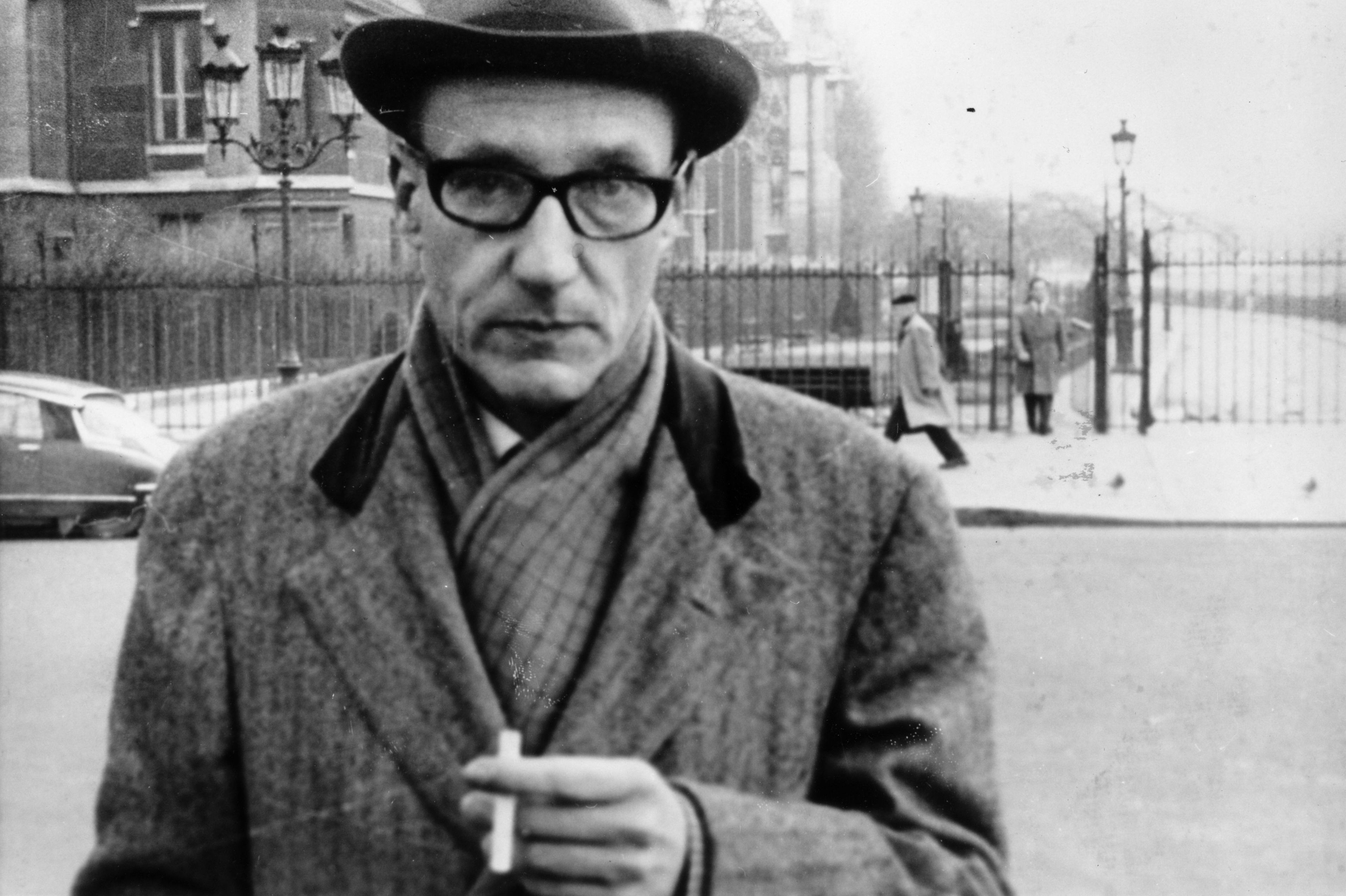
Learning about this reminded me of a poetry lesson I have presented to my Grades 7 and 8 students called "The Cut-Up Technique". It is an aleatory (random choice) literary technique developed by the Dadism Art movement of the 1920s, and was brought to popularity by William S. Burroughs, a beat poet popular in the early 1960s.
Burroughs postulated that words from two different sources could be cut up and pushed together to become something uniquely distinct -- perhaps beautiful, alarming or, at least, thought-provoking.
William S. Burroughs (Beat Generation Author & Visual Artist)
He felt that this technique was a way of “freeing words from the straitjacket of language…to create something fresh, interesting and evocative.”

It is not dissimilar to creating a portmanteau, cutting up two words to coin a new word. “Brunch” is an example, combining “breakfast” and “lunch”. “Motel” is another, combining “‘motor” and “hotel”...or even "blog" a portmanteau of "web log"

For sampledelia teaching purposes, I ask my students to print out songs they know containing rich lyrics and, if possible, end with rhymes -- that is, poetry/lyrics that rhyme on the last syllable(s).
I also print song lyrics with which I have experienced success during this activity in the past. For instance, the song Born To Run from Bruce Springsteen (the same name of the album at #18 on The 500 has proven particularly useful.
Once the students have selected two songs (pieces of poetry) they are tasked with dissecting  each line somewhere near the middle. I often suggest they look for a place where they see a natural break. For example, the first lines of Born To Run could be cut as follows.
Once they have physically cut chunks from each song, they "smash" them together to create something entirely new and, as Burroughs suggested over 50 years ago, the effect is "fresh, interesting and evocative". Here is an example using Born To Run and the song Subdivisions by lyricist Neil Peart of Rush.
As you can see, not every line works perfectly. However some, such as...

"Growing up it's a suicide machine,
Opinions all provided while we're young,
The future pre-decided, we were born to run"

...capture the spirit of a disenfranchised and discontented teen.

Once students have finished their avant-garde submissions, I invite the bold among them to perform their "literary sampledelia" live for their classmates -- beatnik style, with groovy jazz playing softly as a backdrop.
The student audience shows approval by snapping their fingers instead of conventional applause, as if we are in a mid-60s coffee house in Greenwich Village, New York. When teaching went virtual during the pandemic lockdown, students developed their own sampledelias by using Google Forms, which  can be found here.
If you have not heard sampledelic music, Odelay by Beck is a wonderful place to start. I'd direct you to the title track, Devil's Haircut, which features samples from such diverse performers:
  • Irish group Them, featuring a young Van Morrison (1966) and
  • Hall of Fame Funk Drummer Bernard Purdie (1968).
Alternately, consider the track Where It's At, which has samples from 
  • Pop-soul singer Lee Dorsey (1966),
  • Electro-funk, hip-hop trio Mantronix (1985) and
  • Wisconsin alternative-comedy-rock duo, The Frogs (1989).

Much like Cut-Up Poetry, Odelay can sometimes be beautiful, evocative or alarming but it is certainly thought-provoking.