Showing posts with label 2001. Show all posts

Sunday, 5 January 2025

The 500 - #179 - The Definitive Collection - ABBA

I was inspired by a podcast called The 500 hosted by Los Angeles-based comedian Josh Adam Meyers. His goal, and mine, is to explore Rolling Stone Magazine's 2012 edition of The 500 Greatest Albums of All Time. 


Album: #179
Album Title: The Definitive Collection
Artist: ABBA
Genre: Euro-Pop
Recorded: 1972 - 1982
Released: November, 2021
My age at release: 37
How familiar was I with it before this week: Quite
Is it on the 2020 list? Yes, at #303, dropping 124 spots
Song I am putting on my Spotify Playlist: Dancing Queen
Recently, my mother, a retired senior citizen, commented that time was moving too rapidly for her liking. She looked at me earnestly and said, "The weeks go by like days for me now." It was easy to sympathize. Time does not move quite so quickly for me, but the years certainly seem to be flying by. Heck, we are already a quarter century into the 2000s. It sometimes feels like the 1990s were just a few years ago.
Experts agree that our perception of time is flexible and subjective. Time seems to speed up as we age because we have fewer new experiences and our perception of them becomes less vivid. In a September, 2024, article promoting his book Time Expansion Experiences,  Psychologist Steve Taylor "There is a strong link between time perception and information processing. The more information our minds process, the slower time seems to pass."
It is a phenomenon I often recognize with the students with whom I work. Indeed, I am envious of their excitement at events in their lives -- birthdays, holidays, sleepovers and sports. Even an upcoming trip to the mall assumes a level of significance beyond what the occasion calls for. Their unfiltered and intense perception of the world is marvelous to witness. Meanwhile, I have progressively become more desensitized to experiences which, sadly, speeds up time.
Oh, to recapture  the exhilaration of hearing a new song, especially one released by a  favourite artist. Yet, while the anticipation, joy and pleasure of a new record remains, the intensity and passion I experienced in my youth has faded. Which brings me to the first time I heard Dancing Queen from the Swedish pop group ABBA. I was in the backseat of a car driven by a hockey teammate's mom, clipping toward the ice rink in Kingsville, Ontario. I was 11 when it played on the car radio in the fall of 1976.
 I had never heard anything like it. The song's clever construction, opening with a glissando on the piano keys followed by a 14-bar chorus, rather than the first verse, washed over me like a rainbow. The groovy disco beat, the mesmerizing synthesizer blending sublimely with the female vocal harmonies, and incredibly catchy piano stabs had me riveted to the car’s upholstery. Later, I learned that the chorus resolves on a sustained A chord, the key the song was written in – so satisfying.  
 ABBA comprised the  unique confluence of talents of brilliant songwriters and multi-instrumentalists Björn Ulvaeus and Benny Andersson, and the extraordinarily talented vocalists Agnetha Fältskog  and Anni-Frid "Frida" Lyngstad. The group takes their name from the first initials of their first names, arranged into a palindrome -- a word or phrase that reads the same backwards and forwards.
A Book of palindromes, including my favourite 
"Go Hang A Salami, I'm A Lasagna Hog".
The quartet were Sweden's first winner of the Eurovision Song Contest in 1974 with the song Waterloo. Eurovision is an international song competition organized annually by the European Broadcasters Union. It has been held every year since 1956, with the exception of 2020 when it was cancelled due to the Covid pandemic. In 2005, during Eurovision's 50th Anniversary Celebration, Waterloo was declared the best song in the competition's history.
ABBA in 1974; (l-r) Benny AnderssonAnni-Frid "Frida" Lyngstad
Agnetha Fältskog, and Björn Ulvaeus
The Definitive Collection is a compilation record released in 2001. It contains all the singles performed by the group between 1972 and 1979, including Waterloo and Dancing Queen. Taking another listen this week for this blog was a delightful trip down memory lane, reminding me how much I adored ABBA as a kid, memorizing almost every song. However, when hearing Dancing Queen, the emotional thrill that I felt 48 years ago was somehow subdued. The song still gets the feet tapping but the euphoric sensation was evasive. 

Then I reflected on the lyrics. It is a song about a 17-year-old girl who gets lost in the music when she dances at a club on a Friday night. It is told from the perspective of an observer who watches her "feel the beat" and "have the time of her life" as she "dances and jives". She, like the young people in my world (and 11 year old me), is caught up in the liberation and excitement of this experience.
What about 59-year old me? 
Is that liberation and excitement gone forever? 
Will my weeks turn into days as they have for my mom?

Steve Taylor concludes his article with the following advice:
"There are certain things we can do to resist the process of time speeding up. The most obvious is to keep introducing newness into our lives – for example, by travelling to new places, learning new hobbies, and meeting new people. Alternately -- and perhaps more effectively – we can also slow down time by living mindfully, paying conscious attention to our day-to-day experiences of seeing, hearing and feeling."
That's a perfect goal for this new year. Maybe I'll even hit the dancefloor at the club.





Monday, 19 August 2024

The 500 - #199 - Is This It - The Strokes

I was inspired by a podcast called The 500 hosted by Los Angeles-based comedian Josh Adam Meyers. His goal, and mine, is to explore Rolling Stone Magazine's 2012 edition of The 500 Greatest Albums of All Time. 


Album: #199

Album Title: Is This it

Artist: The Strokes

Genre: Indie Rock, Garage Rock Revival, Post-Punk Revival

Recorded: Transporterraum Studios, New York City, U.S.A.

Released: July, 2001

My age at release: 36

How familiar was I with it before this week: Somewhat

Is it on the 2020 list? Yes, at #114, moving up 85 spots

Song I am putting on my Spotify Playlist: Last Night


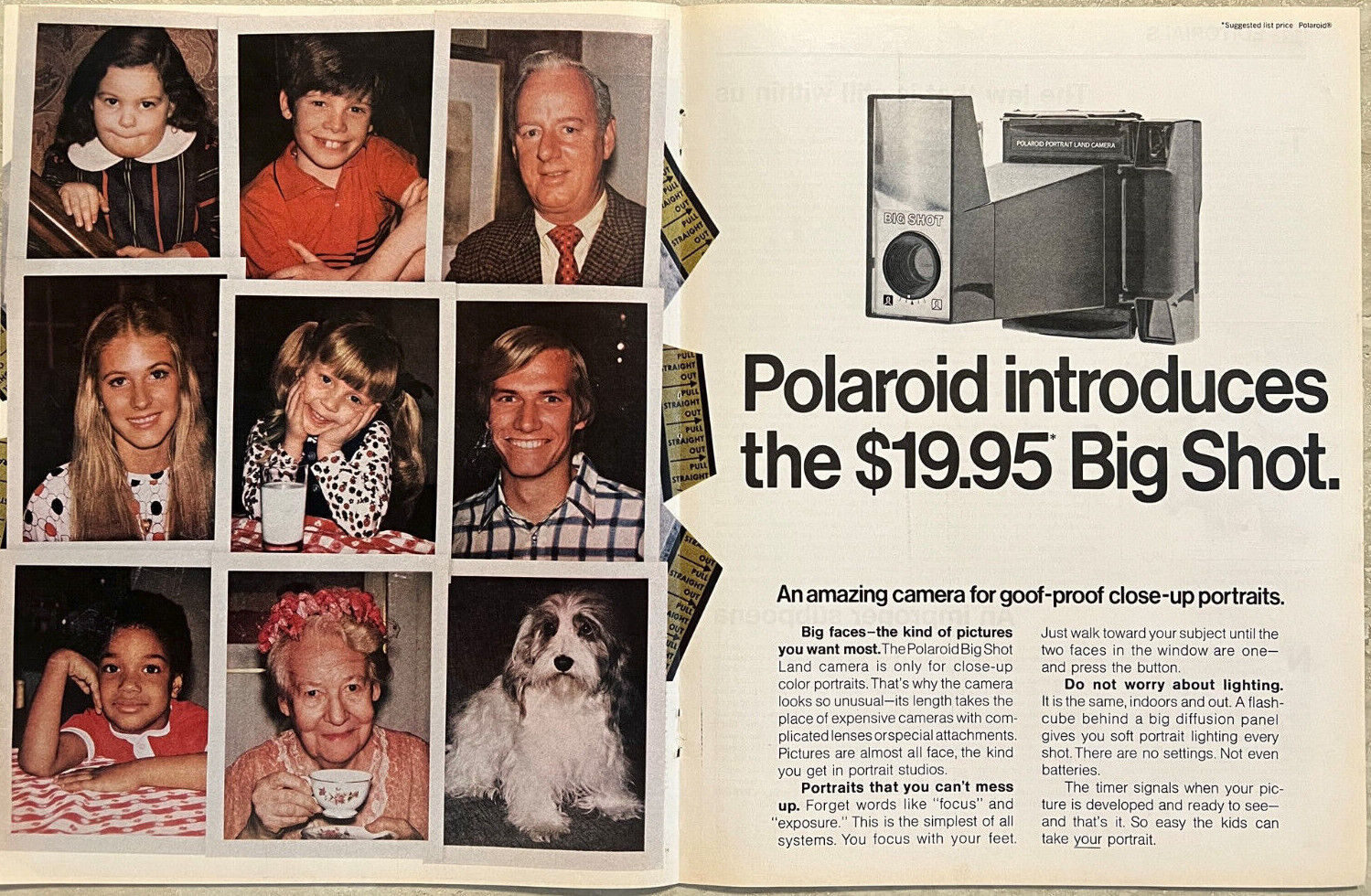
Pictured above is the album cover for the debut record Is This It from American rock band The Strokes – a photograph of a nude woman’s hip and buttocks, with her leather-gloved hand provocatively positioned. The original snapshot was taken by professional photographer Colin Lane on a Polaroid Big Shot camera. He took it spontaneously as his then-girlfriend (who still remains unnamed) stepped out of the shower and slipped on a black Chanel-quilted lambskin in their shared apartment.

A Chanel glove similar to the one used in the photoshoot.

As Lane tells the story:

“Shooting on a Big Shot isn’t easy; you can only shoot from a specific distance, and it’s really designed for head-and-shoulders portraits. But when she put the glove on and slid forward, I knew it was the perfect shot – simple, straightforward, graphic and just so sexy.”


A ‘70s advert for the Polaroid Big Shot

The album cover, which is included in the coffee table book The Greatest Album Covers of All Time, was only available to international audiences. In the United States, the release was delayed until October, 2001, and a different cover was chosen – a psychedelic photograph of subatomic particle tracks in a bubble chamber (below).
Initially, I assumed the “black glove cover” was deemed too racy for American retailers – particularly in the Bible Belt. However, I was wrong. Strokes’ manager Ryan Gentles was contacted by lead singer Julian Casblancas immediately before the release of the record in Japan and Europe to say: “I found something even cooler than that ass picture.” The call was too late because the album was already being printed. However, there was time to change the cover for the later U.S. release date.

The history of the album cover legend is complicated by a passage in The Strokes’ 2003 biography by Martin Roach in which the band allegedly admitted that ‘the fear of objections from America's conservative retail industry and right-wing lobby was also a reason for the artwork's alteration.”
Regardless of the cover, The Strokes exploded on the music scene in the early 2000s. Formed in New York City in 1997, the group helped kickstart the post-punk and garage band revival of the new millennium, alongside The White Stripes, The Hives, Jet, The Killers and Franz Ferdinand.

Singer Casablancas, guitarist Nick Valensi and drummer Fabrizio Moretti began playing together as teenagers while attending the prestigious Dwight School, a private preparatory college on the Upper West Side of Manhattan. They added bassist Nikolai Fraiture and Albert Hammond Jr., both childhood friends of Casablancas.
The Strokes  (l-r) Valensi, Casablancas, Moretti, Hammond Jr., Fraiture
Like some popular bands and artists, including some I have written about in this blog series (Gram Parsons, Vampire Weekend, Lars Ulrich from Metallica and Grace Slick from Jefferson Airplane), The Strokes are from wealthy families. For example, Casablancas' father, John, was the founder of Elite Model Management and worth nearly $100 million when he died in 2013. He was credited with developing the concept of the “supermodel” in popular culture, a phenomenon from the ’80s in which fashion models transitioned into celebrities in mainstream media – Cindy Crawford, Naomi Campbell, Linda Evangelista and Claudia Schiffer, to name a few.
‘80s Supermodel Cindy Crawford in a Pepsi commercial.
John Casablancas was also a documented racist and serial sexual harasser who married a 17-year-old when he was 50. He avoided criminal charges in 2003 when a case of sexual abuse was dropped by the Los Angeles Superior County Court because he was not a California resident. He, along with David Copperfield and Donald Trump, judged the Elite Model Look annual competition. The prize: $150,000 and a chance to secure a modeling contract. It was criticized by journalists from The Guardian newspaper, as “a chance for the trio to proposition these young and vulnerable girls.”
Donald Trump posing with contestants, as featured in a 2020 expose from The Guardian.
I suppose there is an element of disdain on my part for highlighting the band’s affluent background. Taking a chance in the music business was not a financial risk to The Strokes. Had their ambitions been dashed, the quintet would still have had money, social status and financial opportunities to cushion their failure.


There is a part of me, and no doubt others from middle class and working class homes, who admire a band that struggles to make it from humble beginnings to superstardom. We can identify with their determination to achieve their dreams – the artists who saved to buy their instruments, lived in a van or couch-surfed, criss-crossing their country playing gigs that barely covered the costs. Artists on The 500, including Dolly Parton, Jimi Hendrix and Johnny Cash, are good examples.

In a research paper published in 2019, Danish economist Karol Jan Borowiecki analyzed the historical development of creative activity in the United States from 1850 - 2015. Among his conclusions was that “every $10,000 in total family income makes a person around 2 percent more likely to pursue a creative occupation — meaning that someone who comes from a family worth $1 million is ten times more likely to become an artist than someone whose family is worth $100,000.” (See source here)
 Karol Jan Borowiecki
However, there is another side to this argument. As the baseball analogy goes, The Strokes “hit a homerun after starting on third base”. However, that discounts the fact that they worked hard to make it to home plate. According to many sources, the band practised and performed tirelessly in the late-’90s and their seemingly meteoric rise to rock stardom was fueled by their dedication and hustle.

Furthermore, they knew how to write damn catchy tunes and picked the perfect time to relaunch the garage rock sound of the ‘70s. Much like the infamous black glove cover, they took a bang-on shot and made a record good enough to land at #199 on The 500.

Sunday, 13 August 2023

The 500 - #251 - The Blueprint - Jay Z

I was inspired by a podcast called The 500 hosted by Los Angeles-based comedian Josh Adam Meyers. His goal, and mine, is to explore Rolling Stone Magazine's 2012 edition of The 500 Greatest Albums of All Time. 


Album: #252
Album Title: The Blueprint
Artist: Jay-Z
Genre: East Coast Hip-Hop
Recorded: Two Studios, New York, NY
Released: September, 2001
My age at release: 36
How familiar was I with it before this week: Not at all
Is it on the 2020 list? Yes, at #50, moving up 201 spots since 2012
Song I am putting on my Spotify Playlist: IZZO (H.O.V.A.)
In the mid-’80s, music retailers in remote geographical areas were frustrated. When a new record was released, they would often receive it days after it had made its way to shelves at other stores -- usually those in larger cities with faster postal delivery. To level the playing field record labels decided on Tuesdays as a universal release day. Records and compact discs that arrived before the weekend were kept boxed-up until the store opened on Tuesday morning, giving stores at the end of the supply chain a little extra time to receive their deliveries. Hence, an industry standard - dubbed New Music Tuesday, Record Release Tuesday or New Release Tuesday - was born.
The Blueprint, the sixth studio record, from rapper, songwriter, producer and entrepreneur Jay-Z (born: Shawn Corey Carter), was released on a Tuesday. Unfortunately, it was one of 19 major record releases that were scheduled to hit shelves on September 11, 2001 -- when four planes hijacked by terrorists were flown into the World Trade Centre in New York, the Pentagon in Washington, and a rural field in Pennsylvania. About 3,000 people were killed – and the world was convulsed and changed forever.
Among the other records debuting on that terrible day was Bob Dylan's Love And Theft, which came in at #385 on The 500. I wrote about it in January, 2021. That is a strange coincidence, but not the strangest I've discovered.
The most mind-bending coincidence involved the release of a live recording from the progressive rock band Dream Theatre. Unwittingly titled Live Scenes from New York. The recording was made at the Roseland Ballroom in New York City in August, 2000. Like 18 other records in the works, it, too, was scheduled to arrive in record stores that world-wrenching week 13 months later. The artwork selected for the cover was based on a motif printed on Dream Theatre’s 1992 album, Images and Words, featuring a burning heart wrapped in barbed wire.
Cover to Image and Words, by Dream Theatre 
On Live Scenes From New York, the heart was replaced with a flaming apple wrapped in barbed wire, set against the backdrop of the New York City skyline showing the World Trade Center engulfed in flames.
Original cover of Live Scenes From New York
Given the events of the day, the band/record company panicked and pulled the record from the shelves, to be replaced by a re-issued cover weeks later – before the conspiratorially-minded among us were thrown into a frenzy.
Reissued cover to Live Scenes From New York
The Blueprint, from Jay-Z, required no changes to its cover art. It features an aerial shot, depicting the New York-based rapper smoking a cigar while seated on a table. It was taken by photographer Jonathan Mannion, who shot many of Jay-Z's covers. However, its composition was inspired by the portfolio of British photographer Jocelyn Bain Hogg, who spent 10 years documenting British gangsters in South London for her 2001 exhibit, The Firm  
Jocelyn Bain Hogg shot on the left, from her The Firm portfolio
Jay-Z inspired, The Blueprint, cover on the right.
The gangster motif Jay-Z selected to emulate was fitting. At the time, Carter, who also goes by the monikers, Hova, El Presidente, Jigga, HOV and The Carter Administration, was awaiting two criminal trials for gun possession and assault. He pleaded not-guilty, but eventually accepted a three-year probationary sentence on a lesser charge of third-degree assault.
Jay Z - early 200s
Jay-Z was also embroiled in a number of "feuds" with other rappers, including Jadakiss, Fat Joe, Nas and Mobb Deep. Takeover, the second song on The Blueprint, features lyrics intended to "disrespect" or "disparage" all four -- a familiar tactic in hip-hop music called a "diss track". The premise presented in the song's lyrics asserted the dominance of Jay-Z and his rap crew, The Roc A-Fella Family, as the best in the genre. Each verse is then dedicated to defaming the skills and reputation of his rivals, who are identified by name within the song.
Promotional photo for Jay-Z and his posse - Roc A-Fella Family
"Diss Tracks" were common in the rap genre at the time and could have real world consequences. Numerous hip-hop feuds have turned violent and several have resulted in death. Consequently, the cover of The Blueprint, depicting Jay-Z as a confident, cigar-smoking gangster, is an intentional part of the fearless and tough image he deliberately portrayed.
Fortunately, with age comes wisdom and cooler heads eventually prevailed. Nas, whose record Illmatic (#402 on The 500) reconciled with Jay-Z in 2005 when the pair performed together at a concert in New Jersey -- fitting neutral grounds for two of the biggest artists to come out of the New York scene in the ‘90s.
Nas (left) and Jay-Z reconcile in New Jersey (2005)
The practise of releasing records on New Music Tuesday came to an end in 2015 when digital downloads became the industry norm. The Blueprint, which was released on that fateful Tuesday in September, 2001, rebounded quickly from understandably poor sales in its first week. It went to the top of the Billboard charts a few weeks later and has been certified platinum three times in the United States -- more than 3 million copies sold. It also moved to the top 50 on the 2020 edition of The 500.

What about Illmatic by Nas?

Well, it jumped 358 spots to land at #41. So, if a quiet beef was still going on, Nas won that battle. Granted, with a combined worth of three billion dollars, Jay-Z and his wife, Beyonce, are likely unconcerned with arbitrary album rankings.


Sunday, 24 April 2022

The 500 - #320 - Amnesiac - Radiohead

I was inspired by a podcast called The 500 hosted by Los Angeles-based comedian Josh Adam Meyers. His goal, and mine, is to explore Rolling Stone Magazine's 2012 edition of The 500 Greatest Albums of All Time. 


Album: # 320

Album Title: Amnesia

Artist: Radiohead

Genre: Experimental Rock, Electronica

Recorded: Three Studios, Paris, France, Copenhagen, Denmark, Oxford, UK

Released: May, 2001

My age at release: 35

How familiar was I with it before this week: A little

Is it on the 2020 list? No

Song I am putting on my Spotify Playlist: Knives Out

Amnesiac, the fifth studio record by Radiohead, was released in May, 2001, seven months after their fourth album, Kid A, In fact, Kid A was still selling briskly and listed on the US Billboard Top 200 chart on the day Amnesiac was released. We'll revisit Kid A in about four and a half years. It sits on The 500 list at position #67.
Album jacket for Kid A (2000) by Radiohead
When I was a kid, it was not unusual for a band to release two critically well-received records relatively close together, sometimes within the short span of a calendar year. Genesis, Elton John and Led Zeppelin did it in the 70s. The Beatles, whose  albums Revolver and Rubber Soul came out eight months apart in 1965 and 1966, created works so good that both made the top five on The 500 list.
Album jackets for Rubber Soul & Revolver (1965)  The Beatles
Prior to 1990, an album release typically meant a single, 12-inch vinyl record  which was limited to about 23 minutes of material per side. Consequently, albums such as Rubber Soul and Revolver clock in at 35 minutes each.
However, after 1990, many artists released material with the rapidly growing compact-disc (CD) market in mind. A CD can hold twice as much music as a vinyl record. Collectively, Amnesiac and Kid A have a running time of 93 minutes, so Radiohead fans were delighted and surprised when the two records hit shelves so close together. It also got them thinking:

Was the material on Amnesiac just a collection of outtakes from the Kid A sessions?

Or


Was Amnesiac a continuation of the musical statement the British alternative band had started with the release of Kid A?

Both views held some truth. The recording of each album took place at the same time, between January and April, 2000. Then, in 2021, Radiohead released Kid A Mnesia, which combined the two records along with previously unreleased material and remixed versions of songs from the albums. This supported the long-held theory that both records were part of a unified theme, or musical journey, for the band.
Album Jacket for Kid A Mnesia (2021) Radiohead
I gave a brief history on Radiohead in an earlier post, which included my relationship with the band's music. I have been a fan throughout their 30-year career, but seeing them live remains elusive. Although I did not follow them closely during  the early 2000s when I was holding down three jobs, I was delighted to see Amnesiac on The 500 list. It was wonderful to spend a week delving  into a record that I hadn't had time to fairly appreciate.
Radiohead (2000) 
The haunting, atmospheric and jazz-inspired Amnesiac is surreal and sometimes disorienting. It works well over morning coffee, but I wouldn't play it at a social gathering or as conversational background music because it requires sustained focus. And although I concentrated on the lyrics,  the thing that kept sticking with me was the title.

An amnesiac is someone who suffers from a medical condition called amnestic syndrome that hinders memory. There are two types of this condition. In the first, anterograde amnesia, comprehending new information is difficult. The other, retrograde amnesia, impacts an individual’s ability to recall events. Sometimes, both forms of amnesia are due to trauma or connected to a progressive neurological disorder, such as Alzheimer's disease.
The thought of either horrifies me – life without memories? And life void of continuing new inputs can strip the unfortunate sufferer of a meaningful existence, trapped in an earth-bound limbo. There are others who suffer too, such as friends and relatives. No one wants to be a burden.

I've reached an age where people I know are struggling with their cognitive function and it is heartbreaking to see. A good friend visits his mother in a long-term care facility, but she no longer recognizes him. He's been outwardly courageous in accepting his family tragedy, but I also know it impacts him profoundly and I am at a loss over what to say or do to help him.
When asked about the Amnesiac title, bassist Colin Greenwood said: "The record was like discovering a forgotten book buried deep in a library. This was a collection of songs that we didn't know we had (from the Kid A sessions). I suppose we knew we had them and had forgotten how proud we were of them, so we called them Amnesiac."
Radiohead bassist Colin Greenwood
Perhaps, this is a helpful analogy when trying to come to terms with the cognitive decline of someone we love who has forgotten us. We still love them and we are still proud of the life that they left behind, even if it is buried deep in the library of their subconsciousness.