Showing posts with label curriculum. Show all posts

Saturday, 23 July 2022

The Cross-Curriculum Power of the Shapegram

An engaging tool that I have brought into my classroom is the Shapegram, developed by educator, innovator and presenter Tony Vincent. These are a series of Google Drawing activities, complete with step-by-step instructions, that are easily connected to multiple expectations in the Ontario curriculum. From simple ice cream cones to complex time machines, these drawings can be utilized to integrate a wide range of subject matter. But that's not all.


I think it was during the 2018/19 school year that I came across Tony’s on-line Shapegrams. At the time, I was working as an Instructional Partner (Coach) for my board (Thames Valley) in Southwestern Ontario. I was assigned to four schools and it was incumbent on me to make connections with colleagues in those buildings in order to “help build pedagogical capacity”. Consequently, I was always looking for a short, quick activity that I could present to a class within (60-100 minutes).
I've always been comfortable with tech-based options (Scratch coding, Google CS First, WeVideo, Hour of Code and Google Suite options), and teachers generally respond well to my offer to present them. When I saw Shapegrams posted in a tweet by Tony, I was intrigued by the link to make your own Google Draw Ice Cream Cone. I presented it to a Grade 5 class and the reaction was palpable. The teacher who had invited me to work with them was quick to ask: “Where do you get these? I want to do more?”
The finished Ice Cream Shapegram
Tony’s Shapegrams are simple to learn and powerfully engaging. They include step-by-step video instructions and there are additional, enrichment activities on the side to complement curriculum connections. Rather than explaining a Shapegram, I always encourage teachers to go to the site and build the first four (they are free). At the very least, you will enjoy Tony's Dad-Joke worthy puns.
Tony with the Ice Cream Shapegram
When I returned to my own classroom in September, 2019, I integrated the four Shapegrams into my curriculum. The first connection with the Ice Cream Cone was descriptive writing. I asked my students to recreate it, following Tony’s instructions, but also invited them to remix it in some way. In education, we often call this the “low floor, high ceiling approach”. This is when success is always achievable, with the opportunity to “go beyond expectations” or “flex your creativity”.

To connect this to my literacy program, students were asked to describe the ice cream they had created and tell me about their favourite dessert. Using the “cut & copy” feature, their individual, frosty creations were easily transferred to a collaborative Google Slide that provided space for their writing. As a result, students were able to see the work of their peers – both their artistic endeavor and their writing.
Four examples from previous classes
The first activity was a success, a slideshow of examples can be found here. I continued with two of the other free options. The House Shapegram connected to our Geography studies of Relative and Absolute location and the Lion Shapegram fit in perfectly with our study of endangered animals in the Ecosystems unit of science.

An annual subscription is required to access the growing collection of Shapegrams. I have been a subscriber for three years now. It is $35 US (about $45 Canadian). The Google skills that my students master by the end of the year are incredible and the learning experience energizes other subject areas including literacy, science and geography. 
Additionally, their other Google work, including slideshow presentations, take a momentous leap forward. Not only can students work on these platforms more efficiently and quickly, they also begin to recognize (through teacher feedback) how to make their presentations more aesthetically pleasing for their audience.

A major feature of Tony’s program is being able to work at a pace that fits your classroom. Furthermore, there are tips, tricks and shortcuts that raise the bar for teaching and learning. Check it out at the Scope and Sequence chart provided on the site.

I will include a few examples of some collaborative activities we have done below. Feel free to modify them for your needs.


Additional Shapegram Slideshows


Robot Shapegram Slideshow

#OneWord Snow Globe Shapegram Slideshow

Dolphin Shapegram Slideshow - connected to aquatic ecosystems

Giant Sequoia and Building Shapegram - This one includes music clips in Presentation Mode

Remix your own Emoji Shapegram - Literacy task included

Groundhog Shapegram -  What day would you like to live over?

Pot of Gold Shapegram - What would you do with a pot of gold of money?

Time Machine Shapegram - Where would you go in time?

Statue of Liberty Shapegram - What city/place would you love to visit?


Thursday, 29 October 2020

It is what it is...but, it doesn't have to be.

There is an expression that never fails to make me bristle.

"It is what it is."

In my view, that is not necessarily so.

Certainly, the intention of this trite platitude is innocuous and, in some contexts, cogent. It simply means, "Accept things you cannot change and don't let them get you down", whether it was a missed commuter train or the local ice cream shop was out of your favourite flavour. 


Which got me thinking. 

Maybe "it" is...but can I do anything about it? 

After all, isn't it a good thing that people like Mother Theresa, Jonas Salk, Oskar Schindler or Albert Schweitzer didn't think that way.

As it has grown in popularity, "it is what it is" has become shorthand for dismissing things, particularly things with which we are uncomfortable. In September, in a televised interview, Donald Trump was presented with data about the staggering death toll due to the Coronavirus pandemic. His response was an off-hand, "it is what it is." 
Really? 

Did the sitting U.S. President just dismiss the daily loss of a thousand American lives out of hand? 
Or
Has he fallen into the trap of trying to move past an uncomfortable situation with a catch phrase, not recognizing that his words, despite their intention, have an impact.

I began to wonder:

What words do I use that have an impact I am not recognizing?

I stumbled on a Tweet from a fellow educator. She suggested that teachers stop referring to a mixed-gendered group of students as "guys'.

I do this all the time and have for 24 years. Certainly, no offense was intended. My meaning was to address all my students in a friendly way, regardless of gender.
Did the students in my class who identified as female take offence?
So, I asked and, almost unanimously, they agreed with a couple shrugging indifferently. They did not mind but, given the choice, they would prefer not to be called "guys".

For the last two months I have challenged myself to change my choice of nouns. Here's what I've done and what I've learned:
  • I asked my students to remind me, politely, when I slip.
  • I also asked them to come up with a list of gender neutral terms that they would prefer I use. After some comical debate, the following list was created and turned into a poster.
  • The poster has been prominently displayed around the classroom as a reminder to me. 
  • Any time I make a mistake, I apologize and correct it.
  • I've agreed that if I err more than ten times a week...I will buy them each a can of coke. So far, so good, but I am going to drop the number to five in November.
My progress has been good. I catch myself once in a while and I can tell that my students respect my efforts. One girl even told me that she appreciated how hard I was trying.

Old habits are tough to break -- but, with the right support, strategies and incentives, change is possible. It was what it was and now it is something better.


Saturday, 2 February 2019

A Project Based Learning Journey - Part 1

Increasingly, teachers with whom I work are becoming interested in incorporating Project Based Learning (PBL) into their classrooms. If you are not familiar with the difference between PBL and traditional "projects", this short video is a great place to start.

I am just completing a lengthy PBL with a Grade 4 class at Thamesford Public School. It turned out well - mainly because both the students and the classroom teacher were persistent & committed to the experience. It took about 6 weeks and I was present for at least eight 1-hour classes and a few indoor recesses. 

Student projects included...

  • A Talk Show
  • Song performances including "The Compass Rose Song" featuring the music of Shawn Mendes
  • Lego Stop Motion
  • Google Slide Stop Motion
  • A Podcast interview with a resident of Iqaluit, Nunavut
  • A Scratch Coded Interactive Canada Map
  • Interactive Google Slides - on the Boreal Forest & Canadian Provinces
  • Minecraft EDU presentations
  • Kahoot & Blind Kahoot Quizzes 
The biggest lesson I learned was to shape my approach like a triangle and not a rectangle.  I used this multi-media tech set (MMTS) which includes this Google Form to help students define the question they wanted to answer. My approach offered multiple topics and multiple project options - the rectangle design. This was unwieldy.  

I should have employed The Triangle Approach - either a few questions with lots of presentation options or many question options with one project goal.


Word of mouth has spread and another member of staff has asked me to try something in Grade 4 Science. 

This time, we are curating 8 questions from The Ontario Science Curriculum and having students demonstrate their learning with either a Tri-Fold Brochure or Infographic (possibly with a QR code to a Google Site.)

More on this next time!

Sunday, 6 January 2019

What should we teach.

There are a number of popular memes on Social Media decrying the way children are raised and educated in the modern world. They vary in form - but usually have the following things in common.
  • The assertion that "Participation medals" are being doled out for anything a kid does.
  • Some criticism that we aren't teaching the right things to kids.
  • Some suggestions about the things we should be teaching... 
    • gardening, 
    • construction or repair,
    • paying taxes & credit debt,
    • cursive writing,
    • cooking,
    • voting rights,
    • sewing,
    • first aid,
    • raising animals,
    • etc.
Here's the thing.
  • Teachers are not against any of these ideas.
  • These are all valuable skills.
  • Most importantly, they are all available to students right now - either through specialized high school programming or through independent study (especially in an age where Project Based Learning, Passion Projects & Genius Hour are encouraged and promoted by educators.)


The Ontario Curriculum is a living document. It is under regular scrutiny and efforts are always being made to refine it and improve its utility. It is not perfect. It will always be missing something or will include something that some find objectionable, valueless or pointless. However, as I have said in previous posts, teachers are a caring adult that interacts directly with the curriculum and helps navigate students through it.

But why don't they teach ...


Cursive Writing: We do, it is covered in the Grade 3 Writing Curriculum under Expectation 3.7 (Publishing). However, it isn't taught through drill & kill practice sheets. A student should be able to identify cursive letters so that they can read text that has been created in a cursive font - but the utility of mastering the skill of writing in cursive is fading. If a parent wants their child to perfect this skill, they are certainly welcome to provide them with practice opportunities at home. However, I would argue that that time would be better spent on keyboarding. When I taught Grade 5, I would register all my students on Typing.Com and encourage parents to allow their students regular access...especially those who request homework (which, I do not assign). There are also lots of options at this site, which highlights Ten Fun Typing Games for Kids.

Gardening: I can only speak to the school where I last worked - but we had a community garden and all the classes were invited to be part of its development. Here's the thing. The growing season in Ontario includes July & August when the school is empty. Consequently, we had a garden because members of the community spearheaded the project and were willing to take care of it during the summer months. Additionally, with a school population of nearly 1000 students, there were actually too many hands for the project. Each class was invited to participate in the development of the garden, but there wasn't enough for all the students to do. There are many factors that make a gardening project at an elementary school impractical. I do have a friend and colleague who teaches Horticulture and Landscaping at Parkside Collegiate Institute in St. Thomas. Agriculture programs are also available at other secondary schools in this board.

Financial Literacy: It has been promoted through many math classes - I know I included it with my Grade 7 & 8 students when I taught that grade. It has also been highlighted as one of the initiatives that the new Ontario PC government will include in the next Math Curriculum.

Construction & Repair: As can be seen at this Thames Valley District School Board Website 12 of the area's secondary schools offer programs in either Construction or Manufacturing. Additionally, Elementary Schools throughout the Valley are investing in the Makerspace Movement that has been growing since 2011.

Cooking & First Aid: Many secondary institutions provide programs in Hospitality and Health & Wellness.

I could continue, but I think the message is clear.

  • The curriculum is an adaptable document - parents are consulted in its creation & adaptation.
  • Educators are responsive to the needs of students and try to create thinkers, makers & creators.
  • Efforts are made to provide students with opportunities for many life skills.
  • It is impossible to do it all - but we certainly make an effort to do as much as possible.
  • There are practical limitations to some things that some people would like to see in schools. It's not as simple as just "adding it to the curriculum".
  • The curriculum will never please everyone - there will always be "something missing" or "something that should be taught by the parents".
  • Parents are welcome to augment their child's education with anything they want.
  • I now have something to share the next time I see one of those Facebook posts - even those from my favourite comedian - George Carlin.
Image may contain: 5 people, people smiling, meme and text


Saturday, 8 October 2016

The Homework Conundrum Revisted

A little over a year ago, I waded into the homework debate with a blog I dubbed "The Homework Conundrum". In it, I weighed the pros and cons behind a teacher’s decision to give homework and tried to demonstrate, through numerous links, that there is much debate. I tried to explore both sides with an open mind and agreed that compelling and convincing arguments abound. Ultimately, I presented my case for providing students with relevant, meaningful and flexible homework options. I chose to make homework mandatory on weeknights (Monday to Thursday) so parents would never be uncertain if it was assigned.


I look back on the evidence I provided to support this decision and still believe that it holds water. However, as I embark on another year teaching in the Junior Grades, I have reconsidered my approach again. This year, I have decided to leave the option of homework with the students and their parents. To that end, I am providing multiple opportunities for students to enrich their learning with meaningful tasks that will build important skills but, none of it is mandatory. In other words, I am trying to satisfy everyone. I’ll try to illuminate with three examples.

Scenario 1
Nina’s family is very busy every night of the week. She is a competitive swimmer and is also taking piano lessons. Her two brothers play hockey for different teams and both take violin lessons. Her mother’s job takes her out of town frequently; consequently, her father spends most nights shuttling his kids to different venues while scrambling to make sure all three get a healthy dinner. Academic success is a priority for the family but, additional homework is sometimes a burden.

Scenario 2
Sam’s family believes that homework is an essential part of education and one hour is put aside each evening for this purpose. Sam’s parents have often asked his teacher for more homework when he comes home with only a book to read. They want him to develop the "habit of homework" in preparation for high school and post-secondary success. They also set the bar high for him and want him to develop excellent numeracy and literacy skills. They sincerely believe that extra practice every evening will increase his competence and the likelihood of his academic success in the future.

Scenario 3
Home life for Tyler is challenging. He is being raised by a single parent who is struggling with mental health and addiction issues. There are financial issues in the home because his parent can not work and, he does not always have access to the internet or a working computer. Additionally, he is often forced into the role of caregiver for his younger siblings. Sometimes, there is nothing to eat and he needs to walk to the local church to gather a bag of non-perishable items from their food bank. Regular completion of homework is an unreasonable expectation for him.

I gave more thought to these three scenarios and applied the “perfect” homework solution outlined in my previous post. I realized quickly that it only worked effectively in one of these situations and I was forced to admit that, increasingly, these "ideal" scenarios are a less common. I reflected on each fictional student's arrival in class the next day.
  • Sam would be beaming - his homework tucked neatly in the front of his planner. He has satisfied both his teacher and his parents. 
  • Nina would have her work completed too - slightly wrinkled (like her weary eyes) from its completion in the stands at a chilly arena in a different town. 
  • Tyler, equally exhausted, would shuffle in quietly armed with only the knowledge that he had failed meet classroom expectations, again.
Now, I realize I am painting some extreme scenarios and any teacher worth his salt would have developed an alternate, supportive plan for Tyler. Regardless, I now believe that mandatory homework does not work in enough situations to justify itself. Additionally, it is, too frequently, an unnecessary source of frustration for parents, teachers and students.

My Current Solution

Accepting that my teaching and systems are in a constant state of reflection and enhancement - I am currently approaching this by making relevant, meaningful and engaging homework a voluntary proposition. Nina and her parents can relieve themselves of this commitment on any night of the year while still having the option available to them on others. Sam’s parents are also sated by the many options available to their son on every night of the week - options that exceed “daily reading”.  Most importantly, Tyler’s arrival at school each morning is recognized as a success in itself.

What options are available?


Within the first month, I set students up an accounts on Edmodo - a safe, Facebook style, social media platform that allows us to share ideas and create discussions. This also provides me with a launching point for a raft of other free, online educational websites.


XTRAmath - a place for students to practice their basic computational skills. This site effectively removes "drill and kill" from instructional time.

Learn to Type - a website to teach keyboarding essentials through practice, tests and games.

Tween Tribune - thousands of news articles (updated daily to reflect current events) that can be leveled to readers from K - 12. Deeper thinking discussion questions are provided and answers can be posted in the classroom Edmodo page to encourage collaborative discovery.

Prodigy Math - a Pokemon style battle game that requires users to answer questions that are aligned with with the Ontario or Common Core curriculum. Teacher administrators can differentiate questions based on each user's ability and can align the questions to match the current classroom unit.

No Red Ink - Grammar basics (differentiated and aligned with instruction by the teacher) to make learning the fundamentals of language a little more fun.

Study Jams - 200+ video lessons on topics in Science and Math. A great resource for reteaching concepts covered in class and also a place to explore new ideas in a fun and engaging way.

Using Edmodo, I can quickly provide links to these websites and others to help students build their skills in multiple curriculum areas.  Additionally, I can pose questions relevant to current events or curriculum studies that students can explore. They are then provided with the opportunity to share their thinking with both me and their peers through Edmodo discussion posts. Later, in class, we can examine their ideas and allow others to participate orally in our discussion. Student voice is enhanced because each child is encouraged to post pictures, riddles, stories or links that will encourage collaborative online communication. In the past, my students have used Code.org and Scratch to create content that peers can play or even remix.

So far, things have been successful. Parents who are looking for additional homework are encouraged to investigate our Edmodo page with their student. Alternately, I can provide them with links through Class Dojo (which I use with them as a communication and sharing tool). My students have responded well and are many enjoy the opportunity to demonstrate their initiative and independent work habits by exploring these resources on their own. To foster this, I have created an Initiative Bingo Card for them to complete during the fall months.

I'll see you next year when I revisit this topic again.


Thursday, 25 August 2016

Don't ask your kids "How was school today?"


During the past twenty years of my teaching career, communicating with parents has become increasingly easier. In part, this is because experience has made me better at it. However, it is also because there are more quality online tools (and more parents who have access to communication technology).

Class Dojo is perfect for my Junior aged classroom and teachers in primary classes are exploring online portfolios through SeeSaw. Intermediate and Senior teachers find utility in programs like Edmettle or Remind.

However, invariably, the dreaded telephone call is a necessary means to an end. I do try to sprinkle in sunshine calls throughout the year to celebrate student achievements but, that is usually covered by my daily Class Story picture and update on Class Dojo. So, if I am calling home - it is probably to help problem solve a situation that, despite our best efforts, the student and I have not been able to resolve on our own.

Sometimes, the parent is expecting the phone call. That is always a relief and typically expedites the problem solving process. More often, parents are surprised by the phone call. That is not an indictment of their parenting - I get it - life is busy for all of us. Furthermore, it is my responsibility to keep them informed about their student’s progress. When I do reach a parent who is unaware of a problem, I frequently hear the following statement…

“I ask him every day - “How was school?” and he always says “Good.”


I can relate to their concerns. They feel they have been duped. Parents, like all of us, lead busy lives and they rely on their children to keep them informed about the day-to-day events at school. A blanket statement like “How was school?” is a parent’s way of quickly checking in.

I offer the following advice. Banish that statement.


It affords a child a one word response and, in the event that things are not going well, they escape the conversation and continue to fly under the radar. I’ll admit, I used the same tactic with my parents when they questioned me 30+ years ago - especially when I went through my skip classes to hang out at the mall phase in Grade 12.

Instead, may I offer these ten probing questions that you can ask your child. Each requiring a deeper, more meaningful response.

1./ What are you learning in math this week? Is it easy or hard? Can you give me an example of a question and show me how you solve it?

2./ What skills or games are you learning in gym? What do you like about them? What would you change to make them better?

3./ Is your teacher reading a book aloud to you this week? What book is it? Tell me about the story?

4./ Tell me about the last thing you wrote for your teacher? What made it easy or hard? Can you show it to me?

5./ Are you doing any science these days? Can you tell me three facts you learned in science?

6./ Are you doing any social studies these days? What is the coolest new thing you learned?

7./ Who did you have lunch with today? Tell me about your favourite friends at school? Is there anyone you are having trouble getting along with?

8./ What would you like your teacher to change? Is there something that could be done better? Do you want to write to them about it? I’ll help you with it.

9./ Have you been working on any drama, dance or art lately? Are you learning a new song to play or sing?

10./ Can you teach me 5 new words you have learned in French?

If you find that, on a regular basis, you can not get a good, quality response from your student. It is time to contact the teacher. There are a host of reasons why this may be the case and a meeting with your child and the teacher will get to the root of it quickly.

A final, additional benefit is this type of conversation is that it helps your student crystallize his understanding of new information learned at school. If he is asked to summarize facts or demonstrate skills from the day and explain them in detail - he is more likely to retain the information in the near future.

Here are the questions in a printable version that is perfect for hanging on the fridge. Good luck. Have a great year!


Wednesday, 20 July 2016

Twitter & The Lesson that makes me Cry

Recently, while facilitating a workshop with a group of colleagues, I was asked about the relevance of Twitter and how it might be used in the classroom. I took some time to share with them the importance of building a Professional Learning Network (PLN) and listed all of the positives that come with a Twitter presence.

  • It’s fun to follow people.
  • You can facilitate student voice.
  • It is a great source for news as it happens and therefore ...
  • ...it is a social disruptor and galvanizer (Arab Spring, Russian annexation of Crimea).
  • It is great for quick hits of Professional Development.
  • Great educators share resources all the time.
  • You can build a PLN specific to your interests and grade level.
  • A Principal may (should?) ask about yours in an interview.
  • It is ongoing evidence of your best practice - because you curate it.
  • If you follow comedians, you will always have timely jokes.
  • Growing your following rewards your ego (I’d like to say I am better than this … but I have learned that I am not)

When asked about using it in the classroom, I shared the unit that I have dubbed “the one that always makes me cry.”

One would think that, after delivering this unit more than five times, I would have developed a thicker skin. This has not been the case and I am now a firm believer in Andropause. My cynical and hardened veneer has increasingly been showing cracks.
  • I struggle through sad movies...particularly those by Pixar (The first 10 minutes of “UP” gutted me).
  • I more actively avoid media that is tragic and I have far more difficulty processing it when I encounter it.
  • I quickly block any Facebook post that is potentially disturbing (I’m looking at you PETA).

I recognize that this softer side is likely evidence of emotional progress and I realize I am genuinely sharing an empathetic aspect of my personality with my students. However, there remains a nugget of neanderthal masculinity buried deep within my amygdala that steadfastly cautions me - “Emotion bad! You strong! Make joke to relieve tension!.... Good ...now talk about sports!”


The Activity

It begins with an open discussion about the word “homelessness” using a strategy called Post it, Pile it, Pin it. I may start by showing a few photos of homeless people and ask my students to think about words, ideas or opinions that come to mind. They are encouraged to share with each other by writing down their ideas on a post-it note. Another member of the group can also post ideas that are shared orally. A pile of these notes is created in the middle of the table. Finally, the notes are brought to the front and pinned to a chart paper. This also serves to sort the responses because similar responses are grouped.
An updated “techy” version of this involves laptops and a virtual wall - through a program called Padlet.
Obviously, responses will vary but; my experiences have seen the words tend to fall into two categories. One group of posts will contain negative opinions which castigate the homeless (drunk, criminals, lazy, dirty, scary, drug-users). The other set tend to show more compassion or sympathy (misunderstood, mentally ill, helpless, sad, poor). It seems likely that the students are merely parroting opinions that they have heard from others (perhaps the adults in their worlds). The ultimate goal of the lesson is to help them discover their own opinion and move past stereotypes. The Ontario Grade 6 Health curriculum connections fit in nicely here.
C1.3 identify factors that affect the development of a person’s self-concept (e.g., environment, evaluations by others who are important to them, stereotypes, awareness of strengths and needs, social competencies, cultural and gender identity, support, body image, mental health and emotional well-being, physical abilities).
I do my best to list these responses without showing judgement. It is important that students feel comfortable sharing their opinions and we regularly talk about how our perspectives can change when we have additional information. At this point, I share the picture book “Fly Away Home” by Eve Bunting with them. Well, actually, because I struggle to get through it without blubbering - I show the YouTube video of it.

There are some great discussion points available and many students are able to make the connection between the symbolic escape of the bird and Andrew’s life. We can also revisit some of the post it notes and talk about which ones apply to the characters in the story.

The Twitter Connection

So, how does this connect to Twitter? That comes in the next step. I share the following video in which homeless people read mean tweets about the homeless.
It is powerful and requires some setting up (It can also make me weepy). The word “piss” is used. Consequently, that requires some editing or a class discussion about language before it is screened. I prefer the latter. Students respond positively to frank conversation about word choice and this can be empowering for them.
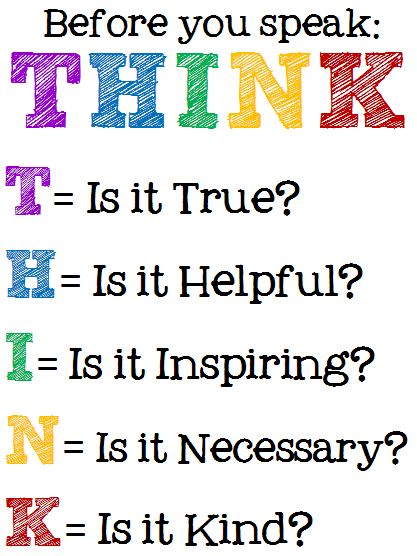
We have a discussion about Tweets, Twitter and Hashtags. We use Edmodo as a classroom forum; so, they are already well versed in Social Media etiquette, online bullying and the T.H.I.N.K. approach to posting.
Again, we can look at our pinned notes and reflect on stereotypes and empathy. I then present the following challenge.
In 140 characters, can you write a kind tweet about homelessness which includes a hashtag to identify it.

As a class, we brainstorm and choose a hashtag. Suggestions and past examples have included #KindnessCounts #EHStudentsCare (EH is Eagle Heights) #HelpHomeless or maybe #KindTweets4Homeless.

I provide the students with a strip of graph paper with about 140 boxes available. The students develop their ideas on scrap paper and then, once satisfied, print them out on the graph paper strip. I log on to my Twitter account and they are invited to type in their Tweets. I do ask that they call me over to confirm things before posting. Over the next few hours, we look forward to alerts that “like” or “retweet” our efforts at kindness.
If you would like to help us, drop me a line. It would be great to organize a day of kind tweets around a common hashtag. If not, look for our tweets this fall. I think I may take the coward’s route and encourage my student teacher to deliver this unit.
Good … Make joke...Sad feeling go back down!