I was inspired by a podcast called The 500 hosted by Los Angeles-based comedian Josh Adam Meyers. His goal, and mine, is to explore Rolling Stone Magazine's 2012 edition of The 500 Greatest Albums of All Time.
Album: #203
Album Title: Bad
Artist: Michael Jackson
Genre: Pop, Funk, Soul, Hard Rock, R&B
Recorded: Westlake Studios, Los Angeles, California, U.S.A.
Recorded: Westlake Studios, Los Angeles, California, U.S.A.
Released: August, 1987
My age at release: 22
How familiar was I with it before this week: Very
My age at release: 22
How familiar was I with it before this week: Very
Is it on the 2020 list? Yes, at #194, moving up 10 spots
Song I am putting on my Spotify Playlist: Man In The Mirror
Ten minutes into the first episode and we were hooked. The show was part sit-com, part mystery -- think I Love Lucy meets The Twilight Zone (1959 - 1964). We had so many questions: The success of this collaborative WandaVision music project in 2021 prompted me to make it part of my regular program and, for the fourth year in a row, it has been received enthusiastically. The eclectic playlist we create throughout the unit never fails to delight me. Songs ranging from Mr. Sandman by The Chordettes (‘50s) to I'm A Believer from The Monkees (‘60s) to Earth, Wind and Fire's September (‘70s) bring diverse sounds to our work periods. With literally thousands of popular songs from which to choose, each year takes on a slightly different tone. One artist, however, has consistently made the cut every year -- The King of Pop , Michael Jackson.
One year, a student locked into ‘70s Michael, performing with his brothers, The Jackson Five, on the soft rock ballad I'll Be There. Another discovered the disco/funk audio splendor of Rock With You from 1979's Off the Wall (#68 on The 500). Another class found Jackson's work from the ‘80s with the hard rock dance track Beat It, and the title track from this week's record, Bad.
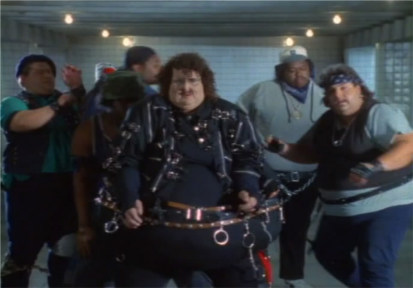
Bad, the single, exploded into the pop culture zeitgeist on August 31, 1987, when the 18-minute video premiered on a primetime CBS special called The Magic Returns: Michael Jackson. Directed by Martin Scorsese, the short film was, in part, inspired by scenes from the musical West Side Story. Shot in a Brooklyn subway station, the protagonist Darryl (portrayed by Jackson) is a young man returning to his old, tough neighbourhood after being away at a private school on a scholarship. Darryl is greeted by his former street gang, which included actor Wesley Snipes in one of his first roles. At first, the reunion is friendly, but becomes awkward when Darryl's street credibility is challenged. In an attempt to show the group that he is still "bad", Darryl considers robbing an elderly man before having second thoughts. The dance sequence that follows, featuring the song Bad, has become iconic, as has the leather outfit Jackson wore as Darryl.
It is, like many things from the ‘80s, a piece of pop culture history that has aged imperfectly. When we watched the video in class there were a few chuckles and a lot of questions. However, by week's end, the song was voted a Bop and became part of that year's playlist rotation.
 That's the thing about Jackson, he fearlessly took risks. It was a message I deliver often in our Grade 7 classroom, "swing for the fences with your artistic endeavours". If you are brave enough to push your creativity to new limits it is worthy of respect, even when it doesn't work out. This was not, I reminded them, dissimilar to the risk they took by picking a song during our WandaVision music challenge. They knew it might be a Flop -- and that's okay.
 Admittedly, Jackson had more hits than misses in his career. In 1991, the album Bad became the second best-selling record of all time, eclipsed only by Jackson's previous record, 1982's Thriller (#20 on The 500). Bad had only had nine tracks on it, and seven of them were singles, with five songs hitting #1 on Billboard charts. The first single from the album, I Just Can't Stop Loving You, was a chart-topper in June, 1987. The final song released as a single, Liberian Girl, wasn't promoted until July, 1989 -- 25 months later. For anyone who lived through "Michaelmania", it felt like he was an constant artistic force.
I plan on sharing the WandaVision Music Experience with my students again in the next school year. Although pandemic lockdowns and virtual learning seem to be a strange thing of the past, the unit still builds community through the coldest and bleakest days of winter. I am always surprised by the interesting choices that students make and I am keen to see if Jackson's streak continues in 2025.
Song I am putting on my Spotify Playlist: Man In The Mirror

Four years ago, as we navigated the unpredictable Coronavirus pandemic, my wife and I discovered the Disney+ program WandaVision. The nine-part mini-series was the first television program released in the Marvel Cinematic Universe (MCU) and set after the events in the 2019 film Avengers: Endgame. 

One might expect this to be typical superhero fare. After all, it featured Wanda Maximoff (aka: Scarlet Witch) and the android Vision, two characters well established in the MCU. However, it was the promotional trailer release that piqued our interest and convinced us to subscribe to the newly available Disney streaming service. This short video, shot in black and white, featured the song Twilight Time from 1950's vocal group The Platters. The vid depicted our former heroes in a situational comedy setting eerily reminiscent of I Love Lucy episodes (1951-1958).
.jpg) |
| Screen Capture for the Official Trailer to WandaVision. |
- Why are these 2020 characters living and hiding their superpowers, in the idyllic world of 1950s Westview, New Jersey?
- Why is the show leaning on the campy and cliche television tropes from that era?
- Why was Vision alive? Thanos had killed him in Avengers: Endgame, right?
- Who is the mysterious person whose hand is shown in a television studio in the final credits, watching the final credits?

Final Credit screen capture featuring a mysterious onlooker.

Our delightful bewilderment continued when the second episode featured the same characters appearing in a fictional world that had all the trappings of a ‘60s era sitcom -- clearly reminiscent of the Dick Van Dyke Show (1961-1967),...including promotional material.
It soon became evident that WandaVision was going to be a mysterious and nostalgic trip through the decades, depicted through the tropes and cliches from situation comedies in each. Wisely, the Disney channel released the episodes weekly rather than dropping the entire series for viewers to binge watch. Consequently, there was plenty of time for online speculation and for fan predictions and theories to percolate.
At the same time, January to March, 2021, I was teaching remotely. I had started the year with a delightful group of Grade 7 students in person. However, as our province, Ontario, entered the second wave of the pandemic, we reluctantly returned to online learning. Always on the hunt to engage students and build community, I thought about ways the WandaVision premise could connect to our learning. Then, I was struck by a plan.
.jpg) |
| WandaVision shot (left) compared with the Dick Van Dyke Show promo. |
 |
| Wanda's changes through the episodes/decades. |
- What if each student was assigned a random decade and found a song that others might enjoy.... a "Bop"?
- The student could then, privately, send me a presentation slide which would feature the song as an embedded YouTube video.
- Included on the slide would be three bullet points of research -- about the song, the artist, the album or the themes in the lyrics.
- I would present the slide (in order to keep the student identity private) and would play the song throughout the week in our virtual learning environment.
- At the end of the week, we would use a Google Form to vote each song from the chosen decade as a Bop or Flop. The top two songs, or any song receiving 60 per cent Bop status, would remain in our class playlist.
- We would then reveal the students who chose each song and created the accompanying slide presentation.
- I began by sharing three songs from the ‘40s in order to provide an example to guide them.

One of my example slides - Stardust by Artie Shaw -- it was voted a Bop.

The activity was a hit. My students were excited to have their songs shared and hear the music chosen by classmates from the ‘50s through to the 2000s. With six decades over six weeks, this turned out to be a wonderful way of bonding the class during a time of dreary isolation -- short, bleak winter days coupled with another pandemic lockdown. It also connected to multiple curriculum expectations -- visual literacy, writing, research and history.

 |
| The King of Pop - Michael Jackson. |
 |
| Cover for the single, Bad, from Michael Jackson |
 |
| A screen capture from the Scorsese directed short film, Bad. |


 |
| Single cover for Liberian Girl - released in the U.K. in 1989. |