Showing posts with label Rolling Stone. Show all posts

Sunday, 3 August 2025

The 500 - #149 - Self Titled Debut - Santana

I was inspired by a podcast called The 500 hosted by New York-based comedian Josh Adam Meyers. His goal, and mine, is to explore Rolling Stone Magazine's 2012 edition of The 500 Greatest Albums of All Time. 


Album: #149

Album Title: Self-Titled Debut

Artist: Santana

Genre: Latin Rock, Jazz Fusion, Psychedelic Rock

Recorded: Pacific and San Mateo Studios, California

Released: August, 1969

My age at release: 4

How familiar was I with it before this week: A couple of songs

Is it on the 2020 list? No

Song I am putting on my Spotify Playlist: Soul Sacrifice

Finnish composer Jean Sibelius (1865 - 1957) attracted both praise and criticism for his approach to form, tonality and architecture in his seven symphonies. His response to the criticisms was dismissive when he famously said: “Pay no attention to what critics say. No statue has ever been put up to a critic.”

Perhaps the six members of the San Francisco-based Latin rock band, Santana, reflected on the wisdom of Sibelius when they saw the early reviews of their 1969, self-titled debut record.
Santana (1969).
Rolling Stone magazine writer Langdon Winner called the record “a masterpiece of hollow techniques” and “a speed freak’s delight – fast, pounding, frantic music with no real content”. He further compared the music’s effect to the drug methedrine (a powerful stimulant popular in the drug culture of the late ‘60s) saying, (the music) “gives a high with no meaning…featuring repetitively, unimaginative playing amidst a monotony of incompetent rhythms and inconsequential lyrics”.
Robert Cristgau - Village Voice Magazine.
Meanwhile, on the other coast, New York Village Voice writer Robert Christgau echoed Winner’s sentiments calling the record “a lot of noise… (from) the methedrine school of American music.”


Ouch!


Initially formed in 1966 as The Santana Blues Band, the group evolved into a free-form jam band, experimenting with a fusion of blues, rock, and Latin rhythms—drawing inspiration from the Mexican and Nicaraguan heritage of two of its members. By the time they recorded their debut album, their name was shortened to Santana and the lineup included Carlos Santana (lead guitar), David Brown (bass), Gregg Rolie (keyboards and lead vocals), Michael Shrieve (drums), Michael Carabello (congas and percussion), and José "Chepito" Areas (timbales and percussion).
Santana (1969).
The group performed at the now legendary Woodstock Music Festival on Saturday, August 16, 1969, a week before the release of their debut title. The group performed six songs from their upcoming album including two cover songs – Jin-Go-Lo-Ba by Nigerian percussionist Babatundi Olatunji and the Willie Bobo song Fried Neck Bones and Some Home Fries. I’ll admit, I enjoyed a phonetic preoccupation when I discovered the name “Ba-ba-tundi Ola-tun-ji” and the pleasing syllables that comprise it. I caught myself repeating it as a mini-mantra.

“Ba-ba-tundi Ola-tun-ji” (give it a try).

Thirty-one years after its release, Santana’s debut album received a far warmer reception from Rolling Stone. In 2000, critic Chris Heath described the record as “thrilling ... with ambition, soul and absolute conviction – every moment played straight from the heart.” This marked a dramatic shift from the magazine’s original 1969 review, which had dismissed the album as hollow and frantic. By 2003, Rolling Stone included it at #150 on its original list of The 500 Greatest Albums of All Time, nudging it up to #149 in the 2012 revision. However, it was dropped from the most recent update in 2020. The album’s fluctuating status lends weight to Jean Sibelius’s famous observation: “No statue has ever been put up to a critic.”
Santana on the cover of Rolling Stone magazine 1n 1999.
Sibelius himself, of course, has a monument in his honor -- an elegant sculpture nestled in a Helsinki park that also bears his name. His legacy extends further: an academy, a high school, a museum, several streets across Europe, and even a widely used music notation software all carry his name.
Sibelius Monument in Sibelius Park, Finland.
Carlos Santana, who recently celebrated his 78th birthday, has built a legacy just as enduring. He’s been inducted into the Rock and Roll Hall of Fame, earned a star on the Hollywood Walk of Fame, and ranks #20 on Rolling Stone’s list of The 100 Greatest Guitarists of All Time. With over 100 million records sold worldwide, his influence spans generations.
One imagines Santana has long since recovered from the early barbs hurled by critics like Langdon Winner and Robert Christgau. And if not, he can surely take comfort in nearly six decades of musical achievement – or, at the very least, in the towering pile of money he’s earned. Big enough to fund a statue of his own.

Sunday, 19 November 2023

The 500 - #238 - Howlin' Wolf - Howlin' Wolf

I was inspired by a podcast called The 500 hosted by Los Angeles-based comedian Josh Adam Meyers. His goal, and mine, is to explore Rolling Stone Magazine's 2012 edition of The 500 Greatest Albums of All Time. 


Album: #238
Album Title: Howlin' Wolf
Artist: Howlin' Wolf
Genre: Chicago Blues
Recorded: Multiple studios
Released: January, 1962
My age at release: Not born
How familiar was I with it before this week: A little
Is it on the 2020 list? No, but a different Howlin' Wolf record is
Song I am putting on my Spotify Playlist: Little Red Rooster
In 1988, I went through a blues phase. I purchased Eric Clapton's Crossroads Box Set after becoming a fan of his third band, Cream (more on that story when we get to albums #205, #114 and #102). The boxset contained four compact discs, the first of which covered Clapton's time with Cream as well as his first band, The Yardbirds (#355 and #350) and John Mayall And The Bluesbreakers (#195), his second. All three bands wrote their own material, but also performed songs written by early blues artists, including Willie Dixon, Robert Johnson, John Lee Hooker and Sonny Thompson.
Boxset cover for Eric Clapton's Crossroads.
Discovering those songs sent me down an audio rabbit hole and I began enthusiastically purchasing blues records and CDs. There was also a store called The Software Warehouse which rented CDs for a small fee. Consequently, I started recording my “favourite discoveries" on cassette  tape to play in my car, a 1987 Ford Mustang that I spent too much money on. (Tip of the hat to my Dad for co-signing the loan).
The 1987 Ford Mustang LX.
In the summer of 1988, I drove the “Stang” from London, Ontario, to Calgary, Alberta, to meet my future wife's father for the first time. I only stopped once, a one-hour nap beside a cornfield in Rugby, North Dakota -- the geographical centre of North America.
A stone monument in Rugby, ND, marking the geographical 
centre of North America.
That 32-hour journey was fueled by cigarettes, coffee, Jolt Cola (a cola beverage super-charged with caffeine,) and plenty of blues cassettes, including The London Howlin' Wolf Sessions, a 1971 record featuring blues legend Howlin' Wolf (born Chester Arthur Burnett) playing with contemporary artists who had been inspired by him. Among them were Eric Clapton, Steve Winwood, and Rolling Stone members Charlie Watts and Bill Wyman. It was my introduction to the American singer and guitarist.
The self-titled record on The 500 list is a compilation of songs recorded by Howlin' Wolf between 1960 and 1962. Often called The Rocking Chair Album, it features 12 blues standards, all written by another blues legend, Willie Dixon. Deemed the third greatest guitar album of all time by Mojo magazine in 2004, it has been described as "an outrageous set of sex songs".
Howlin' Wolf (circa 1965)
The second track, Little Red Rooster, was released as a single in 1964 and became the first, and only, blues song to hit #1 on the U.K. singles chart. The song has been recorded by dozens of artists on The 500 list, including Muddy Waters, The Rolling Stones, Sam Cooke and The Jesus and Mary Chain. In 2007 the song was inducted into the Rock and Roll Hall of Fame's archive as one of the 500 songs that shaped the genre of rock.
The album was also a massive influence on the British rock band Led Zeppelin, with five records on The 500. Lyrics from the songs Back Door Man and Shake For Me were used on Zeppelin's hit song Whole Lotta Love from their second, self-titled record (#79 on The 500).
Single Release for Whole Lotta Love from Led Zeppelin
Howlin' Wolf died in 1976 at the age of 65, after battling health issues for years. He was posthumously inducted into the Blues Hall of Fame in 1980. A  29-cent stamp was issued in his memory by the U.S. Postal Service in 1994. Earlier, in 1991, The Rock and Roll Hall of Fame added him to their roster. His influence can be heard today in releases by contemporary performers such as The Black Keys, Marcus King, Gary Clark Jr., and the guest on the accompanying episode of The 500 Podcast, Joe Bonamassa.
It has been a fun week or so as I revisited many of those songs that accompanied me across the continent in 1988, including that first disc from Clapton's Crossroads collection. It was a trip to remember.

Friday, 12 February 2021

The 500 - #383 - More Songs About Buildings And Food - Talking Heads

I was inspired by a podcast called The 500 hosted by Los Angeles-based comedian Josh Adam Meyers. His goal, and mine, is to explore Rolling Stone's 2012 edition of The 500 Greatest Albums of All Time. 

Album # 383

Album Title: More Songs About Buildings And Food
Artist: Talking Heads
Genre: New Wave, Avant-Pop
Recorded: Compass Point - Nassau, Bahamas
Released: July, 1978
My age at release: 13
How familiar was I with it before this week: Somewhat
Song I am putting on my Spotify: Take Me To The River

Talking Heads were officially formed in 1975 in New York City. However, the band's origin can be traced to the Rhode Island School of Design in 1973 where guitarist and vocalist David Byrne formed the band The Artistics with drummer Chris Frantz. Transportation to gigs was often provided by Frantz's girlfriend, Tina Weymouth.

Rhode Island School of Design 
When The Artistics disbanded two years later, the trio moved to a communal loft in the Lower East Side of Manhattan. Unable to find a bassist, Frantz convinced Weymouth to learn the instrument. And the Talking Heads were born.

Talking Heads (original line-up) 1976

The band's name came from television production parlance. It refers to a camera shot, often used in newscasts. In it, only "the head and shoulders of an individual talking" are captured. According to Weymouth, it perfectly fit the aesthetic the band hoped to achieve -- "all content, no filler."

Keyboardist, guitarist and vocalist Jerry Harrison (who was the guest on this week's episode of The 500 Podcast), joined the band in 1977 and the classic line-up, which would remain intact for the next 14 years, was formed.

Talking Heads (1977) l-r Harrison, Byrne, Weymouth, Frantz

More Songs About Buildings and Food is the second studio record by Talking Heads and one of four that appear on The 500 list.  Like many 1970s artists, my first encounter with Talking Heads was their appearance on Saturday Night Live. The date was February 10, 1979, almost 42 years to the day of this post.  It also featured host Cicely Tyson, who passed away two weeks ago. (#Coincidences)

Cicely Tyson in a Saturday Night Live Promotional Photo (Feb. 1979)
Admittedly, I looked up the date of this broadcast's airing. However, I do know I was babysitting at 11:30 p.m. on the night I saw it. Other than the money (a whopping $1/hour), watching Saturday Night Live uninterrupted was my favourite part of a babysitting gig. 

Saturday Night Live - 1979 - The "Not Ready for Prime Time" Players

The children were fast asleep, the parents would not arrive home until at least 1:30 a.m., and I had a full bowl of potato chips and a fridge full of pop at my disposal. It was early-teen heaven.

Talking Heads' performance of Take Me To The River was everything I loved about Saturday Night Live, even if I didn't know how to articulate it at the time. It was entertaining, weird, avant-garde, clever, subversive and, perhaps most importantly, it felt like I was getting a window into the future.

In an uncomfortable interview on Dick Clark's American Bandstand, about a month after their Saturday Night Live performance, a 27-year-old Weymouth said this about the band's music: 

"It's pretty highfalutin, but we want to make our mark in music history."

Well, I suppose, as I write these words 42 years after that awkward exchange between Clark's polished presentation and four artistically gifted introverts, I have to say ... Mission Accomplished, Ms. Weymouth.

"All content, no filler."

Sunday, 27 September 2020

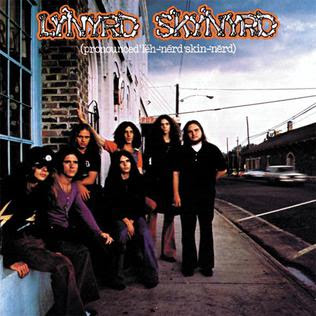
The 500 - #403 - "Pronounced 'Lĕh-'nérd 'Skin-'nérd" - Lynyrd Skynyrd

I was inspired by a podcast called The 500 hosted by Los Angeles-based comedian Josh Adam Meyers. His goal, and mine, is to explore Rolling Stone's 2012 edition of The 500 Greatest Albums of All Time. 

Album # 403

Album Title: Pronounced 'LÄ•h-'nérd 'Skin-'nérd
Artist: Lynyrd Skynyrd
Genre: Southern Rock, Hard Rock, Blues Rock
Recorded: Studio One, Doraville, Georgia
Released: August, 1973
My age at release: 8
How familiar was I with it before this week: Very
Song I am putting on my Spotify Mix: Tuesday's Gone
Pronounced 'Lĕh-'nérd 'Skin-'nérd by Lynyrd Skynyrd
This decision to buy this record, in the spring of 1985, was one I distinctly remember. I had eyed it for some time at my favourite record shop, Dr. Disc, in downtown London, but was reluctant to make the purchase. I was deep in my Progressive Rock phase and 
Lynyrd Skynyrd, a southern rock group, was a great departure from my tastes. I was also under the misguided impression that the band might be racist.
Movie Poster from The Blues Brothers
I suspect this thinking could be traced back to the movie The Blues Brothers which has been a favourite since my youth. In it, the protagonists Jake and Elwood Blues are travelling across the state in an effort to save their childhood orphanage by reuniting their band to play a fundraiser. En route, and broke, they secure a gig at a rural honky-tonk saloon under false pretenses. When they ask the bartender what kind of music is played in the bar, she replies: "Oh, we got both kinds. We got country and western."
In the film, the Blues Brothers Band would go on to perform their gig on a small stage behind chicken wire -- set up to shield the performers from the beer bottles that were hurled from the drunk and raucous crowd. 

This served to reinforce an opinion I had cultivated from television and film in the 1970s -- most people from the south, especially those who liked country and western music, were simple, violent and racist. They were, after all, the people who had gone to war in order to maintain slavery and who harranged Kwai Chang Caine weekly on Kung Fu. I suppose I should have been more troubled that the Chinese character was played by an Irish-American actor.
The 70s Television & Film that influenced
my opinion on The South
Sure, there were exceptions, the "good ol' boys" from Dukes of Hazzard and Burt Reynold's Bo Darville from the Smokey and the Bandit films. In both cases, charismatic protagonists were forced to battle the inherently corrupt lawmakers or establishment. They were, clearly, the exception.

Consequently, I was taken by surprise when I gave side one my first listen. I was familiar with Freebird, the album's epic final track, which featured the blistering guitar solo that had first drawn me to the band. However, the rest of the record was new territory.

I Ain't the One, the album's opening track was an absolute rocker and it was followed by the beautiful ballad, Tuesday's Gone. However, it was the the third track, Gimme Three Steps, that won me over. The lyrics, based on a true event lead singer Ronnie Van Zant experienced, weave a comedic tale about a young man who was... 

"cutting a rug in a place called The Jug with a girl named Linda Lou. When in walked a man with a gun in his hand and he was looking at you know who." 

Upon realizing it is Linda's boyfriend, the startled narrator pleads for a three-step head start toward the door, hoping to escape the situation. In some ways, the songwriter was embracing the stereotypes I had about people in the south -- where you could get shot for accidently dancing with the wrong girl. However, cleverly, he had turned the story into a comedic romp where no one actually gets hurt.

I was wowed and the record worked its way into my playing rotation frequently after. As I've matured, my inherent bias toward folk from the southern U.S. has softened. At the very least, I recognize it is there and I've become more accepting of everyone -- even if they only listen to Country and Western music.  


Friday, 4 September 2020

The 500 - #405 - Radio City - Big Star

 I was inspired by a podcast called The 500 hosted by Los Angeles-based comedian Josh Adam Meyers. His goal, and mine, is to explore Rolling Stone's 2012 edition of The 500 Greatest Albums of All Time. 

Album # 405

Album Title: Radio City
Artist: Big Star
Genre: Power Pop
Recorded: Ardent Studios, Memphis
Released: February, 1974
My age at release: 8
How familiar was I with it before this week: Fairly
Song I am putting on my Spotify Mix: Back of a Car

This week, we finish off the Big Star trilogy with their sophomore offering, Radio City, from 1974.
Radio City - Big Star (1974)
Last December, in a time we might soon call PC (Pre-Covid), I wrote about their final record, Third/Sister Lovers, which was #449 on The 500 list. I highlighted Big Star's impact on popular music. They are often called The Musicians' Musicians - "the band that your favourite band is probably listening to."
Third/Sister Lovers - Big Star (1978)
Then, in April of this year, we arrived at their debut, and my favourite album from the band, Number 1 RecordI wrote about my relationship with the band and the magnificence of this "red letter moment" in music, "when everything falls in place."
Number 1 Record - Big Star (1972)
For many, I am sure, the question must be: Why would a band with all three of their studio records on The 500 list not be more popular? In fact, I'll go so far as to say that many of the people who read my blog, except perhaps the musicians, are unfamiliar with Big Star. 

I conducted a quick Twitter Poll with the question: "How familiar are you with the band Big Star?" I only got 23 responses but, as you can see below, the majority had little to no familiarity with the music. 
Twitter Poll conducted September 3-5, 2020
A 2013 article from The Atlantic magazine calls them "The Greatest Band You've Never Heard Of" and a music review from NPR in 2010 dubbed them "The Unluckiest Band in the World". Was it bad luck? There are some who think the audacious decision to call themselves Big Star and then double-down and name their debut release Number 1 Record was tempting fate.

I don't buy into the notion of fate. I bristle when people say, "Everything happens for a reason."  

It doesn't. Things happen and we retroactively ascribe meaning to them.

This week on The 500 Podcast, host Josh Adam Meyers welcomed Jody Stephens, drummer and only surviving member of Big Star. He dismissed the idea that it was "bad luck" and looks back on his career with positive affection, saying:
"It all worked out. The records are finding an audience and I had an amazing career. (We) got to create the way we wanted to create and, financially, he (Guitarist & Singer Alex Chilton) could support himself from songs he had written for Big Star. I'm in Love with a Girl was used in a Heineken commercial and he co-wrote In the Street with Chris (Bell) which was used in the credits of That 70s Show. Once that television program went into syndication...the income got appreciable. (Bassist) Andy Hummel went on to get a degree in Mechanical Engineering and an MBA in Finance and raised a beautiful family. Maybe things wouldn't have turned out so well if we got recognition with the first album. Who knows, the whole thing could have been finished."  
Drummer Jody Stephens at Ardent Studios
The track for my The 500 Spotify Playlist is, Back of a Car, selected by friend (and drummer) Steve Crew. In a text to me, he credited Jody Stephens as an important influence. As he put it..."I stole every lick."

Sunday, 23 August 2020

The 500 - #407 - Sandinista! - The Clash

 I was inspired by a podcast called The 500 hosted by Los Angeles-based comedian Josh Adam Meyers. His goal, and mine, is to explore Rolling Stone's 2012 edition of The 500 Greatest Albums of All Time. 

Album # 407

Album Title:  Sandinista!
Artist: The Clash
Genre: Too many to list
Recorded: 5 Studios - Manchester, New York, Kingston, Jamaica & London
Released: December, 1980
My age at release: 15
How familiar was I with it before this week: One song
Song I am putting on my Spotify Mix: 
Police On My Back 

On Episode 407 of The 500 Podcast, host Josh Adam Meyers welcomed guest Tom Morello, best known as the guitarist for Rage Against The Machine & Audioslave. Morello is equally noted for his political activism. Consequently, he was the ideal guest to discuss Sandinista!, the fourth studio release by English post-punk legends The Clash. 
Sandinista! album cover by The Clash
Morello shared the following quote when discussing the politically charged song Washington Bullets from side four of the three-disc album:
"My world view was intact before I heard The Clash, but to have your favorite band reflect your world view back to you in a way that you don't see from the educational or authority figures in your life was powerful. Their point of view was not in the classroom and not on the news, but it was absolutely true and accurate. There are bands that you like, bands that you love and then there are bands you believe in. For me, that's why I put both hands around The Clash forever." 
I was walking when I heard Morello make this statement. I had been listening to the podcast while loading groceries into my car and this quote stopped me in my tracks. It was a sentiment I understood and it resonated powerfully. For me, it wasn't The Clash, it was the musician Peter Gabriel who reflected my world view with the passionate political statements he made on songs such as Games Without Frontiers, Not One Of Us and the anti-apartheid protest song Biko on his untitled 1980 record (sometimes referenced as Melt). 
Peter Gabriel's third untitled record (1980)
Morello had summarized the passion that drew me to music when I was in my early teens. The incredible feeling that comes when all the things you've been thinking and feeling are reinforced by intelligent, kind and passionate artists who package ideas with lyrical and musical beauty. Although I didn't articulate it completely as an early ten, this was the thing that drew me to music. It was the reason I spent hours in my bedroom listening to records and memorizing the lyrics that spoke to the best version of me.
I realized that The Clash is a band that should have played a more important part in my life as a teen. Don't get me wrong, I liked them and owned a copy of London Calling (which we will get to in about six years...it is #8 on The 500 list.) The band wasn't a big part of my musical orbit at that time. I was deep into my progressive rock phase, so bands such as Rush, Yes, Genesis and the aforementioned Gabriel dominated my turntable. 

The consolation to missing out on this record in my early teens it would be that I got to discover Sandinista! this week. It is a lengthy record with 36 tracks, so it has been playing in the background for several days. There are many genres explored by the band on this record. There is funk, rock, gospel, reggae, rockabilly, folk, dub, rhythm and blues, calypso disco and even rap (at a time when that genre was in its infancy). It was challenging to select a song for my Spotify mix, but I finally settled on Police On My Back after consulting with my friend Claudio, who is a big fan of The Clash and Sandinista!

So, beyond the bands you like and love...is there one you believe in?


Monday, 17 August 2020

The 500 - #408 - I Do Not Want What I Haven't Got - Sinéad O'Connor

I was inspired by a podcast called The 500 hosted by Los Angeles-based comedian Josh Adam Meyers. His goal, and mine, is to explore Rolling Stone's 2012 edition of The 500 Greatest Albums of All Time. 

Album # 408

Album Title:  I Do Not Want What I Haven't Got
Artist: Sinéad O'Connor
Genre: Rock, Folk Rock
Recorded: S.T.S Studios, Dublin, Ireland
Released: March, 1990
My age at release: 24
How familiar was I with it before this week: Somewhat
Song I am putting on my Spotify Mix: The Emperor's New Clothes

It is difficult to quantify the impact Sinéad (Shin-AidO'Connor made when she exploded on the commercial music scene of 1987. Her shaved head and black combat boots made her stand out in a time when teased hair and mini-skirts dominated the female music scene. However, it was her voice that captured the attention of many, including me. Perfectly pitched and effortlessly fluctuating from the hauntingly ethereal to a powerful, primal scream. There was no denying her talent and mystique.
I Do Not Want What I Haven't Got - Sinead O'Connor
Her second record, the platinum-selling album I Do Not Want What I Haven't Got , was a commercial juggernaut - propelled mainly by her emotional performance of the Prince song Nothing Compares 2 U. However, as I listened to it this week, it was a deeper cut on the record that captured my attention.
"These are dangerous days,
To say what you feel, is to dig your own grave."
Those fifteen simple words, from the song Black Boys on Mopeds, certainly resonate today. They are words that would prove prophetic for O'Connor. Two years after the release of this record, she made what was construed as a provocative attack on the Catholic Church. The backlash resulted in an immediate decline in her career. It would be two decades before she would experience some redemption, as people began to understand the precise nature of her criticism which really concerned sexual abuse of children within the church. O'Connor's experience is a good example of what is now called Cancel Culture.

Saturday, 8 August 2020

The 500 - #409 - Strange Days - The Doors

 I was inspired by a podcast called The 500 hosted by Los Angeles-based comedian Josh Adam Meyers. His goal, and mine, is to explore Rolling Stone's 2012 edition of The 500 Greatest Albums of All Time. 

Album # 409

Album Title: Strange Days
Artist: The Doors
Genre: Psychedelic Rock, Acid Rock
Recorded: Sunset Sound Recorders, Hollywood, California
Released: September, 1967
My age at release: 2
How familiar was I with it before this week: Somewhat
Song I am putting on my Spotify Mix: Love Me Two Times
Strange Days album cover

Much like a visit from tedious relatives, the popular experimental group The Doors are best tolerated in small doses. It is a style of music that can often be too gloomy and introspective -- a depressive hangover from a different generation. However, all is not uninspiring. A song by The Doors can be perfect on a mixed playlist. Their songs also play brilliantly on many movie soundtracks such as the following:
  • Alabama Song (Whisky Bar) adds the perfect amount of discordant whimsy in the strange British comedy The World's End 
  • Love Her Madly captures Forrest Gump's unrequited love for Jenny in the 1994 film.
  • And I can't imagine Apocalypse Now without hearing The End playing through the hypnotic and unnerving opening sequence.
That being said...I've never owned a record by The Doors. This week, as I listened to Strange Days on Spotify, their second studio release from 1967, I again found myself fatigued by their sound. 

Last March, in my review of Rum, Sodomy and the Lash (Album #440) by Irish band The Pogues, I made a similar statement. The Doors are like the laptop steel guitar, perfect in moderation...but not easily digested all night. In fact, as I cued the record up for a third time, my wife asked, "Is there something else we can listen to?"

True to my word, I gave this record a half-dozen quality spins in a variety of circumstances. There are some tracks on Strange Days that I quite enjoyed and lead singer Jim Morrison's lyrics always get me thinking.
Jim Morrison of The Doors 
Morrison's poetry, much like the music of The Doors, is hit and miss. Some lyrics stopped me in my tracks when I first heard them as a teenager. However, as the years passed, I outgrew them. Regardless, they still get your thinking, even if to wonder..."What does he even mean?" The middle passage from When The Music's Over is one example of a lyric that would have floored me as a 17-year-old, heck, it still grabs my attention now:
"Cancel my subscription to the Resurrection
Send my credentials to the House of Detention. 
I've got some friends inside."
I suppose Morrison was a much like the beat poets and writers that surrounded him in the sixties (Allen Ginsberg, Jack Kerouac William S. Burroughs). They were all embracing alternate forms of spiritualism while challenging conventions, pushing up against authority and viewing the world through an unreliable lense. Sometimes soft, sometimes focused and sometimes warped and clouded by heavy drug use. For all four writers, their outcomes were varied, but, when they worked, they really worked.
Burroughs, Ginsberg and Kerouac (l-r)
I suppose it's fair to finish by letting the poet explain himself. When asked about his work, Morrison once said:
"Our work, our performing, is a striving for a metamorphosis. Right now, we’re more interested in the dark side of life, the evil thing, the night time. But through our music, we’re striving, trying to break through to a cleaner, freer realm. Poetry appeals to me so much-because it’s so eternal. Nothing else can survive a holocaust but poetry and songs. No one can remember an entire novel, but so long as there are human beings, songs and poetry can continue. If my poetry aims to achieve anything, it’s to deliver people from the limited ways in which they see and feel.”