I was inspired by a podcast called The 500 hosted by New York-based comedian Josh Adam Meyers. His goal, and mine, is to explore Rolling Stone Magazine's 2012 edition of The 500 Greatest Albums of All Time.
Album: #151
Album Title: Funeral
Artist: Arcade Fire
Genre: Art Rock, Chamber Pop, Baroque Pop, Symphonic Pop
Recorded: Hotel2Tango, Montreal, Canada
Released: September, 2004
My age at release: 39
How familiar was I with it before this week: A couple songs The album earned universal acclaim upon release, receiving a towering 9.7/10 rating from Pitchfork, which named it the Best Album of 2004. It was later ranked #2 on their list of the decade’s best, second only to Radiohead’s Kid A (#67 on The 500). The record also received a Grammy nomination for Best Alternative Music Album, cementing its place in indie rock history.
In addition, It garnered star-studded endorsements from music legends who weren’t shy with their admiration, including Bruce Springsteen and David Bowie who collectively have 13 records on The 500. Springsteen championed Arcade Fire’s emotional intensity and ambition and Bowie praised the band’s “uninhibited passion” and described their sweeping orchestral sound as a “kaleidoscopic, dizzy sort of rush.”
On September 8, 2005, Bowie joined the band on stage at Radio City Music Hall in New York for a stunning performance of their anthemic single Wake Up. It marked one of Bowie’s first appearances following a medical hiatus, a moment both poignant and electrifying, etched into music folklore. It can be seen here.
Funeral didn’t just succeed, it re-defined indie rock, fusing Baroque pop and art rock, with anthemic power and orchestral flourishes that punctuate raw, grief-fueled storytelling. Its impact echoed for years, inspiring new indie-rock bands that embraced:
They became known for pushing sonic boundaries while remaining emotionally grounded. Their stature grew steadily, with regular invitations to perform on Saturday Night Live, where they sometimes even appeared in comedy sketches alongside the cast – a rare crossover earned only by true favorites.
In August, 2022, Pitchfork published a detailed investigation in which four individuals accused Arcade Fire front-man Win Butler of sexual misconduct. The accusers – three women and one gender-fluid person– were all between the ages of 18 and 23 at the time of the alleged incidents, which reportedly took place between 2015 and 2020. In November, a fifth person using the pseudonym “Sabina” came forward, describing a prolonged three-year relationship with Butler that she characterized as manipulative and emotionally abusive..jpg) In response, Butler, who is married to bandmate Régine Chassagne, acknowledged engaging in extramarital affairs. He stated, “I have had consensual relationships outside of my marriage. The majority of these relationships were short-lived, and my wife is aware – our marriage has, in the past, been more unconventional than some.”
In response, Butler, who is married to bandmate Régine Chassagne, acknowledged engaging in extramarital affairs. He stated, “I have had consensual relationships outside of my marriage. The majority of these relationships were short-lived, and my wife is aware – our marriage has, in the past, been more unconventional than some.”
The reaction from fans was swift and divided. For many, the allegations struck a dissonant chord against the band’s long-standing image of emotional sincerity and progressive ideals. Some expressed deep disappointment, feeling unable to continue engaging with the music in the same way. Others attempted to compartmentalize, choosing to uphold their appreciation for the band’s art while grappling with discomfort over Butler’s alleged behavior. A vocal minority defended Butler, pointing to the absence of legal charges and his insistence on consent, although this defense was often criticized as tone-deaf to the experiences of the accusers.
The legacy of a band like Arcade Fire, particularly their landmark debut Funeral, is now entangled in a cultural and moral reckoning. Allegations against front-man Butler have sparked calls for boycotts and cancellations – reactions that, though emotionally understandable, invite more difficult questions. What becomes of the other band members — Chassagne, Parry, Kingsbury who, along with Butler, are still with the band and had no involvement in the alleged misconduct? Should their creative legacies and financial futures be tethered to accusations about the behavior of one person?
After the story broke, several radio stations removed Arcade Fire’s music from rotation. Album sales dipped, ticket demand slowed, and when the band was announced as musical guest on the Walton Goggins-hosted SNL episode last May, backlash flared again. Fans and commentators debated the ethics of spotlighting a group still navigating unresolved controversy.
For me, this dilemma echoed the fate of The Cosby Show, which was pulled from syndication following the revelations about Bill Cosby. While Cosby himself was rightly held accountable, the show's removal also meant that actors, writers, and crew, many of whom depended on residuals, lost a vital source of income. They, too, were collateral damage in a conflict they did not choose to participate in. The question isn't whether we should hold powerful figures accountable – we must – but whether our mechanisms for doing so are precise or indiscriminate. In our rush to condemn, are we also sanctioning the work of those who did nothing wrong? I won’t claim a moral position here. It's not my place to do so. However, as events unfolded, I found myself thinking about that collateral damage. About the musicians and collaborators whose lives are tied to the art they helped build, yet who are now tainted by someone else’s actions. They’re left in a kind of limbo: revered, implicated, and uncertain. It’s one thing to call for accountability; it’s another to ask whether our efforts to achieve it leave enough room for nuance.
Perhaps the most honest response is simply to live with that discomfort—to acknowledge that art and its makers are never immune to contradiction. Funeral can still crack open a heart, even if the band behind it is now fractured by moral dissonance.
To erase the music entirely may feel justified, but it also risks silencing the creativity of those who had no voice in the allegations. So maybe the better question isn’t whether to listen, but how to listen – with nuance and space for uncomfortable truths. We’re often forced to negotiate lines between reverence and responsibility, and some lines refuse to be neatly drawn.
How familiar was I with it before this week: A couple songs
Is it on the 2020 list? Yes, at #500 - dropping 249 spots
Song I am putting on my Spotify Playlist: Wake Up On May 10, 2025, actor Walton Goggins made his long-awaited debut as host of Saturday Night Live (SNL), appearing in the penultimate episode of the show's milestone 50th season. For my wife and me, longtime admirers of his work, it felt like a victory lap. We've enjoyed Goggins for years, captivated by his ability to effortlessly shift between razor-sharp comedy and riveting drama in standout roles from Justified and Vice Principals to Django Unchained and The Righteous Gemstones.
The Internet agreed and social media lit up in celebration. Goggins had already crashed into the cultural mainstream with his Emmy Award nomination in The White Lotus Season 3, and his SNL hosting gig only affirmed what fans already knew: He was not just having a moment, he was defining one. At 53, Goggins is more than a scene-stealer. He's a creative force whose career spans acting, filmmaking, photography, travel, brand design, and entrepreneurship as co-owner of a gin and whisky distillery. That night on SNL, his magnetic energy reminded us why he's not merely part of the zeitgeist, currently, he is the zeitgeist.
 On the same episode, Canadian indie rock stalwarts Arcade Fire returned as musical guests, promoting their seventh studio album, Pink Elephant. Longtime favorites of SNL creator and executive producer Lorne Michaels, this marked Arcade Fire’s sixth appearance on the show in 18 years – a record unmatched by any band in the modern era, surpassed only by Kanye West, who appeared seven times between 2005 and 2018. Yet, unlike guest host Walton Goggins, Arcade Fire's performance drew mixed reactions on social media, with fans divided over their current creative direction.
 The group formed in Montreal in 2001 when high school friends Win Butler and Josh Deu began collaborating on music. They soon invited Régine Chassagne, then a music student at McGill University, to join. The lineup expanded with multi-instrumentalists over the next two years, but in 2003, Deu departed to pursue filmmaking and visual art, though he continued contributing creatively through web content and music videos.
That same summer, 2023, the newly solidified band featured Win and William Butler, Chassagne, Richard Reed Parry, Tim Kingsbury, and Howard Bilerman, They began recording what would become their iconic debut, Funeral.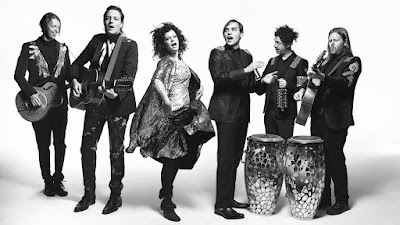
The album’s title and emotional weight stemmed from personal losses suffered during its production:
Song I am putting on my Spotify Playlist: Wake Up


The Internet agreed and social media lit up in celebration. Goggins had already crashed into the cultural mainstream with his Emmy Award nomination in The White Lotus Season 3, and his SNL hosting gig only affirmed what fans already knew: He was not just having a moment, he was defining one.


That same summer, 2023, the newly solidified band featured Win and William Butler, Chassagne, Richard Reed Parry, Tim Kingsbury, and Howard Bilerman, They began recording what would become their iconic debut, Funeral.

The album’s title and emotional weight stemmed from personal losses suffered during its production:
- In June, 2003, Chassagne lost her grandmother to Parkinson’s disease.
- In February, 2004, the Butler brothers' grandfather, legendary swing guitarist Alvino Rey, passed away.
- Just weeks later, Richard Reed Parry’s aunt, described by him as the “family matriarch,” died of cancer.

 |
| Radiohead's Kid A Album Cover |
On September 8, 2005, Bowie joined the band on stage at Radio City Music Hall in New York for a stunning performance of their anthemic single Wake Up. It marked one of Bowie’s first appearances following a medical hiatus, a moment both poignant and electrifying, etched into music folklore. It can be seen here.
 |
| Bowie performing with Arcade Fire 2005. |
- Expansive lineups and layered instrumentation
- Concept albums with emotional or political themes
- Theatrical performances more akin to communal rites than typical rock shows
 |
| Suburbs Album Cover. |
In August, 2022, Pitchfork published a detailed investigation in which four individuals accused Arcade Fire front-man Win Butler of sexual misconduct. The accusers – three women and one gender-fluid person– were all between the ages of 18 and 23 at the time of the alleged incidents, which reportedly took place between 2015 and 2020. In November, a fifth person using the pseudonym “Sabina” came forward, describing a prolonged three-year relationship with Butler that she characterized as manipulative and emotionally abusive.
.jpg)
 |
| Butler and wife, Chassagne. |
The legacy of a band like Arcade Fire, particularly their landmark debut Funeral, is now entangled in a cultural and moral reckoning. Allegations against front-man Butler have sparked calls for boycotts and cancellations – reactions that, though emotionally understandable, invite more difficult questions. What becomes of the other band members — Chassagne, Parry, Kingsbury who, along with Butler, are still with the band and had no involvement in the alleged misconduct? Should their creative legacies and financial futures be tethered to accusations about the behavior of one person?
After the story broke, several radio stations removed Arcade Fire’s music from rotation. Album sales dipped, ticket demand slowed, and when the band was announced as musical guest on the Walton Goggins-hosted SNL episode last May, backlash flared again. Fans and commentators debated the ethics of spotlighting a group still navigating unresolved controversy.
 |
| Arcade Fire Perform on SNL. |

Perhaps the most honest response is simply to live with that discomfort—to acknowledge that art and its makers are never immune to contradiction. Funeral can still crack open a heart, even if the band behind it is now fractured by moral dissonance.
To erase the music entirely may feel justified, but it also risks silencing the creativity of those who had no voice in the allegations. So maybe the better question isn’t whether to listen, but how to listen – with nuance and space for uncomfortable truths. We’re often forced to negotiate lines between reverence and responsibility, and some lines refuse to be neatly drawn.

.jpg)


.jpg)


.jpg)
_poster.jpg)