Showing posts with label The Beatles. Show all posts

Sunday, 2 April 2023

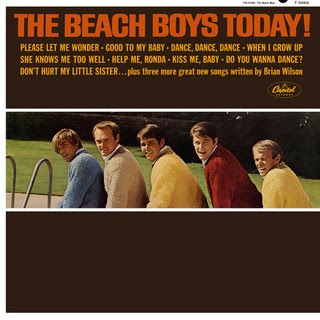
The 500 - #271 - The Beach Boys Today - The Beach Boys

I was inspired by a podcast called The 500 hosted by Los Angeles-based comedian Josh Adam Meyers. His goal, and mine, is to explore Rolling Stone Magazine's 2012 edition of The 500 Greatest Albums of All Time. 


Album: #271

Album Title: The Beach Boys Today

Artist: The Beach Boys

Genre: Orchestrated Rock, Rock, Chamber Pop

Recorded: Three Studios, Hollywood, California

Released: March, 1965

My age at release: Not Born Yet (Technically, I was a fetus)

How familiar was I with it before this week: A few songs

Is it on the 2020 list? Yes, At #4
Song I am putting on my Spotify Playlist: In The Back Of My Mind

(Spotify song picked by Eamon O'Flynn, Host of The Record Roulette Podcast where this record was discussed on an October, 2021 episode)

The first time I borrowed a record from a friend, it was Help Me, Rhonda, a number one single from The Beach Boys Today, the eighth studio release by American band, The Beach Boys.
Today, in an era of YouTube and music streaming services (Spotify, Apple Music, Tidal, etc.), it is easy to hear your favourites. However, I wonder if the current younger generation of music listeners is missing out on something special. My friend Terry and I initially bonded over a mutual love of Pink Floyd and Led Zeppelin when, in the fall of 1982, he invited me to spend an evening by his stereo, recording a few of his records onto cassettes. We remain close friends and still talk about music.
The cassette tape - a staple for music listening and recording (1962-2000)
I can't remember who lent 10-year-old me that 45 rpm single of Help Me, Rhonda. However, I do remember giving it a workout on my small, all-in-one, suitcase-style portable turntable. My cheap needle probably did irreparable damage to that vinyl, but it also made me a fan of The Beach Boys and their harmony-rich, surf-rock sound.
A portable turntable, similar to mine
For many years after, I only thought of The Beach Boys in terms of their California Sound -- a musical aesthetic which encapsulated beaches, surfing, hot-rods, girls in bikinis, carefree innocence and young love. I wasn't entirely wrong; the early Beach Boys' catalogue features genre-defining hits, including Surfin' Safari, Surfin U.S.A., I Get Around, Fun Fun Fun, Barbara Ann, and Little Surfer Girl.
Then, in 1984, I heard David Bowie perform God Only Knows and learned (likely from a radio disc-jockey) that it was a Beach Boys song. I was gobsmacked! How could this beautiful, lush, orchestral song of grief and heartbreak be a Beach Boys tune? Soon after, I listened to The Beach Boys 1966 studio release, Pet Sounds (#2 on The 500) for the first time, and my formerly narrow understanding of this influential group was forever changed.
As reported in my February, 2021, post for their record Smile, The Beach Boys went through a transition in the mid-60s (the height of the British Invasion). Brian Wilson, the group's principal songwriter, was struggling with exhaustion and crippling anxiety (later diagnosed as schizo-affective disorder). Consequently, he stopped touring with the group and spent his time writing and working in the studio with the band's supporting musicians.
The Beach Boys Today was a fascinating moment in pop-culture and music history. It documents the band's transition from the California Rock sound that had made them commercial juggernauts to the start of their ascension toward critical acclaim with their artistic masterpiece, Pet Sounds.
In fact, this sonic switch occurs neatly between Side One and Side Two of The Beach Boys Today. Typically, when a band changes its sound, the transformation takes place between records. Perhaps the best example of this can be found in the new direction The Beatles took with the release of Rubber Soul (#5 on The 500). It was the product of a whirlwind tour of North America in 1965 when they met folk singer Bob Dylan and their hero Elvis Presley, as well hearing the soul music hits that were playing on American radio.
Album cover for Rubber Soul by The Beatles (1965)
There is always something new to learn, and  this thought prompted me to ask: When did I make the biggest change in direction as a school teacher?
Throughout my career, I've learned so much from many mentors. However, the biggest game-changer came in the autumn of 2013 when my principal suggested I attend a Google Professional Development session being offered by our board. Attendees were provided with Chromebooks and, over the course of the day, we learned about the Suite of free tools available through Google and the powerful educational utility of this small, inexpensive device.
An early version of Google's Chromebook
Within a few weeks, a portable WiFi unit and a cart of 15 Chromebooks were available to our school. (Yes, believe it or not, wireless access to the internet for a classroom was still in its infancy ten years ago). The portable units were nicknamed "COWs" -- which stood for Computers On Wheels. They housed the Chromebooks and the portable WiFi system that needed to be plugged into power and the classroom ethernet line.
I was eager to incorporate this new technology into my Grade 4 classroom. and my students were equally enthusiastic participants. As an early adopter, I benefited from nearly exclusive access to that technology for much of the year and my entire approach to teaching changed.
The original line-up of Google Suite Apps

I shifted from a traditional "Sage on the Stage" approach and adopted the role of "Guide on the Side". Instead of delivering information to rows of students who dutifully took notes, I began sharing links to engaging, kid-friendly websites. Excited and engaged, my charges worked collaboratively to discover information they could share with classmates through interactive slideshows – a process that allowed them to expand their knowledge base creatively.
I could write pages on all the ways Chromebooks and Google Suite changed my pedagogy for the better. In fact, for the past eight years I have, in conjunction with the Elementary Teachers Federation of Ontario (ETFO), offered a three-day Summer Academy session to educators to support them in incorporating this technology into their own classrooms.
A poster for ETFO's Summer Academy in 2021
I've even inveigled my dad into being my blog sounding board. Early on, we would clean up my blog copy by phone, but it was a cumbersome and time consuming process. So, he learned the "suggestion" feature using Google Docs for feedback on my musings. After a final proofing, I am ready for publishing via Google Blogger.
So, how about you? What sparked the biggest change in your professional life or creative pursuit? I'd love to hear in the comments below or through my social media feed. @Mr_H_Teacher

And, as my current students are in a habit of saying during their Google presentations ... thanks for staying until the end!


Sunday, 2 October 2022

The 500 - #297 - We're Only In It For The Money - The Mothers

I was inspired by a podcast called The 500 hosted by Los Angeles-based comedian Josh Adam Meyers. His goal, and mine, is to explore Rolling Stone Magazine's 2012 edition of The 500 Greatest Albums of All Time. 


Album: #297

Album Title: We're Only In It For The Money

Artist: The Mothers

Genre: Experimental Rock, Acid Rock, Satire

Recorded: Three studios in Los Angeles, California & New York City

Released: March, 1968

My age at release: 3

How familiar was I with it before this week: A Little

Is it on the 2020 list? No

Song I am putting on my Spotify Playlist:  Who Needs The Peace Corps?

My first record collection belonged to the London Public Library. I was fourteen when I moved to the Southwestern Ontario city and discovered that the Central Branch of the municipal library system had an entire section dedicated to vinyl records and eight comfortable listening booths available for free.
Where my earnest foray into music and comedy began.
The library's collection was impressive, and many contemporary rock bands were represented. More surprisingly, there was an extensive comedy section. Already a fan of Monty Python, Steve Martin, SCTV and Saturday Night Live, it was among these stacks that I first heard records from legends such as Richard Pryor, George Carlin, Gilda Radner and The Goon Show.
Four of my favourite comedy discoveries at the library
It was also among these stacks that I first saw a Frank Zappa record. It was Act I of his three-part rock opera Joe's Garage and, initially, I mistook it for a comedy album. I wasn't entirely wrong; there are numerous absurd and humourous elements throughout it, including provocative and titillating song titles such as: Catholic Girls, Crew Slut, Wet T-Shirt Nite, and Why Does It Hurt When I Pee? The album cover features Zappa holding a mop with his face completely painted black -- which I found weird and intriguing. Through the social lens of today, it was an unfortunate portrayal.
Joe's Garage album cover
Zappa was a provocateur and outrageous. Those familiar with Zappa's career know he has no history of racism and that, in the context of 1970s’ society, he was just being silly.  Additionally, some claim, weakly, it is not "blackface", but engine grease (ostensibly from Joe's Garage) smeared on his visage. Moreover, his lips are not painted and he is not mugging comically to the camera like the Minstrel performers of the 19th and early 20th century. Granted, it doesn't help that the "Joe" character in the rock opera is voiced by Ike Willis, a black guitarist and singer in Zappa's band.
Two white performers in blackface for a Minstrel Show
Regardless, hearing Joe's Garage for the first time on those library-owned headphones was an overwhelming and wonderfully confounding experience for my teenage brain. Instinctively, I knew I had stumbled onto something special. It was as if the universe had provided me with a puzzle that I needed to solve. I had so many questions, the most pressing of which was: "Who is Frank Zappa"?
The unconventional Zappa
Frank Vincent Zappa was born in Baltimore, Maryland, on December 21, 1940, to Sicilian immigrants. When he was 12, the family moved to southern California and he joined the high school band as a drummer. It was during this time that he became passionate about music and sound. His earliest influences ranged from black rhythm and blues guitar rock and doo-wop to modern composers that included Igor Stravinski and Anton Webern. He was also fascinated with avant-garde composers, particularly Edgard Varese, who created dissonant sound experiments.
Edgard Varese, known for dissonant sound experiments
Varese's influence, which emphasized timbre (tone quality) and rhythm above melody, is evident in many of Zappa's compositions. In fact, in 1963, long before the release of his first record, Freak Out! (#246 on The 500), the 22-year-old Zappa appeared on the television variety program, The Steve Allen Show, to demonstrate how he composed using a pair of drumsticks, a bass violin bow and a bicycle. You can see the video here.
The magic wrought by drumsticks, violin bow and bicycle wheel demonstrated by Zappa on the Steve Allen Show, 1963
In 1964, Zappa replaced the guitarist in an established R&B band called The Soul Giants and the group rebranded themselves as The Mothers of Invention. Zappa became bandleader and co-singer. The group built an audience playing in Los Angeles’ underground scene and Zappa's predilection for sonic experimentation began to infiltrate the band's sound. In 1966, their first record, Freak Out!, was released. The Mothers were backed by an orchestra of 20 additional musicians, including cellists and a full brass section.
Album cover for Freak Out! (1966)
We're Only In It For The Money, was the third release by The Mothers. Featuring 18 musicians, it is a concept record that satirizes left and right wing politics, describing both sides as "prisoners of the same narrow-minded, superficial phoniness". The themes work as well in today's political climate as they must have in 1968. The thin-skinned, perpetually stoned hippies of Zappa's era have been replaced by overly-woke, endlessly offended hipsters of today.
1960s hippies have somewhat morphed into 2020 hipsters
The right wing targets of Zappa's sardonic ire – insincere corporations and police officers who unreasonably resort to acts of hyper-violence – fit well into a criticism of the social milieu of the sixties or these twenties.
Police arresting protesters in San Francisco (1968)
The cover lampoons The Beatles who had just released their magnum opus, Sgt. Pepper's Lonely Hearts Club Band. Zappa felt that the British band's embrace of peace, love and harmony was less sincere than it appeared. He believed The Beatles were more a corporate product than a band and that Sgt. Pepper was more about money than about social change.
Sgt. Pepper & We're Only In It Covers side by side
After Zappa conceived the cheeky parody photograph, he reached out to Beatle Paul McCartney to request permission to lampoon their iconic cover. McCartney declined, suggesting  it was "an issue for business managers" -- ostensibly supporting  Zappa's contention.  Thus, when the first edition of We’re Only In It For The Money was released by the production company, Capitol Records, it nervously put the parody cover on the inner sleeve. An alternative cover was requested  by Capitol and Zappa opted for an image of himself and three of The Mothers looking intentionally bland, dressed in women's frocks.
First version of the album cover for We're Only In It For The Money
Back in 1980, when I was filled with teenage anxiety and was uncertain about my place in the world, I kept my appreciation of Zappa a secret. It wouldn't be until the autumn of 1981 that I would become more public about my Zappa fandom. That was when I met two unabashed Zappa fanatics -- pals Paul and Steve (both of whom have been featured in previous posts). They had, to my envy, attended a Frank Zappa concert at the local hockey arena the previous November. I knew about the show, but chose not to attend it. It's a regret I still have today and, since Zappa's premature death from prostate cancer in 1993, it is a missed opportunity I can no longer rectify.


Monday, 25 July 2022

The 500 - #307 - A Hard Day's Night - The Beatles

I was inspired by a podcast called The 500 hosted by Los Angeles-based comedian Josh Adam Meyers. His goal, and mine, is to explore Rolling Stone Magazine's 2012 edition of The 500 Greatest Albums of All Time. 


Album: # 307

Album Title: A Hard Day's Night

Artist: The Beatles

Genre: Pop-Rock, Rock, Beat

Recorded: EMI, London, UK & Pathe Marconi, Paris, France

Released: July, 1964

My age at release: Not Yet Born

How familiar was I with it before this week: Very

Is it on the 2020 list? Yes, 263 (Moving up 44 places)

Song I am putting on my Spotify Playlist: And I Love Her

A Hard Day's Night was the third record by The Beatles. It was released in England at the height of Beatlemania on July 10, 1964, exactly one year and a day before I was born. It was released two weeks earlier in the U.S., with a slightly different track listing (including four instrumentals).
Album cover for the US release
There is a part of me that wishes I could have experienced Beatlemania – that wild period of anything goes and “I’m all right, Jack” that gripped the Western world between 1963 and 1966. It was a cultural upheaval and music revolution of a kind that might never happen again.
In the mid-90s, my beer league hockey team won the unlikely chance of playing at the renowned Maple Leaf Gardens in Toronto. Before taking on our competitors we were given a guided tour by a local historian who shared fascinating stories about the famous building.
The iconic Maple Leaf Gardens in Toronto, Ontario
At a loading area at the back of the building the guide told us about the first time The Beatles played in the arena in 1964. It was where the group had been shuttled in a heavy-duty police van for protection. Earlier in the week, their limousine had been set upon by hundreds of female devotees who, seemingly against the laws of physics, managed to claw their fingers into the seams of the doors and rip them open. The four pop idols had their shirts torn from their bodies before escaping with the help of police.

On the day they made their Gardens debut, 4,000 police officers and Mounties were assigned to clear a five-block area around the arena for 12 hours.

A Hard Day's Night became a milestone in the Beatles’ compendium of hits. In contrast with their first two releases, it contained songs exclusively written by the Fab Four  – mainly John Lennon and Paul McCartney. Its issue coincided with the opening in movie theatres of a musical-comedy film by the same name, in which they starred.
My favourite bit of trivia about the film is that it features a young Phil Collins as an uncredited extra. Collins would go on to become the drummer and eventually the singer for one of my favourite bands, Genesis. He would also enjoy a massively successful solo career. I remain a little frustrated that there are no records from Genesis or Collins on The 500 list. I think The Lamb Lies Down on Broadway or Selling England By The Pound have the artistic merit and Collins' No Jacket Required was a monster hit with smash singles that dominated the chart for most of 1985. Oh well -- as podcaster Josh Adam Meyers often says "we just accept the list....even when it's butt cheeks."
There are still seven more Beatles records on The 500 list, but we won't get to the next one until #53, Meet The Beatles. That's nearly five years I have to think of more things to say about the four Lads from Liverpool. No prob, mates.


Monday, 7 February 2022

The 500 - #331 - Help - The Beatles

I was inspired by a podcast called The 500 hosted by Los Angeles-based comedian Josh Adam Meyers. His goal, and mine, is to explore Rolling Stone Magazine's 2012 edition of The 500 Greatest Albums of All Time. 


Album: # 331

Album Title: Help

Artist: The Beatles

Genre: Pop Rock

Recorded: EMI Studios, London, U.K.

Released: August, 1965

My age at release: 27 days

How familiar was I with it before this week: Familiar

Is it on the 2020 list? Yes - #266 (Up 61 spots)

Song I am putting on my Spotify Playlist: I've Just Seen A Face

Help, the title track from the sixth studio record by The Beatles, holds a special place in my music repertoire.  Although I was aware of the band, this was the first song I truly loved. It was my childhood friend Glen who introduced me to it. Sometimes, we would commandeer his parents’ stereo to play The Beatles: Live At The Hollywood Bowl. They owned it on an 8-track cassette tape. One afternoon, while walking home from Glen’s place, I found myself singing the words to Help in my head and thought, “I’m a Beatles’ fan”.
At the time, I was a much bigger fan of The Monkees. After all, how could The Beatles compete with a group that appeared on my television set five afternoons a week. The Monkees also played catchy, up-tempo pop songs, but they packaged it with wacky storylines and broad, slapstick comedy on their television program.
As I started to understand music a little better, my Beatles fandom eclipsed their (mainly) American television counterparts. By the time I was a teen, I was borrowing Beatles records from the library and learning about their history -- from their beginnings as a mop-topped boy-band to their eventual foray into psychedelic experimentation… and everything in-between.

Without the advent of Google nearly 20 years away, it was tough to parse the facts from the fiction. It didn't matter. For teens of my generation, respect for The Beatles was a rite of passage and, as I chased scattered breadcrumbs of information on my journey of discovery, my admiration grew.
Which got me thinking.

What do today’s kids know about The Beatles?
Are the four lads from Liverpool relevant...or even remembered?


Spending six hours every weekday with 27 bright and funny students provides insight. The class I have is multicultural, with many students from first-generation Canadian families. Their parents were not raised in a North American (or even Western-centric) pop-culture milieu. What was their perspective?

So, last week I asked my crew if they would take a quick survey to help with my blog. They were, as I expected, happy to oblige. 

I posed the following questions on a printed slip of paper..
  • Do you know who The Beatles are/were?
  • How many Beatles were there?
  • Can you name any of them?
  • Are they still alive?
  • Can you name any songs by them?
  • Do you remember how you learned any of this information? Who introduced you to The Beatles
A copy of the slip my students completed.
The results were interesting and led to an engaging discussion about Beatlemania. Fifty-Three percent knew of the group and of them, more than half had a fairly good understanding of the band’s legacy.

Most had learned about The Beatles from their father or an older brother. Sulaiman informed me that it was an "old wizard" who was responsible for his knowledge -- (see what I mean about them being funny). I have compiled the data in the chart below.
Click to enlarge
The album Help was released in the summer of 1965, a few weeks after I was born. It is also the soundtrack to the film of the same name. Many fans see this record as part of a transitional period , marking the group's shift from pop-oriented music toward a more mature sound influenced, in part, by their admiration for the music of Bob Dylan. This can best be heard in the Dylanesque acoustic guitar work on, You've Got To Hide Your Love Away.
Promotional Poster for the movie Help!
The U.K. release included Yesterday which has become the biggest Beatles song of all time. It was voted the best song of the 20th Century by the BBC, and has been covered by other performers a staggering 2,200 times. Interestingly, none of my students mentioned it on the survey -- although one knew another hit from this week’s record, Ticket To Ride.
Single release for Yesterday & Act Naturally from the album Help
This was an interesting week, relistening to a Beatles record I haven't heard in its entirety for over a decade. I was struck, once again, by the deceptively powerful lyrics in the title track Help. The buoyant harmonies and up-tempo energy of the song belies the heartbreaking plea from the song’s speaker.

John Lennon, who wrote the song, later made it clear that it was a literal cry for help as he struggled with his mental health following the group's meteoric rise to superstardom. It was also the song I chose to play for my students.
Single for the U.K. release of Help
At the end of the week, the class and I gathered, as always, in our Friday Community Circle to reflect on the past five days. We use a process called "The Four A's" - Announcements, Appreciations, Apologies and Ah-Ha Moments to guide our discussion. At one point, a student named Malak said: "My Ah-Ha was learning about The Beatles." As you might expect, that made me smile (under my mask).

Perhaps, I have set another student on the breadcrumb trail of discovery that I went on as a teen in 1979. Maybe, like Glen, I helped make a few more fans of The Beatles...at least they have the advantage of Google.
Poster for our weekly 4 A's Community Circle Activity