Sunday, 7 July 2024

The 500 - #205 - Wheels Of Fire - Cream

I was inspired by a podcast called The 500 hosted by Los Angeles-based comedian Josh Adam Meyers. His goal, and mine, is to explore Rolling Stone Magazine's 2012 edition of The 500 Greatest Albums of All Time. 


Album: #205
Album Title: Wheels Of Fire
Artist: Cream
Genre: Blues Rock, Psychedelic Rock, Hard Rock, Proto Metal
Recorded: Two studios (U.K. & U.S.A.) and two live venues (San Francisco)
Released: Summer, 1968
My age at release: 2
How familiar was I with it before this week: Quite
Is it on the 2020 list? No
Song I am putting on my Spotify Playlist: Crossroads (Live)
I've always loved a trio when it comes to rock bands. Two of my favourites are Rush and Triumph, progressive rock trios from Canada. However, I am also a fan of The Police, The Jimi Hendrix Experience, Motorhead, ELP, ZZ Top, Nirvana, Beastie Boys, James Gang, Morphine, Silverchair, Husker Du and Primus. Collectively, the groups listed in boldface have 17 records on The 500 list. That total rises to an even 20 with the addition of Cream, the British supergroup comprising Eric Clapton (guitar, vocals); Jack Bruce (lead vocal, bass, harmonica); and Ginger Baker, (drums, percussion).
Cream, (l-r) Baker, Bruce, Clapton.
The term "supergroup" refers to a musical collective formed by individuals already successful as solo artists or with other bands. It first came to my attention in 1981 when the band Asia exploded onto the commercial music scene with their self-titled debut record and their chart topping single, Heat Of The Moment. Asia included members who had been in progressive rock bands that I already loved, including Yes, King Crimson, U.K. Uriah Heap and Emerson, Lake & Palmer (ELP). The unexpected commercial success of Asia felt like validation to me at 16. That summer, I suspect I skewered several romantic opportunities because of  my compulsion to share my knowledge about Asia with any girl who made the mistake of telling me she liked the song Only Time Will Tell.
However, Cream is generally regarded as the first supergroup. All three members were well established as premier blues-rock players in England. Clapton had success with The Yardbirds (#355 & #350 on The 500) and with John Mayall and The Blues Breakers (#195). Baker, whose groundbreaking drumming style blended jazz fusion and African rhythm, had gained fame with Blues Incorporated and the Graham Bond Organisation (GBO). Baker's first name isn't Ginger; it's Peter. However, he grew up in a tough area of south London and his flaming red hair quickly earned him the nickname. These days, I'd have a word with a student for using that pejorative moniker. In the 1940s, Baker accepted and adopted it like a badge of honour.
Baker, late 60s, matching his shirt with his flaming red hair.
The final member of Cream was journeyman multi-instrumentalist Jack Bruce who, by age 25, had already worked with Clapton and the Blues Breakers and with Baker in GBO. Bruce also found fame with Manfred Mann, a popular British band who took their name from their keyboardist.

The Cream trio came together because of their frustrations playing with earlier bands. Clapton found Mayall's band confining. Earlier, he left The Yardbirds because they were having "hits” with short ditties that eschewed guitar solos. Specifically, the two-and-a-half-minute song For Your Love, which topped the charts in the U.K., Canada and the United States, was built around a harpsichord melody. Similarly, Bruce and Baker felt stifled in the GBO and were fed up with band leader Bond's drug addiction and bouts of mental instability.

Graham Bond Organisation record featuring Baker and Bruce.
Baker, Bruce and Clapton initially decided on the name The Cream because they were considered "the cream of the crop" in the burgeoning U.K. blues and jazz scene of the ’60s. Sure, a bit boastful, but these lads had the chops to back it up. However, by the time of their debut release, Fresh Cream (#102 on The 500), it had been truncated to Cream.
Fresh Cream (1966), a record I look forward to writing about
in July, 2026.
Wheels Of Fire, the third release from Cream, became the world's first double record to reach platinum status -- with more than 1,000,000 units sold. It was also unusual because disc one featured nine tracks recorded in the studio, while disc two, dubbed Live at the Fillmore, included seven live recordings. For pop music buffs, a bit of trivia here is that six of the seven live recordings were captured when the band played at San Francisco's Winterland Ballroom and only the instrumental track, Toad, was recorded at the nearby Fillmore Ballroom. This is likely because the Fillmore carried more cache, as many popular ’60s psychedelic acts had played and recorded there. Among them: Jefferson Airplane, Big Brother and the Holding Company, The Grateful Dead and The Mothers of Invention. Collectively, the foursome have eight records on The 500 list.
The famous Fillmore (Carousel Ballroom) in San Francisco.
I went through a Cream phase in the late-’80s, coinciding with my purchase of the Eric Clapton four-CD boxed set Crossroads. However, that is a story for when we get to my favourite album from the trio, Disraeli Gears, which ranks at #114 on The 500. It’s about my ill-fated attempt to join a few premier local musicians as their lead singer and saxophone player for a Battle of the Bands competition in the fall of 1988.


Monday, 1 July 2024

The 500 - #206 - Dirty Mind - Prince

I was inspired by a podcast called The 500 hosted by Los Angeles-based comedian Josh Adam Meyers. His goal, and mine, is to explore Rolling Stone Magazine's 2012 edition of The 500 Greatest Albums of All Time. 


Album: #206
Album Title: Dirty Mind
Artist: Prince
Genre: Funk, Post Disco, Pop, Rock, R&B
Recorded: Prince's Basement Studio near Lake Minnetonka, Minnesota, U.S.A.
Released: October, 1980
My age at release: 15
How familiar was I with it before this week: One song
Is it on the 2020 list? Yes, at #326, dropping 120 spots
Song I am putting on my Spotify Playlist: When You Were Mine
Every so often while perusing social media I will see a post bemoaning the state of modern music. These digital missives, typically generated by people of my vintage (Generation X) will state boldly that "there is no good music these days".
a
An example of a social media meme bemoaning the state of popular
music today.
Worse still, they will critique a current pop star as banal or formulaic by making a comparison to a legendary performer from their youth. Current chart toppers, including Post Malone, Billie Eilish, Drake, and The Weeknd, seem to be the target of much of this animus. However, it is mega-star Taylor Swift who seems to bear the brunt of the vitriol, often from people who can't name three of her songs or recognize her talent, let alone her well documented history of generosity, philanthropy and kindness
A common complaint is that she only writes songs about her break-ups. Given that she has been in the public eye for more than 15 years and many of her former beaus are celebrities, their stories easily become the stuff of tabloid fodder. And sure, she has written some songs about heartache and loss, but aren’t writers always told to write about what they know?

The same angry 50-somethings who lambaste Swift simultaneously glorify bands from their generation who committed the same "offence". To name a few, nearly every track on Led Zeppelin's debut record (#29 on The 500) is about losing love -- Good Times, Bad Times, Babe I'm Going to Leave You, You Shook Me, Dazed and Confused, Communication Breakdown, and I Can't Quit You Baby.

Perhaps more of these memes should be posted by Gen X 
social media users.
In my role as a middle school teacher, my students tipped me to Swift's talent many years ago. In 2011, a Grade 8 girl named Lexi played the song Mean for our class as part of her presentation on metaphoric language and I was duly impressed -- by both the presentation and the song. The central tenet of Mean encourages proudly and bravely navigating a world rife with critics and bullies. Since 2010, I have used it annually as part of my Health unit and our school's anti-bullying campaign. It's terrifically catchy and continues to be a hit with adolescents with each passing year. It also uses similes, metaphors and idioms that are perfect for young minds to process and understand.
In a round-about way, the comparisons bring me to Dirty Mind, the third studio release from Minnesota-born superstar Prince. Hitting shelves in 1980, the album features a fusion of genres, including new wave, rock, disco, funk and R&B. It also contains sexually explicit lyrical themes, highlighting Prince's fascination with open relationships, lust, romance and gender-bending androgyny. Fans of Prince will easily recognize how this record laid the groundwork for the music on his follow-up releases throughout the 1980s, notably three that are on The 500 list -- 1999 (at #163), Purple Rain (#76), and Sign O' The Times (#93).
Prince in 1980.
Over the years, I became a Prince fan. However, in my youth, much like the Gen Xers who angrily rage-post about Taylor Swift, I made judgments about him without truly appreciating his talent and genius. I did not hear the Dirty Mind record in 1980 and, until discovering it on The 500 list, had never listened to it. I was surprised to recognize When You Were Mine, which I knew as a Cyndi Lauper song, appearing on her 1983 album She's So Unusual (#487).
Certainly, I would not have liked this Prince record when it was released four decades ago. In my youngish years, I was stuck in my ways. Since then, my understanding of life's rich tapestry and appreciation of music in its many varied forms has grown exponentially. Looking back, I suspect there was a little homophobia wrapped into my disdain for an artist like Prince. His comfort with his sexuality and his freedom to embrace his feminine side was not something 15-year-old me was ready to accept. Ironically, Prince  became a legendary lady-killer who dated beautiful celebrities, many of whom my friends and I held a torch for – Kim Basinger, Madonna, Sheila E., Carmen Electra, Vanity and Sherilyn Fenn.
Prince with some of his romantic partners in the 80s.
Much like Taylor Swift, these liaisons became material for his lyrics and music. However, unlike Swift, he is not criticized for his reputation as a Lothario nor his penchant for lyrical inspiration following these romantic trysts. I suspect that is a commentary on  society's penchant for misogyny. The truism remains that a man who has many partners is considered virile and called a stud. By contrast, a woman who plays the field is regarded as "fallen" and worse – saddled with horrible labels including whore, slut, harlot and tramp. It is among the many double-standards women, including Swift, must learn to navigate.
Forty-three years after its release, I listened to Dirty Mind with a more mature perspective on the world. The sound is a bit dated and the sexual themes excessive. However, that is a product of my age as this isn't a record written for a man nearing 60. Prince was writing pop music and it was meant for young people at a given time. So, too, is the music of Taylor Swift in the 2010s. Angry Gen Xers fail to understand they don't have to like it. Her music isn't being written for them. So get over it, stop posting angry memes and put on another Zeppelin record.

Sunday, 23 June 2024

The 500 - #207 - Abraxas - Santana

I was inspired by a podcast called The 500 hosted by Los Angeles-based comedian Josh Adam Meyers. His goal, and mine, is to explore Rolling Stone Magazine's 2012 edition of The 500 Greatest Albums of All Time. 


Album: #207
Album Title: Abraxas
Artist: Santana
Genre: Latin Rock, Jazz Fusion, Psychedelic Rock
Recorded: Wally Heider Studio, San Francisco; Pacific Recorders, San Mateo, California
Released: September, 1970
My age at release: 5
How familiar was I with it before this week: Very
Is it on the 2020 list? Yes, at #334, dropping 128 spots
Song I am putting on my Spotify Playlist: Samba Pa Ti
Album cover for Santana's Abraxas.
The other day while cleaning and organizing cupboards I found a high school yearbook. It was a tome from 1985, documenting the half year I spent at H.B. Beal Secondary School, improving my grades to get into university. As I flipped through the pages I was struck by how homogeneous faces seemed. More than 90 percent of the headshots were Caucasian and the last names were almost exclusively Western European (English, Scottish, Irish, German, Dutch, Portuguese and French). Ironically, Beal was considered one of the most "multicultural" schools in London, Ontario, in 1985 because it was centrally located and offered a  wide variety of technology and industrial programs, along with arts and academic options.

H.B. Beal Secondary School in downtown London, Ontario.
Currently, I work with a wonderfully diverse group of students at a local elementary school, most of whom are first or second generation Canadians. I could easily run a mock United Nations learning activity because the mix includes students with origins in Egypt, Korea, China, Vietnam, Jordan, Syria, Palestine, Morocco, Finland, Lebanon, Kosovo, Pakistan, India, Albania, Turkestan and the Bahamas.

London's demographics are changing, but not as much as my classroom would lead you to think. According to the 2021 census, the most common ethnic or cultural origins in London are still English (21.9%), Scottish (17.4%), Irish (16.8%), Canadian (12.1%) and German (9.3%). In other words, 78 percent of my hometown's population still matches the pictures and names I saw in my 1985 yearbook.
An aerial view of London, Ontario looking North from the forks of the Thames River.
I've always loved learning about other cultures and, from a young age, wanted to be considered "worldly". As a teen, growing up in the pretty but terribly vanilla city of London, this was not an easy challenge. However, I found escape and knowledge through movies at the local repertory cinema  (The New Yorker), novels and magazines at the library and used book stores (City Lights) and, of course, the music I purchased in record shops.
City Lights Book Shop in London, Ontario.
When I picked up my first copy of Abraxas, the second studio album by the San Francisco Latin Rock band Santana, it was because I wanted to appear multi-culturally hip. I'd heard two of the record's biggest hits, Black Magic Woman and Oye Cómo Va, on classic rock radio. Additionally, the band's lead guitarist and founding member, Carlos Santana, was admired by many of my friends as a generational talent. Indeed, Rolling Stone Magazine's 2023 edition featuring the 250 Greatest Guitar Players of All Time lists Carlos Santana at position #11. Granted, it was a controversial choice that resulted in heavy criticism from music fans. The Mexican-born musician was ranked ahead of highly regarded guitar legends Keith Richards (The Rolling Stones), Stevie Ray Vaughn, Eric Clapton, Prince and Brian May (Queen).
Carlos Santan performing in the 70s.
Formed in San Francisco in 1966, the Santana band was a collaboration between Carlos Santana and keyboard player Greg Rolie. Having discovered the hippie and counterculture movement, The duo of Rolie and Santana eventually expanded to seven members, allowing them to blend elements of Latin American music with the blues and psychedelic rock sounds popular in Northern California -- Grateful Dead, Big Brother and the Holding Company, and Jefferson Airplane.
Santana 1971. (l-r): Neal Schon, Gregg Rolie, Michael Shrieve,
Michael Carabello, David Brown, Carlos Santana, José "Chepito" Areas

The group's debut album, the self-titled Santana, was panned by critics, with Rolling Stone Magazine writer Langdon Winner calling it "a masterpiece of hollow technique" and "a speed freak's delight – fast, pounding, frantic music with no real content." Rolie and Santana were brutally critiqued for "playing repetitively unimaginative (music) amidst a monotony of incompetent rhythms and inconsequential lyrics."
The self-titled debut from Santana (1969).
To their credit, the band responded a year later with a strong second release, Abraxas. The title took its name from the Gnostic god, with each letter of the biblical Greek word ἀβραξάς representing the seven so-called “classical planets” (those that can be seen with the naked eye –  the moon, the sun, Mercury, Venus, Saturn, Mars and Jupiter. These celestial spheres are also connected to the days of the week and the 12 signs of the Zodiac.

At the time, my friends and I were enamoured by all things mystical and magical and, in my role as Dungeon Master, I was quick to write the god Abraxas into the Dungeons and Dragons campaigns I presented each Sunday when we gathered to participate in the role-playing game. Back then, evangelicals lambasted the popular pastime, claiming it had overtones of the occult and devil worship. However, we never took it that seriously. It was a fun distraction and playing the game made me a better writer, while the statistics-heavy rulebook strengthened my arithmetic skills.
Abraxas, the album not the god, was well received by music fans and critics. Carlos Santana and Greg Rolie seem to have figured out how to blend the psychedelic sound they were after, punctuating it neatly with a blend of jazz and Latin salsa rhythms. The first three songs on side one – Singing Woods, Crying Beasts; Black Magic Woman/Gypsy Queen; and Oye Cómo Va – segue into each other to create a beautifully hypnotic mini-suite. I enjoyed re-listening to it as much for this blog as I did when I purchased the record in 1981. Interestingly, all three of those musical pieces were written and performed by other artists. It seems that Santana and Rolie realized their strength was in interpretation, rather than composition.
Black Magic Woman - originally written and recorded
by Fleetwood Mac (1968).
Abraxas did the trick for me in the ‘80s. It helped me feel worldly and multi-culturally receptive as I navigated high school, basement parties and Dungeon and Dragons games in what I saw as, boring and bland, vanilla London, Ontario. Little did I know at the time that Santana’s drummer was from my hometown. Graham Lear, who attended Prince Charles and Churchill Public School, as well as Clarke Road Secondary School, began his professional music career with the London (Ontario) Symphony Orchestra at age 13. Eventually, he joined popular Canadian musician Gino Vanelli and helped record on some of his earliest records. He also toured with REO Speedwagon and Paul Anka but, from 1977-1987, he was the drummer for Santana,  pounding out those sweet Latin grooves.
Lear performing with Santana in 1977.
Lear was inducted into the London Music Hall of Fame in 2018. He still plays with his own Graham Lear Trio. He lives in Niagara-On-The-Lake with his wife, Penny, whom he married in 2008. So, as it turns out, my yearning for cultural experience didn’t mean having to leave my vanilla world. Through music, it was right there.


Sunday, 16 June 2024

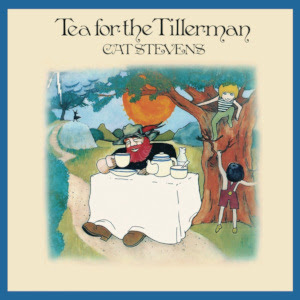
The 500 - #208 - Tea For The Tillerman - Cat Stevens

 I was inspired by a podcast called The 500 hosted by Los Angeles-based comedian Josh Adam Meyers. His goal, and mine, is to explore Rolling Stone Magazine's 2012 edition of The 500 Greatest Albums of All Time. 


Album: #208
Album Title: Tea For The Tillerman
Artist: Cat Stevens
Genre: Folk Rock
Recorded: Three Studios, London, England
Released: November, 1970
My age at release: 5
How familiar was I with it before this week: Quite
Is it on the 2020 list? Yes, at #205, up 3 spots
Song I am putting on my Spotify Playlist: Where Do The Children Play?
I am delighted to announce that, for the fourth year in a row, a student from the Grade 7 class with whom I work has volunteered to write a guest post. Each school year, typically around January, I share my 500 project with the class. I often use it to amplify the importance of coordinating with a peer editor to improve written work. I will show them my initial draft and then a version with the suggestions my father, a former professional writer, has shared.

This year, as June approached, I had no takers and I thought I would have to let it go. However, in mid-May, Umar approached me to look at the list. There were about nine choices available before the end of the school year and, after a short discussion, he selected Tea For The Tillerman from Cat Stevens. Umar was already developing into a strong middle school writer. As you will see, he makes even further strides with this piece. Upon reading it, my father sent me the following message...
"MARC. UMAR SHOWS EARLY PROMISE OF BECOMING AN EXEMPLARY WORDSMITH AND MUSIC AFICIONADO. HE OBVIOUSLY HAS A GOOD HEAD ON HIS SHOULDERS TO CONTEMPLATE AND ADVANCE IMPORTANT ISSUES. WELL DONE, YOUNG MAN. "
So, please enjoy this guest post from Umar.

Hey there, I’m Umar, a Grade 7 student. Today, I want to take you on a journey through the soothing melodies and thought-provoking lyrics of Cat Stevens' fourth studio album, Tea For The Tillerman.
Umar (September, 2023)
As we embark on this adventure called life, we're constantly seeking meaning and understanding about the world around us. Stevens' music speaks to this universal quest for knowledge and enlightenment, with the goal of resonating with us on a deeper level.

Released in 1970, Tea For The Tillerman quic
kly became a beloved folk rock classic, enchanting listeners with its introspective themes and captivating melodies. Stevens, later known as Yusuf Islam, crafted this album during a transformative period in his life, and it explores themes of spirituality, identity, and human existence.
Cat Stevens (1969).
When I first heard the name Tea For The Tillerman, I had no idea what it meant. I thought maybe a “Tillerman” was an actor or musician, and the tea was to please him. After my research, I came across the meaning of “Tillerman” which (in this context) is a man who steers a small boat. The idea of the title is that there is no one to steer the boat if the “Tillerman” is drinking his tea. In my opinion, this is a metaphor. Like a boat on open water, the events in a person’s life can change when they stop steering their boat.
An example of a wooden "till" at the back of a boat.
Stevens himself is an interesting man. One obvious example is his decision to change his name – twice. Born Steven Demetre Georgiou, he realized that his birth name made it difficult to get performance gigs, so he changed it to something easier to say and remember – Cat Stevens.

Then, in 1968, the pressure of touring and the challenges of living a celebrity life took its toll and Stevens fell sick with a potentially fatal diagnosis of tuberculosis. The illness put him in the hospital for months. It was then that Stevens began a journey of reflection and prayer.
Stevens writing music while recovering in hospital (1970).
When Stevens recovered, he had a different perspective on the world and changed his music considerably. He wrote some 40 songs that reflected changes in his personal life. His music was calmer and meaningful, while his lyrics gained subtlety and a mysterious touch. In his private life he began to explore a variety of spiritual paths.

I believe Stevens decided to change his music so much during this painful period because he realized how fast life can be taken away and he realized, like we all should, that it can’t be taken for granted. I think he recognized that life is short and fulfilment at the end is important. You might say he viewed leaving that hospital as a rebirth, and a second chance for a mindful and fulfilling existence.
Tracks such as Father And Son and On the Road To Find Out capture the essence of adolescence, with its mix of excitement, confusion, and longing for independence. These songs remind us that it's okay to question authority, to forge our own paths, and to embrace the journey of self-discovery, which is something that was important to Stevens.
In 1977, Stevens received a Quran from his brother who had been on a trip to Jerusalem. After reading it, Stevens converted to Islam and changed his name to Yusuf – the Islamic equivalent of Joseph. because he related to the story of Joseph told in the Quran.
Cat Stevens/Yusuf Islam reading a book at a coffee shop in Dubai (2007).
Stevens has definitely had an amazing and fascinating personal life but he has also had a fantastic musical career. When I first listened to this album I was amazed. My favourite song is Where Do the Children Play?
Where Do The Children Play? Single album cover.
This remarkable song showcases Stevens' songwriting talent. Initially, it presents itself with soothing music—a gentle guitar, soft keyboard, and a hint of bass. It might deceive you into thinking it's just a peaceful tune with a happy message. However, as you pay closer attention to the lyrics, you'll find it's much more than that. Where Do the Children Play? is actually a protest song, raising important questions about the future of our children in a world consumed by technological progress. It suggests we should make sure kids have space to play and where nature will find its place in the middle of our rapid technology advances. Despite its serious message, the song remains beautiful, thanks to Stevens' heartfelt vocals and guitar playing.
This song reminds me of daily life when I often see young people consumed by screens on their laptops, televisions, phones and even watches. This is now considered normal behaviour and I wonder if technology is stealing part of our childhood. But, anyone can be addicted to a screen, no matter what age. It is interesting that Stevens wrote it about the technology of the early 1970s, but it still applies today.
As I mentioned previously, this song is a “protest song” which means the theme is Stevens’ commentary on the world and how things need to change. I would go further and say the entire record is a protest. According to my research, Stevens became vocal about many social issues. Later in his life, he appeared at actual protests. and He and his wife created multiple charities to support people, particularly children in war-torn countries.
Small Kindness charity logo - founded
by Yusuf to help the most vulnerable 
victims of war.
In conclusion I was honestly surprised by this album. When I chose it from the list Mr. Hodgkinson showed me, I had no idea what it would be like. To be fair, I wasn't sure I would even enjoy it. However, that was definitely not my experience. I would absolutely recommend listening to album #208 on The 500 - Tea For The Tillerman by Cat Stevens…aka Steven Demetre Georgiou aka Yusuf Islam.

Thanks for reading.

-Umar