Monday, 3 July 2017

Keep on Truckin'

On Thursday, June 29, I spent my last day at Eagle Heights Public School as a member of the staff. I walked to school in the morning, leaving early so that I would have time for a coffee and the opportunity to reflect. It was a spectacular morning, with a bright summer sun illuminating an impossibly blue sky. Perhaps, I am romanticizing a typical Ontario morning in June. In retrospect, I think I may be personifying an optimism that I needed to embrace that day.

Many teachers will agree that the final day of a school year brings with it a strange energy - a deliriously heady mix of excitement, nostalgia, anticipation, trepidation and resolution. It is a place of wild dichotomy, where a year’s worth of structure seems to come undone. Emptied desks, blank bulletin boards lead to backpacks stuffed with memories and mementos. An odd community where wild packs of exuberant ten year old boys, drunk with summer excitement, might race past hugging congregations of weeping grade 8 girls, some still clutching day old graduation bouquets.

This year, more than others, my ballasts were swayed by this turbulent sea. Unpredictable waves of wistful reflection and hopeful optimism swept over me throughout the day. At the morning assembly, two of my closest colleagues shared kind and honest words about me as I looked across an ocean of familiar faces. I was suddenly aware of how many students have passed through my class, or been on a team I have coached, during my six year stay.

My current students were wonderfully kind. Their sweet words, hand-written letters and determined hugs were a bittersweet reminder of the change that was ahead. I had a much needed laugh when one student said, “I hope you like your new job, but not too much - and you can come back and teach us in Grade 7”. My wife reminds me that I say this every year...but, they really were a great group of kids who made me a better educator.

The momentary calm after the final dismissal bell was short-lived. Staff members quickly scattered to predetermined locations where they met in groups of four. The annual Eagle Heights Road Rally was about to begin. Our team’s theme was “Sensing the Seventies” and I made the practical decision to dress as a 70’s basketball player because … shorts! My teammates rocked everything from platform shoes to tan coloured cullottes with yellow socks.  
Me and Captain Canada 

We raced around the city (respecting traffic laws, of course) guided by a list of eclectic instructions. This was, in many ways, a recipe for competitive mayhem. We were tasked with gathering as many peculiar items and intentionally choreographed, but comically ludicrous, photographs as we could before travelling to the party headquarters by the 5:30 deadline. It was the perfect distraction.

The evening featured lots of laughter, a great meal, sing-a-longs and speeches. It was a chance to reflect on the past while receiving and sharing well wishes for the future. I left at a reasonable time. A new chapter in my educational career would begin the next day and I wanted to be rested. Even though I am excited about my future, I will miss so much about Eagle Heights. I grew tremendously as an educator and a person over the past six years. I have such great respect for the wonderful colleagues with whom I worked. I am not sure if I conveyed that fully when I made a brief speech after dinner. I guess I am still not sure it has fully registered. I suppose, I'm still adrift, sailing between two ports and adjusting to the winds of change.

Saturday, 24 June 2017

Listen to the Music - Part 2

In my last post, I introduced my approach to music in my classroom and the “eight song bracket challenge” my students and I explore throughout the year. In this writing, I would like to share the story of an unexpected opportunity that resulted in an authentic conversation and a positive outcome.

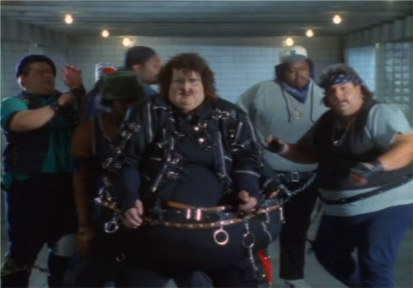
Recently, the students wanted to look at eight songs by Michael Jackson and have them square off in the challenge.  For fun, I decided to share “Eat it”,  the ‘Weird Al’ Yankovic video lampooning Jackson’s “Beat it”. It was wonderfully well received and I squeezed in a quick lesson on parody, particularly focusing on the notion that the individual being satirized would be more flattered than offended. I currently have a group of boys who have a fascination with “pranking”. They are, as one might expect, still learning that a gag may not always be harmless, or be received as it was intended.

A few weeks later, we watched the “Bad” video - which is actually an 18 minute short film directed by Martin Scorcese. It generated lots of talk. There were some obvious commentary about how it hadn’t aged well, but we also discussed street violence, crime and poverty. We even brushed up against  the idea that we all wear different masks for different people in order to feel safe or belong.

It was around this time that I remembered that ‘Weird Al’ had a parody video called “Fat”. When the video was released, in 1987, I was working as a bartender at a pizza joint. There was an upbeat cook who would parrot lines from the video, peppering them comically into his daily kitchen banter. Consequently, I only remembered the song as being tremendously funny and hysterically quotable.

Al.jpg

Thirty years later, I reflected on things differently. The song, although clever, could easily be seen as staggeringly cruel to people who were obese. I realized that endorsing it as “great comedy” would not be appropriate and I debated moving on. However, I also reflected on a mantra from the world of improvisational comedy.

“There are no mistakes, only opportunities”.

I decided to turn the wheel of my pedagogical car into this skid, and embrace this situation head-on. I showed my students the video without giving them any preamble. We then looked over the lyrics. Then we debriefed.

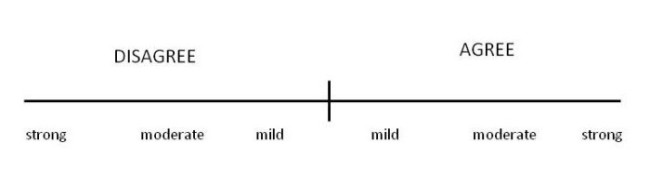
I began by asking the students to gather at the front of the class to show a continuum. We have done “opinion continuums” before, so they were familiar with the process.  


At one extreme was a space for students who felt the song and video was “totally fine, just good fun and not a big deal”, and at the other end was a space for students who felt the song was “inappropriate, clearly body-shaming people who were overweight”.

Interestingly, 94.7% of the class (19 out of the 20 students who chose to participate) gathered on the “totally fine/good fun” side, with 12 putting themselves near the most extreme end. The message was clear. Overall, the students did not think this was a big deal.

We then had a discussion.

  • Students openly shared their opinions about their position. Several suggested that "people were fat by choice" and that "it is okay to make fun of fat people because they are funny."
  • I floated the idea that other factors could contribute to obesity, including
    • Poor food options in childhood due to poverty.
    • Mental health issues, like depression leading to overeating.
    • Physical health issues, like issues with the endocrine system.
  • I asked them if their opinion would be different if we had a student in the class who was obese?
  • I asked them if their opinion would change if it was, equally cleverly written, but called “Black” or “Gay”?

There were some great ideas shared and the conversation was lively. My students, who are nearing Grade 6, are starting to become more aware of social charged topics. Their world of black & white truths are starting to bleed into an intricate mix of grays. Being part of this process with them is as wonderful and important as it is complex and delicate.

We returned to the opinion continuum after the discussion. This time we self-evaluated our choices before and after the chat by completing a Google Form anonymously. The results are here. As you can see, most students moved toward the opposite end with 26.4% recognizing it as some degree of insensitive, 31.6% in the middle and the remaining 42% still seeing it as a lesser degree of “just fine/good fun”.

Some final thoughts and questions


  • I am constantly amazed at the great things that can come out of a simple idea.
  • I sincerely feel that this activity made my students kinder, more thoughtful & considerate about the feelings of others.
  • There are some who might argue that I am using my position of authority unfairly. That, perhaps, I am trying to create "soft liberals". Students who will become overly concerned with Political Correctness & stereotyping while learning to be afraid of free speech.  I’d like to tackle that in Part 3 of this blog series - but that might be too big a nut to crack in a forum like this.

Thursday, 22 June 2017

Listen to the Music - Part 1

I love to incorporate music into as many lessons as possible. I try to have music playing during every work period. This year, I am responsible for about a third of the music instruction with the rest being covered by a rotary music teachers.

When I volunteered as a (very) late night DJ at a University Radio station, I picked up a rule that I still apply in my classroom today.

We can listen to anything that was not released in the last 12 months.


That radio station, CHRW 94.9 FM at Western Ontario,  still celebrates “a mandate to look outside what commercial radio stations and CBC are doing” on their home page.

My Grade 5 students are just at the point where they are discovering commercial radio and are defining their own taste in music. Consequently, I want to provide them with a rich & expansive buffet from which to choose.


Our musical choices come from many sources…

  • They can be curriculum inspired, Pump it Up by Elvis Costello & the Attractions was picked as a theme song by the group presenting their Cardiovascular System Talk Show.
  • They can be selected for practical reasons. Perhaps, they are simple enough for me to play on the guitar or ukulele. “Ahead by a Century” was our entry into the Canadian Music Class Challenge this year.
  • They can be situational. We looked at the music of Chris Cornell when he passed this May.
  • They can be selected through student voice. We often take a vote and pick a genre of music that we want to explore. This year, for example, we did New York Songs, Funny Songs & Hip Hop to name a few.


To facilitate this exploration, we select 8 songs from the artist or genre and then have them do battle, bracket style, to determine a winner. This is an example of a Knockout Bracket that we completed when David Bowie passed in January of 2016.


We put the songs up, head-to-head, using the Polls feature in Edmodo and voting (which is optional and anonymous) takes place each night. This is an additional tool to get the students onto the Edmodo (a teacher moderated and student safe Facebook-like environment) where they can chat and share opinions, building both their literacy and social media skills.

My 2016-17 class is currently in the last 5 days of school and we have reviewed the 32 entries on the Class Song List we have curated over the past 10 months. Spotify has made it easy for me to make the playlist that is the soundtrack to our year.

The songs are currently going head-to-head in an elimination bracket similar to the NCAA Basketball Tournament (aka: March Madness) format to determine our Song of the Year. At the time of this writing, we are into the Elite Eight and there is much debate about the eventual winner.

There was also agreement that ...
1.) We covered music from many decades (even centuries with our Genius Hour Mozart Soundtrack)
2.) We covered music from a variety of genres (Beatles to Reggae, Cajun to Hip Hop, Pink Floyd to Taylor Swift).
3.) It is okay to say that something "isn't my cup of tea", but we reserve the word "hate" for things like racism and war.
4.) It really was a good idea to look outside the music from commercial radio,


In Part Two - I will discuss how looking at a parody of a Michael Jackson song turned a potential mistake into a great, teachable opportunity.


Tuesday, 16 May 2017

Scratch and Grade 5 Triangles - TLLP Activity 3


This is the third in a series of blog posts connected to the Teacher Learning and Leadership (TLLP) I am part of. Our goal was to “Investigate ways that students can use Computational Thinking, across the Curriculum, to problem solve, create and remix - maximizing available technology.”
I need to thank Cliff Kraeker @kraekerc for the genesis of this idea. A colleague was using part of his Coding Quest Education Program and I made some variations to the lesson for my Grade 5 class.

Curriculum Connections - Grade 5 - Mathematics (Geometry)

By the end of Grade 5, students will:

  • identify triangles (i.e., acute, right, obtuse, scalene, isosceles, equilateral), and classify them according to angle and side properties
  • construct triangles, using a variety of tools (e.g., protractor, compass, dynamic geometry software), given acute or right angles and side measurements

Procedure (Over several periods, depending on knowledge and understanding)

1./ My students were familiar with the different triangles and most could already name them all. Experiences in earlier grades were obviously paying dividends. The review period for the terms (acute, right, obtuse, scalene, isosceles & equilateral) were quick. A brief review of an interior measure of an angle and an exterior measure of an angle is also helpful.

2./ We did a paper cutting activity where students were encouraged to make a large triangle of any kind on a standard sheet of paper. We cut the triangles out and then cut each corner off on a slight curve. We assembled the curves together and, in every case, we formed a rudimentary semicircle. The following guiding questions helped them come to some realizations
  • How many degrees in a circle?  What about half a circle?
  • If all of us could make a half circle from the corners or our unique triangles, what does the tell us about all triangles?
  • If an equilateral triangle has three corners with interior angles that are the same, and they add up to 180 degrees...What will each corner measure?
  • If a right triangle has a corner that measures 90 degrees - what do the other two angles measure? BONUS: Is a right triangle always an isosceles triangle?
  • If an isosceles triangle has two angles that measure 80 degrees, what will the third be? How do you know?

3./ As a kinesthetic learning activity students put a strip of masking tape on an open floor space. One partner walks the tape and turns his/her body to begin to walk an equilateral triangle at the corner (vertex). Before continuing, they must answer the question.

How many degrees did I turn my body? Was it more than 60 degrees? Was it more than 90?
 
The realization that they actually turned 120 degrees is an important one for the coding they will eventually do in Scratch. The interior angle is 60, but the person, or pen or coded line actually turns the distance of the exterior angle. The activity can continue as students explore the space for isosceles, right, scalene, obtuse and acute triangles. In previous years. In previous years, I would encourage them to mark the sides with masking tape - but this did not serve to enhance their understanding and took up too much time...and tape.

Coding with Scratch

The students are shown the following example.

However, it is paused after the Equilateral Triangle is shown. Expectations are discussed.

  • Using any sprite and the pen tool, create three different triangles.
  • Using the “say” function - provide your viewer with information about the triangle.
  • You must provide at least 3 truths about the triangle - but you can add more.
  • Use any background and feel free to add sound effects.
  • You can record your voice reading the information that you are “saying” on screen.
  • You can work with a partner, but must do an equitable amount of the work.

Students exceeded expectations, as seen here and here

The part they liked the best - beyond the absence of boring worksheets.

  • They got to choose which triangles they would share.
  • There was flexibility on the information they chose to share.
  • They liked the challenge of the scalene triangle.
  • They liked the freedom to add music, moving images, colourful backgrounds.
  • They loved working with a partner.

Differentiation

  • Struggling students were allowed to use a large section of my code and remix it.
  • Students with limited proficiency copied code from handouts, and were encouraged to look for patterns that could be duplicated.
  • Students comfortable with the program created it on their own - referencing my code when necessary.
  • Advanced students were encouraged to find a more interesting approach to the code and the final product or to find a different way to code it.

We shared our final products on Edmodo in order to allow other students to offer positive feedback.

Hints (Or Problem Solving Opportunities for them to debug)

  • Show them the “Clear Graphic Effects” and “Clear” option that starts their program.
  • Remind them that their Sprite needs to be reset with “Point in direction 90” - otherwise, they can’t test and debug as they are building their script.
  • Suggest that they start their first triangle well away from a central location - this will allow them room for the other two.

Have Fun - I think you will enjoy seeing and evaluating the results.

A Report Card comment could read:

"Name was able to construct and identify a number of different triangles according to angle and side properties using dynamic geometric software with (insert modifier here)."

Thursday, 11 May 2017

The Health Curriculum and Why Parents don’t need to worry (as much).

Open Letter to My Grade 5 Parents:

We are about to start our Health Unit on Human Development. This is often dubbed the “Sex Ed” curriculum and is the one that has created concern for some parents. Please realize that much of that concern is because the facts have been misrepresented. Last year, I read a note that was being circulated in my community. I was shocked to see how much it distorted the facts. It seemed as if it was intentionally designed to frighten parents about what will be covered in class. Hopefully, I can alleviate any concerns with the following information about the specifics of the Grade 5 curriculum.


Look here for more information (Pages 160 - 162 on the PDF).


First off - the curriculum did not change much in Grade 5. There is a lot of information out there to suggest that this is an entirely different program - it is almost the same as it was 20 years ago.


Here is what it said in 1998 (When I taught my first Grade 5 class)
  1. describe the secondary physical changes at puberty (e.g., growth of body hair, changes in body shape).
  2. describe the processes of menstruation and spermatogenesis.
  3. describe the increasing importance of personal hygiene following puberty.


Here is what it says now
  1. identify the parts of the reproductive system, and describe how the body changes during puberty.
  2. describe the processes of menstruation and spermatogenesis, and explain how these processes relate to reproduction and overall development.
  3. describe emotional and interpersonal stresses related to puberty.


Some other facts to put your mind at ease


  • We just finished a unit on human body systems and have already talked about a lot of our inner workings (including all the less pleasant parts of our digestive system). Consequently, the students are familiar with the fact that we talk about the human body like scientists - uncovering the secrets of many systems that help us function.


  • Remember that the curriculum is not delivered by a robot. There is a caring, responsible adult who exists between the curriculum and your student. I want your student to be an informed pre-teen who is prepared for the changes that will happen in their bodies. I want them to be considerate, compassionate citizens who will treat others and themselves with respect, patience and kindness. I take great care to craft my lessons and presentations in a way that is honest and as comfortable as possible.


  • For you, the curriculum is about your kid, but it is actually written for all kids. Specifically, it written to provide important information to children who would not get this information outside a classroom. A young person’s best advantage when navigating the pitfalls that come with a changing body is knowing the facts. Life changing, and even life ending, mistakes are best prevented by education.


As a final note, I will understand completely if you wish to remove your student from class during these lessons. It is your prerogative to provide this education to them in the way in which you see fit. Drop me a line, and I will let you know the exact periods (to the minute) in which this instruction will take place. You will need to sign your student out at the office and return them for the next period if possible.


However, I will warn you that they will likely ask their friends what was said while they were away. They are naturally curious - which is one of their greatest gifts. I would much prefer that they hear the facts directly from me and not second-hand, through the filter of students who, themselves, are just becoming familiar with this new information.


Sincerely,


Marc Hodgkinson
Grade 5 Teacher

Wednesday, 10 May 2017

Haiku Coding Activity for Grade 5 -TLLP Activity 2

This is the second in a series of blogs connected to the Teacher Learning and Leadership (TLLP) of which I am a part. Our goal was to “Investigate ways that students can use Computational Thinking, across the Curriculum, to problem solve, create and remix - maximizing available technology.”


I need to thank Scott McKenzie @ScottMcKenzie27 for this great idea. He let me know that he got it from Kim Gill @Gill_Ville. Regardless, I am sharing it because it has so many great curriculum connections and it really "bumped-up" a Haiku activity that had gotten stale for me.  Additionally, it allows even early English Language Learners to experience wonderful success.  Finally, there are some great connections to decomposition in Computational Thinking.


A few Curriculum Connections taken from Ontario Grade 5 Writing


1.1 identify the topic, purpose, and audience for a variety of writing form.


1.2 generate ideas about a potential topic using a variety of strategies and resources.


2.6 identify elements of their writing that need improvement, using feedback from the teacher and peers, with a focus on specific features.


2.7 make revisions to improve the content, clarity, and interest of their written work, using several types of strategies.


2.4 use sentences of different lengths and structures.


3.8 produce pieces of published work to meet identified criteria based on the expectations related to content, organization, style, use of conventions, and use of presentation strategies.


Procedure


1./ Introduce Haiku to students by way of this book “Guyku: A Year of Haiku for Boys” by Bob Raczka and Peter H. Reynolds. This makes the idea of this poetry more accessible to boys who are, sometimes, a little more reluctant to create poetry. There are also some great resources and activities at that website.


2./ Allow the students the opportunity to recognize the pattern themselves? What do all of these poems have in common? This is decomposition - the first step in Computational Thinking.


  • Three lines - not rhyming.
  • 5 syllables followed by 7 syllables followed by 5 syllables,
  • Each poem tells a short story or has a complete idea.


3./ Lots of scrap paper, pencils and GO!  

  • Let them create.
  • At least three is the expectations, but there is no limit on creativity.
  • Reinforce the idea of tinkering - massage the language to get more from less.
  • Encourage sharing and, most importantly, syllable counting and checking.


4./ Have them select a favourite and present it using two sprites on Scratch. One sprite to read the poem, while the other claps or drums or meows the syllables. Additionally, they are to add a variable counter for Haiku Lines and Syllables.  


My students were familiar with Scratch, but at different stages of proficiency. My mid-year arrivals are still beginners, while others in the class have long since eclipsed my skill level.


I used this example as a guideline. It also provided me with a comfortable way to introduce the upcoming Health Unit on Human Development and Puberty.


  • Struggling students were allowed to use my code and remix it.
  • Students with limited proficiency copied code from handouts, and were encouraged to look for patterns that could be duplicated.
  • Students comfortable with the program created it on their own - referencing my code when necessary.
  • Advanced students were encouraged to find a more interesting approach to the code and the final product.


We shared our final products on Edmodo in order to allow other students to offer positive feedback.


Here are some examples.  Nevaeh's Haiku Diya's Haiku Hadil (ESL) Haiku


Have Fun!