Saturday, 8 October 2016

The Homework Conundrum Revisted

A little over a year ago, I waded into the homework debate with a blog I dubbed "The Homework Conundrum". In it, I weighed the pros and cons behind a teacher’s decision to give homework and tried to demonstrate, through numerous links, that there is much debate. I tried to explore both sides with an open mind and agreed that compelling and convincing arguments abound. Ultimately, I presented my case for providing students with relevant, meaningful and flexible homework options. I chose to make homework mandatory on weeknights (Monday to Thursday) so parents would never be uncertain if it was assigned.


I look back on the evidence I provided to support this decision and still believe that it holds water. However, as I embark on another year teaching in the Junior Grades, I have reconsidered my approach again. This year, I have decided to leave the option of homework with the students and their parents. To that end, I am providing multiple opportunities for students to enrich their learning with meaningful tasks that will build important skills but, none of it is mandatory. In other words, I am trying to satisfy everyone. I’ll try to illuminate with three examples.

Scenario 1
Nina’s family is very busy every night of the week. She is a competitive swimmer and is also taking piano lessons. Her two brothers play hockey for different teams and both take violin lessons. Her mother’s job takes her out of town frequently; consequently, her father spends most nights shuttling his kids to different venues while scrambling to make sure all three get a healthy dinner. Academic success is a priority for the family but, additional homework is sometimes a burden.

Scenario 2
Sam’s family believes that homework is an essential part of education and one hour is put aside each evening for this purpose. Sam’s parents have often asked his teacher for more homework when he comes home with only a book to read. They want him to develop the "habit of homework" in preparation for high school and post-secondary success. They also set the bar high for him and want him to develop excellent numeracy and literacy skills. They sincerely believe that extra practice every evening will increase his competence and the likelihood of his academic success in the future.

Scenario 3
Home life for Tyler is challenging. He is being raised by a single parent who is struggling with mental health and addiction issues. There are financial issues in the home because his parent can not work and, he does not always have access to the internet or a working computer. Additionally, he is often forced into the role of caregiver for his younger siblings. Sometimes, there is nothing to eat and he needs to walk to the local church to gather a bag of non-perishable items from their food bank. Regular completion of homework is an unreasonable expectation for him.

I gave more thought to these three scenarios and applied the “perfect” homework solution outlined in my previous post. I realized quickly that it only worked effectively in one of these situations and I was forced to admit that, increasingly, these "ideal" scenarios are a less common. I reflected on each fictional student's arrival in class the next day.
  • Sam would be beaming - his homework tucked neatly in the front of his planner. He has satisfied both his teacher and his parents. 
  • Nina would have her work completed too - slightly wrinkled (like her weary eyes) from its completion in the stands at a chilly arena in a different town. 
  • Tyler, equally exhausted, would shuffle in quietly armed with only the knowledge that he had failed meet classroom expectations, again.
Now, I realize I am painting some extreme scenarios and any teacher worth his salt would have developed an alternate, supportive plan for Tyler. Regardless, I now believe that mandatory homework does not work in enough situations to justify itself. Additionally, it is, too frequently, an unnecessary source of frustration for parents, teachers and students.

My Current Solution

Accepting that my teaching and systems are in a constant state of reflection and enhancement - I am currently approaching this by making relevant, meaningful and engaging homework a voluntary proposition. Nina and her parents can relieve themselves of this commitment on any night of the year while still having the option available to them on others. Sam’s parents are also sated by the many options available to their son on every night of the week - options that exceed “daily reading”.  Most importantly, Tyler’s arrival at school each morning is recognized as a success in itself.

What options are available?


Within the first month, I set students up an accounts on Edmodo - a safe, Facebook style, social media platform that allows us to share ideas and create discussions. This also provides me with a launching point for a raft of other free, online educational websites.


XTRAmath - a place for students to practice their basic computational skills. This site effectively removes "drill and kill" from instructional time.

Learn to Type - a website to teach keyboarding essentials through practice, tests and games.

Tween Tribune - thousands of news articles (updated daily to reflect current events) that can be leveled to readers from K - 12. Deeper thinking discussion questions are provided and answers can be posted in the classroom Edmodo page to encourage collaborative discovery.

Prodigy Math - a Pokemon style battle game that requires users to answer questions that are aligned with with the Ontario or Common Core curriculum. Teacher administrators can differentiate questions based on each user's ability and can align the questions to match the current classroom unit.

No Red Ink - Grammar basics (differentiated and aligned with instruction by the teacher) to make learning the fundamentals of language a little more fun.

Study Jams - 200+ video lessons on topics in Science and Math. A great resource for reteaching concepts covered in class and also a place to explore new ideas in a fun and engaging way.

Using Edmodo, I can quickly provide links to these websites and others to help students build their skills in multiple curriculum areas.  Additionally, I can pose questions relevant to current events or curriculum studies that students can explore. They are then provided with the opportunity to share their thinking with both me and their peers through Edmodo discussion posts. Later, in class, we can examine their ideas and allow others to participate orally in our discussion. Student voice is enhanced because each child is encouraged to post pictures, riddles, stories or links that will encourage collaborative online communication. In the past, my students have used Code.org and Scratch to create content that peers can play or even remix.

So far, things have been successful. Parents who are looking for additional homework are encouraged to investigate our Edmodo page with their student. Alternately, I can provide them with links through Class Dojo (which I use with them as a communication and sharing tool). My students have responded well and are many enjoy the opportunity to demonstrate their initiative and independent work habits by exploring these resources on their own. To foster this, I have created an Initiative Bingo Card for them to complete during the fall months.

I'll see you next year when I revisit this topic again.


Thursday, 25 August 2016

Don't ask your kids "How was school today?"


During the past twenty years of my teaching career, communicating with parents has become increasingly easier. In part, this is because experience has made me better at it. However, it is also because there are more quality online tools (and more parents who have access to communication technology).

Class Dojo is perfect for my Junior aged classroom and teachers in primary classes are exploring online portfolios through SeeSaw. Intermediate and Senior teachers find utility in programs like Edmettle or Remind.

However, invariably, the dreaded telephone call is a necessary means to an end. I do try to sprinkle in sunshine calls throughout the year to celebrate student achievements but, that is usually covered by my daily Class Story picture and update on Class Dojo. So, if I am calling home - it is probably to help problem solve a situation that, despite our best efforts, the student and I have not been able to resolve on our own.

Sometimes, the parent is expecting the phone call. That is always a relief and typically expedites the problem solving process. More often, parents are surprised by the phone call. That is not an indictment of their parenting - I get it - life is busy for all of us. Furthermore, it is my responsibility to keep them informed about their student’s progress. When I do reach a parent who is unaware of a problem, I frequently hear the following statement…

“I ask him every day - “How was school?” and he always says “Good.”


I can relate to their concerns. They feel they have been duped. Parents, like all of us, lead busy lives and they rely on their children to keep them informed about the day-to-day events at school. A blanket statement like “How was school?” is a parent’s way of quickly checking in.

I offer the following advice. Banish that statement.


It affords a child a one word response and, in the event that things are not going well, they escape the conversation and continue to fly under the radar. I’ll admit, I used the same tactic with my parents when they questioned me 30+ years ago - especially when I went through my skip classes to hang out at the mall phase in Grade 12.

Instead, may I offer these ten probing questions that you can ask your child. Each requiring a deeper, more meaningful response.

1./ What are you learning in math this week? Is it easy or hard? Can you give me an example of a question and show me how you solve it?

2./ What skills or games are you learning in gym? What do you like about them? What would you change to make them better?

3./ Is your teacher reading a book aloud to you this week? What book is it? Tell me about the story?

4./ Tell me about the last thing you wrote for your teacher? What made it easy or hard? Can you show it to me?

5./ Are you doing any science these days? Can you tell me three facts you learned in science?

6./ Are you doing any social studies these days? What is the coolest new thing you learned?

7./ Who did you have lunch with today? Tell me about your favourite friends at school? Is there anyone you are having trouble getting along with?

8./ What would you like your teacher to change? Is there something that could be done better? Do you want to write to them about it? I’ll help you with it.

9./ Have you been working on any drama, dance or art lately? Are you learning a new song to play or sing?

10./ Can you teach me 5 new words you have learned in French?

If you find that, on a regular basis, you can not get a good, quality response from your student. It is time to contact the teacher. There are a host of reasons why this may be the case and a meeting with your child and the teacher will get to the root of it quickly.

A final, additional benefit is this type of conversation is that it helps your student crystallize his understanding of new information learned at school. If he is asked to summarize facts or demonstrate skills from the day and explain them in detail - he is more likely to retain the information in the near future.

Here are the questions in a printable version that is perfect for hanging on the fridge. Good luck. Have a great year!


Wednesday, 24 August 2016

Wile E. Coyote - Computational Thinking Genius


Throughout the summer, I have been trying to learn more about computational thinking. It is a commitment I made to myself, and my peers, when we applied for a grant through the Teacher Learning and Leadership Program (TLLP). I detail the first steps in that journey here. Computational thinking is a way of approaching problems using key fundamentals from the computer sciences. A comprehensive explanation of it can be found at this site but, simplified, it typically involves decomposing a problem in order to see patterns that can then be used to create a method (or algorithm) for solving other similar problems. My team and I are attempting to “investigate ways that students can use computational thinking, across the curriculum, to problem solve, create and remix - maximizing available technology.” At least, that is a quick “elevator pitch” of our goal.
I have been learning a lot about coding - the lessons available at code.org, Code Monkey and Scratch have been invaluable … and a lot of fun. The connections to math and science are easy and obvious.  However, I did want to put more thought into how I might introduce computational thinking into my teaching of both art and literacy. Eventually, a podcast led me to an unexpected revelation  - The cartoon team of Wile E. Coyote and his fleet-footed nemesis Roadrunner. It struck me that this classic Loony Tunes cartoon could be used to help teach both minimalism and writing within a framework. This is because each episode of the cartoon existed in a universe governed by a specific set of rules. Eleven, well articulated guidelines developed by the show's creator and animation director Chuck Jones to be followed by his writers.  


The rules were as follows:


1. The Road Runner cannot harm the Coyote except by going "meep, meep."
2. No outside force can harm the Coyote -- only his own ineptitude or the failure of ACME products. Trains and trucks were the exception from time to time.
3. The Coyote could stop anytime -- if he were not a fanatic.
4. No dialogue ever, except "meep, meep" and yowling in pain.
5. The Road Runner must stay on the road -- for no other reason than that he's a roadrunner.
6. All action must be confined to the natural environment of the two characters -- the southwest American desert.
7. All tools, weapons, or mechanical conveniences must be obtained from the ACME Corporation.
8. Whenever possible, make gravity the Coyote's greatest enemy.
9. The Coyote is always more humiliated than harmed by his failures.
10. The audience's sympathy must remain with the Coyote.
11. The Coyote is not allowed to catch or eat the Road Runner.

So, here is my idea for a couple lessons and a culminating activity


The students and I could start by exploring the art work of well known minimalists (perhaps a few paintings by Yves Klein and Barnett Newman). Without introducing the term, minimalism, I will allow the students to decompose the art form to discover its essential elements. This interactive Google Slide could be shared with small groups for inquiry and discussion.

This will lead us to a brief discussion of minimalism - perhaps even investigating the music of modern composer Phillip Glass - and organize the rules that these artists embrace.

Once we have explored the elements of minimalism we will view two or three cartoons featuring Wile E. Coyote and the Roadrunner. The students will work in groups to determine the rules that they feel govern this cartoon world. I suspect that, after we debrief as a class and share our findings, we will uncover most of these rules through our own inquiry.

Students can now be tasked with writing their own episode - using either a script, storyboard or live tableaux format - respecting the rules decreed by Chuck Jones. As a group, they will present their script to the class. I will encourage them to explore as many Rube Goldberg-style devices as possible as their Wile E. Coyote character exhausts the warehouses at the ACME corporation. This video by the band OK GO is an additional way to introduce Rube Goldberg.

It will take a few test runs to formalize the efficacy of this series of lessons and activities. I will also fine tune it with the help of my TLLP team. In the end, I hope this serves to connect Computational Thinking to several Art Strands (Visual, Musical, Dramatic) and Literacy strands (Writing, Story Boarding, Oral Presentation) from the Ontario Curriculum.

As a side note, the funny pseudo-Latin names given to our titular characters (carnivorous vulgarus & acceleratii incredibus respectively) leads nicely into Grade 6 Science - Life Systems)


Monday, 8 August 2016

The Tragically Hip... in my hometown

Tonight, The Tragically Hip perform in my hometown of London, Ontario for the last time. I don’t have tickets. They proved too hard to secure through Ticketmaster and then, when made available through secondary providers like Stub-Hub, were far too expensive. That’s okay. I’ve seen them several times and the Canadian Broadcasting Corporation (CBC) will be broadcasting their final show live on August 20. Fittingly, it will be performed in the band’s hometown of Kingston, Ontario. Lead singer and lyricist Gord Downie was diagnosed with glioblastoma  - a terminal form of brain cancer  earlier this year. Consequently, this 2 month tour of Canada will be the band’s swan song.


I have always been a fan of “The Hip”. They were pure Canadiana and the riff-heavy “New Orleans is Sinking” was a staple on numerous mixed-tapes I made in the 80’s. However, over the past few weeks, I have been reminded how significant they were in the soundtrack of my 20's & 30's. I like a lot of music and my tastes are eclectic. Since escaping the tunnel-vision mindset of my youth, I have lived by the mantra that all music has value. (Well, all music that is made earnestly and passionately is of value.) Consequently, I listen to everything with an open mind and I don’t participate in Kanye, Nickleback or Bieber bashing. I simply gravitate toward the things I like most and The Hip has always had a place within that inner circle.


My first encounter with The Hip was entirely forgettable. It was the late 80’s and they were playing at a London bar called Call the Office. I was there, visiting with a friend who was about to board a train to Toronto. I paid no attention to them at all (a great regret). It was only their memorable name and later success that informs me that the event even took place. I vaguely remember wandering past the stage to use the bathroom. I am pretty sure they were playing a cover song - but, I cannot remember which one. I even left early - probably before the first set was completed.


It would be 1996 before I saw them again. I got tickets to the show at Cobo Hall in Detroit, Michigan. This would be the performance that was recorded for their live album “Live Between Us”. It was a fantastic show that was overshadowed by the theft of my wallet. I had placed my jacket under my seat, not realizing that there was access to it from the walkway behind me. It was frustrating but, not costly. I was out about $100. This was pre-9/11, so I breezed back into Canada without any identification. Simpler times. Now, when I listen to that live album I find myself preoccupied with the thought - “Was it during this song that the jerk took my wallet?”


In the last 20 years, I have only managed to see them a couple times more. I guess, like many, I assumed that I could always catch them on the next summer tour. Like warm weather, flip-flops, girls in sundresses and Dave Matthews - they are a mainstay of July and August in Canada.


I've always been a lyrics guy and Gord's poetry was, and is, a treasure for me to discover - again and again. It will always remain a gift that continues to give. I am still unwrapping rich, new substance in his words. From the haunting simplicity of Wheat Kings to the layered complexity of Nautical Disaster and even the clever humour of Poets, Gord created a tapestry of words that were both accessible and capacious. I loved that there was so much Canadiana in his writing. Gord found touchstones of my beautiful country in both familiar and obscure references that, for inexplicable reasons, resonate profoundly with me. Bobcaygeon, Bill Barilko, David Milgaard, Millhaven Maximum Security - Gord transported me to a place or time in Canada where I had never been and yet, felt like I knew.


I’ve been revisiting a lot of the band’s catalogue in the past few months. Gord’s lyrics take on a special power and significance when viewed through this current, tragic lens. I keep coming back to the song Ahead by a Century from the 1996 album Welcome to the Hen House. Twenty years ago, when I (foolishly in retrospect) felt like an old man, this song resonated in a powerful way. Today, the lyrics take on new significance in light of the situation in which I find myself - watching a gifted performer and writer say goodbye.


"First thing we'd climb a tree and maybe then we'd talk,Or sit silently and listen to our thoughts.With illusions of someday casting a golden light,No dress rehearsal, this is our life."


Thank you Gord.
May the road ahead be kind to you.

Wednesday, 20 July 2016

Twitter & The Lesson that makes me Cry

Recently, while facilitating a workshop with a group of colleagues, I was asked about the relevance of Twitter and how it might be used in the classroom. I took some time to share with them the importance of building a Professional Learning Network (PLN) and listed all of the positives that come with a Twitter presence.

  • It’s fun to follow people.
  • You can facilitate student voice.
  • It is a great source for news as it happens and therefore ...
  • ...it is a social disruptor and galvanizer (Arab Spring, Russian annexation of Crimea).
  • It is great for quick hits of Professional Development.
  • Great educators share resources all the time.
  • You can build a PLN specific to your interests and grade level.
  • A Principal may (should?) ask about yours in an interview.
  • It is ongoing evidence of your best practice - because you curate it.
  • If you follow comedians, you will always have timely jokes.
  • Growing your following rewards your ego (I’d like to say I am better than this … but I have learned that I am not)

When asked about using it in the classroom, I shared the unit that I have dubbed “the one that always makes me cry.”

One would think that, after delivering this unit more than five times, I would have developed a thicker skin. This has not been the case and I am now a firm believer in Andropause. My cynical and hardened veneer has increasingly been showing cracks.
  • I struggle through sad movies...particularly those by Pixar (The first 10 minutes of “UP” gutted me).
  • I more actively avoid media that is tragic and I have far more difficulty processing it when I encounter it.
  • I quickly block any Facebook post that is potentially disturbing (I’m looking at you PETA).

I recognize that this softer side is likely evidence of emotional progress and I realize I am genuinely sharing an empathetic aspect of my personality with my students. However, there remains a nugget of neanderthal masculinity buried deep within my amygdala that steadfastly cautions me - “Emotion bad! You strong! Make joke to relieve tension!.... Good ...now talk about sports!”


The Activity

It begins with an open discussion about the word “homelessness” using a strategy called Post it, Pile it, Pin it. I may start by showing a few photos of homeless people and ask my students to think about words, ideas or opinions that come to mind. They are encouraged to share with each other by writing down their ideas on a post-it note. Another member of the group can also post ideas that are shared orally. A pile of these notes is created in the middle of the table. Finally, the notes are brought to the front and pinned to a chart paper. This also serves to sort the responses because similar responses are grouped.
An updated “techy” version of this involves laptops and a virtual wall - through a program called Padlet.
Obviously, responses will vary but; my experiences have seen the words tend to fall into two categories. One group of posts will contain negative opinions which castigate the homeless (drunk, criminals, lazy, dirty, scary, drug-users). The other set tend to show more compassion or sympathy (misunderstood, mentally ill, helpless, sad, poor). It seems likely that the students are merely parroting opinions that they have heard from others (perhaps the adults in their worlds). The ultimate goal of the lesson is to help them discover their own opinion and move past stereotypes. The Ontario Grade 6 Health curriculum connections fit in nicely here.
C1.3 identify factors that affect the development of a person’s self-concept (e.g., environment, evaluations by others who are important to them, stereotypes, awareness of strengths and needs, social competencies, cultural and gender identity, support, body image, mental health and emotional well-being, physical abilities).
I do my best to list these responses without showing judgement. It is important that students feel comfortable sharing their opinions and we regularly talk about how our perspectives can change when we have additional information. At this point, I share the picture book “Fly Away Home” by Eve Bunting with them. Well, actually, because I struggle to get through it without blubbering - I show the YouTube video of it.

There are some great discussion points available and many students are able to make the connection between the symbolic escape of the bird and Andrew’s life. We can also revisit some of the post it notes and talk about which ones apply to the characters in the story.

The Twitter Connection

So, how does this connect to Twitter? That comes in the next step. I share the following video in which homeless people read mean tweets about the homeless.
It is powerful and requires some setting up (It can also make me weepy). The word “piss” is used. Consequently, that requires some editing or a class discussion about language before it is screened. I prefer the latter. Students respond positively to frank conversation about word choice and this can be empowering for them.
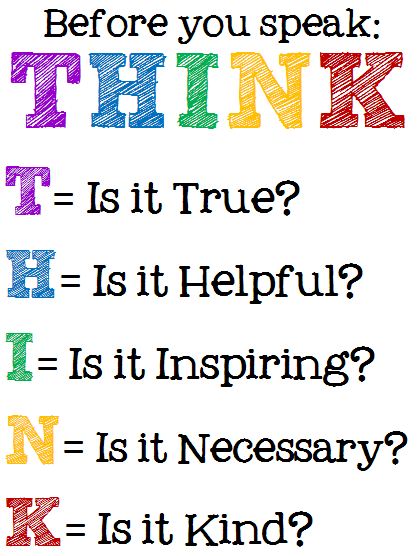
We have a discussion about Tweets, Twitter and Hashtags. We use Edmodo as a classroom forum; so, they are already well versed in Social Media etiquette, online bullying and the T.H.I.N.K. approach to posting.
Again, we can look at our pinned notes and reflect on stereotypes and empathy. I then present the following challenge.
In 140 characters, can you write a kind tweet about homelessness which includes a hashtag to identify it.

As a class, we brainstorm and choose a hashtag. Suggestions and past examples have included #KindnessCounts #EHStudentsCare (EH is Eagle Heights) #HelpHomeless or maybe #KindTweets4Homeless.

I provide the students with a strip of graph paper with about 140 boxes available. The students develop their ideas on scrap paper and then, once satisfied, print them out on the graph paper strip. I log on to my Twitter account and they are invited to type in their Tweets. I do ask that they call me over to confirm things before posting. Over the next few hours, we look forward to alerts that “like” or “retweet” our efforts at kindness.
If you would like to help us, drop me a line. It would be great to organize a day of kind tweets around a common hashtag. If not, look for our tweets this fall. I think I may take the coward’s route and encourage my student teacher to deliver this unit.
Good … Make joke...Sad feeling go back down!

Thursday, 14 July 2016

A Rough Guide to Genius Hour

After participating in professional dialogue at #PubPD last night, I stumbled upon a #2ndChat which broadcast the topic of #GeniusHour as its theme. I tried my first Genius Hour this past year and I still had some beer left in my can from the previous session (I couldn’t make it to the Pub in person, so I participated at home via Twitter). More PD seemed like a good idea, so I jumped into the second chat. 

As I answered questions and shared my experiences (140 characters at a time) I was approached by some of the participants who wanted to know more. We shared emails through Direct Message (DM) and I told them I would type up some notes and share some of the Google Doc resources that I had available. As I was typing them out I thought - Why not just write this in a blog… so, here we go.

Full details on Genius hour can be found at this site. There, they define Genius Hour as “a movement that allows students to explore their own passions and encourages creativity in the classroom.  It provides students a choice in what they learn during a set period of time during school.” The idea was spawned at Google who “allow its engineers to spend 20% of their time to work on any pet project that they want. The idea is very simple.  Allow people to work on something that interests them, and productivity will go up.” Consequently, it is sometimes called “20 Time”.


My colleague and I decided to try Genius Hour with our students this past January. He had a Grade 6 class and I had a Grade 5/6 class with about 28 students in each. Our school has many new Canadians and more than half our classes are composed of students learning English as a second language. Some are very new and needed support from our ESL teacher but, most are quite competent in their new language. However, a lot of the terms we planned to use were new to them or had nuanced meanings ("pitch", "genius", "passion", "grill"). Consequently, we included opportunities to teach these ideas and build comfort with these words.

Step One

We launched a discussion by showing the short film Caine's Arcade about a 9 year old boy who made a carnival style arcade using cardboard boxes and household objects. We talked about ...

  • “how cool” his idea was.
  • how it would be fun to make something, even if it was just for ourselves.
  • his “inspiration” and the idea of being "inspired to make something".
  • the terms “passion” and “passion project”.

Step Two

We took the kids to the computer lab and provided them with access to desktops and Chromebooks. With nearly 60 kids, we needed to have access to many devices so they could explore independently before sharing. They were asked to research the following by sharing this document with them through a Google Classroom link. To start, they were given 10 minutes to find out anything they could about Genius Hour, 20% Time or 20 Time Projects. After they explored, we mixed and mingled around each other's screens and shared our findings.

Step Three


The rest of that same document details a full introduction and a step-by-step guide (through questions) to make a plan for a passion project. It even includes a worksheet for deadlines.

Step Four

The students prepare a "pitch" using this Google Doc to guide them.

We let them work in small groups to practice their pitch and to ask each other probing questions to make sure that their Genius Hour plan ...

  • made sense (supplies were attainable and didn’t take up too much class space).
  • could be achieved  (was practical for a classroom environment).
  • would take approximately 6 hours (six - 1 hour blocks) to complete.

 
We also sent notes home to parents to let them know about this project. (We both use Class Dojo as our parent communication tool). We wanted parents to know that they may have to purchase some supplies or to dissuade their students from project choices if they were unable to provide these supplies.
 
Step Five
They made their pitch and were “grilled” by the teacher and students. We talked about “being grilled” in an interview. The “grilling” was good natured but important questions were asked. Some students did have ideas that needed tweaking. For example, one student wanted to learn how to “juggle" a soccer ball 25 times in a row using his feet. That was not something he could practice for six hours in a classroom. Instead, he compromised and chose to make an interactive Google Slideshow of the top ten greatest soccer goalies.

Step Six

We then blocked off 1 hour of time (every Friday during the first 100 minute block of the day) and launched our Genius Hour work time. For those who forgot their supplies, I prepared guided reading activities and I did some Diagnostic Reading Assessment. To create mood, the best of Mozart was played in the background. Students were reminded that they should be working quietly and independently. This did not have to be policed as engagement was high. After each Genius Hour block, students were given about 20 minutes to document their progress. I took photographs and shared them through Google Photo links on Edmodo. Some chose to write in journals and others used a Google Doc. Some even recorded a short speech about what they had done as a voice memo. This hodge-podge made it difficulty for me to evaluate their progress effectively.


Final Projects

After about 8 weeks (there were unavoidable interruptions) we shared our projects. Each class set up a make-shift Passion Project Museum that allowed visiting classes to wander through the exhibits. My students created video games, foosball tables, comic books, doll houses, desk organizers, board games and cardboard villages. One girl knitted a hat for her doll while several made interactive slideshows on subjects like "The History of Modern Dance" or "Sea Creatures of the Deep".

Next Steps

My teaching colleague has moved on to a new position but, I will try Genius Hour again. The changes I will make are as follows...
  • I will share pictures of the best examples from the previous year.
  • The notes I send home to parents will be more detailed and will let them know that they do not have to buy expensive supplies (other choices are available).
  • I will have students all use a Google Doc Journal to document their progress.
  • Progress updates will require a photograph and at least a single paragraph entry. I will provide them with feedback each week too.
  • I will make sure we have 6 consecutive Fridays available without interruption.
  • Spend more time on the idea of "passion". Some students picked things they "liked" but were not passionate about.
  • Encourage them to consider creating things that can be shared with the world to increase the likelihood of feedback.