Showing posts with label The 500 Greatest Albums of All Time.. Show all posts

Monday, 28 November 2022

The 500 = #289 - Something Else - The Kinks

I was inspired by a podcast called The 500 hosted by Los Angeles-based comedian Josh Adam Meyers. His goal, and mine, is to explore Rolling Stone Magazine's 2012 edition of The 500 Greatest Albums of All Time. 


Album: #289

Album Title: Something Else

Artist: The Kinks

Genre: Baroque Pop, Music Hall, R&B

Recorded: Pye Studios, London, UK

Released: September, 1967

My age at release: 2

How familiar was I with it before this week: One Song

Is it on the 2020 list? Yes, dropping to #478 (since 2012)

Song I am putting on my Spotify Playlist: Waterloo Sunset

For me, my friends and, I suspect, many people of my age bracket, our first exposure to The Kinks was by way of Van Halen’s version of You Really Got Me.
I was also familiar with the cheeky 1970 hit, Lola, by The Kinks –a somewhat controversial song which chronicled a romantic encounter in Soho, London, between a man and a trans-woman. Over the years, I have heard a handful of Kinks songs, with A Dedicated Follower of Fashion being my favourite. However, I never purchased a Kinks record and, until recently, had never listened to a Kinks album in its entirety.
The English band was founded by brothers Ray and Dave Davies while still in high school. Ray was 18 and Dave was only 15 when they began performing at school dances under the names The Ray Davis Quintet, The Bo-Weevils, The Ramrods and The Ravens.

The Davies line-up temporarily featured a 17-year-old Rod Stewart on vocals before he went on to form his own group, Rod Stewart and The Moonrakers, who became a local rival for pub gigs in the North London region. By 1964, the group comprised the Davies brothers (guitars and vocals), Peter Quaife (bass) and Mick Avory (drums). They also settled on the name The Kinks which was intended to garner them attention because of its slightly naughty connotation.
The Kinks (1965) (l-r) Quaife, D. Davies, R. Davies, Avory
The group gained international fame with the release of You Really Got Me in 1964 when they began heavy touring. The schedule was grueling and tempers soon flared. The most notable incident was an on-stage fight between Dave Davies and Avory at the Capitol Theatre in Cardiff, Wales. Frustrated by his bandmate's playing, Davies insulted Avory and kicked over his drum set. Avory responded by hitting Davies in the head with a cymbal stand, knocking him unconscious. Thinking he had killed the guitarist, Avory fled. Davies was taken to the hospital for 16 stitches. When the police became involved, Avory managed to avoid charges by telling them that it was "part of the show" and had just gotten a little out of hand.
Something Else By The Kinks (often shortened to Something Else) was the group’s fifth studio record. It became  the first of their three records to make The 500 list. It was a departure from their earlier releases which were more rock oriented. Something Else is considered baroque pop, a genre best described as a fusion of ornate and majestic styles from classical music, with rock and roll rhythms. Often, the harpsichord is included to create the classical effect. Legendary studio musician Nicky Hopkins was recruited to play this complex instrument on two of the tracks, Two Sisters and Love Me Till The Sun Shines. 
Hopkins (1974)
Something Else also features many of Ray Davies' introspective lyrics, including the only track from the album with which I was familiar, Waterloo Sunset. In the song, a solitary narrator is watching two lovers, Terry and Julie, passing over a bridge at sundown. The song is often studied in university arts courses and purportedly the lovers were inspired by Terence Stamp and Julie Christie who starred in the contemporaneously released film, Far From The Madding Crowd. Davies has dismissed the assertion, saying  the couple was inspired by one of his sisters and her boyfriend.
Music journalist Robert Christgau has called Waterloo Sunset "the most beautiful song in the English language" and Pete Townshend of The Who declared it a "divine masterpiece". Consequently, it was an easy pick for my 500 Spotify playlist. We'll be back with The Kinks in about eight months with album #258, The Kinks Are The Village Green Preservation Society.

Sunday, 12 June 2022

The 500 - #313 - MTV Unplugged In New York - Nirvana

I was inspired by a podcast called The 500 hosted by Los Angeles-based comedian Josh Adam Meyers. His goal, and mine, is to explore Rolling Stone Magazine's 2012 edition of The 500 Greatest Albums of All Time. 


Album: # 313

Album Title: MTV Unplugged In New York

Artist: Nirvana

Genre: Alternative Rock, Grunge

Recorded: Sony Music Studio (Live) - New York

Released: November 18 , 1993

My age at release: 28

How familiar was I with it before this week: Very

Is it on the 2020 list? Yes, #279 - moving up 34 spots

Song I am putting on my Spotify Playlist: Pennyroyal Tea (Selected by my brother (in-law) and Nirvana fan, Dan


Earlier this year, the Grade 7 students and I spent some time discussing leadership. I kicked off the conversation with a fascinating, three-minute TED talk video, featuring musician, author and entrepreneur, Derek Sivers.
Sivers speaks on the topic of "How To Start  A Movement '', while a grainy video of a young, shirtless, dancing man begins playing on a screen behind him. Although unseen, it seems likely that the "dancing man" is at a musical performance, gesticulating wildly and comically.
Eventually, he is joined by his "first follower" and it is here that Sivers advances his notion that "the first follower is actually an underestimated form of leadership in itself. It takes guts to stand out like that. The first follower is what transforms a lone nut into a leader."
As the video continues, two more people join the duo and are immediately embraced as equals by both the dancing man and his first follower. Quickly, they are joined by four more and suddenly there is a tide of recruits. "This is the tipping point", states Sivers, "as more people join in, it's less risky. So those that were sitting on the fence before, now have no reason not to. They won't stand out, they won't be ridiculed, but they will be part of the in-crowd if they hurry."
By the end of the video, less than three minutes after being introduced to our shirtless, dancing man there are literally hundreds of people participating. Sivers makes his final point:
"Leadership is over-glorified. Yes, it was the shirtless guy who was first, and he'll get all the credit, but it was really the first follower that transformed the lone nut into a leader. So, as we're told that we should all be leaders, that would be really ineffective."
I have used this video with students for more than a decade and it provides a wonderful launching pad for rich discussions about their interpretation of, and comfort with, leadership. Invariably, a student will ask a key question:
"What do you call someone who doesn't want to lead or follow?" 
I love this moment, because it organically transitions to a conversation about "The Contrarian". Instead of framing this reluctant individual as an antagonist or adversary to progress, I instead offer examples of people who took a contrary stance that propelled them to greatness:
  • Former World Boxing Champion Muhammad Ali's decision to abstain from participation in the Vietnam War, despite its resultant heavy fine, potential jail time and a ban from boxing.
  • India’s Mahatma Gandhi's opposition to tyranny through non-violent protest.
  • Astronomer Nicolaus Copernicus risking death by contradicting the Catholic Church's 15th Century belief that the earth, not the sun, was the centre of our solar system. 
Although not on the same scale, MTV Unplugged in New York is a ready-made example of a contrarian spirit.
Nirvana guitarist and singer Kurt Cobain
In 1993, Nirvana was the biggest band in the world. The three-piece alternative rock group from Seattle, Washington, were Kurt Cobain (guitar, vocals), Krist Novoselic (bass) and Dave Grohl (drums). Their second studio release, Nevermind, (#17 on The 500) had been selling over 300,000 copies weekly since its release two years earlier. It had also transformed the world of popular music. The hair-metal and stadium rock of the late 80s had been replaced by grunge. In a nutshell, grunge is a musical sound (murky, punk-influenced, and bleak), an attitude (cynical and non-conformist) and aesthetic (loose flannels, androgynous oversized shirts often cobbled together from thrift shops).
Nirvana is typical grunge apparel ]
(l-r Cobain, Novoselic & Grohl)
MTV (Music Television) was also wildly popular in the 1990s and their Unplugged Series had enjoyed tremendous success. The popular series showcased well-known artists performing their greatest songs in a stripped-down acoustic format. These were then released as audio versions which sold briskly, generating massive profits for the network.  The biggest, Eric Clapton's 1992 Unplugged performance,  sold 26 million copies worldwide.
All this information is important context. It can't be understated how monumental the Nirvana performance was to the world and how important it was to the executives at MTV -- executives who had not factored in the difficult and contrary nature of this cynical, frustrated group, who were on the verge of breaking up permanently.
  • Cobain was struggling with a heroin addiction, and rehearsals had gone poorly. There was grave concern that the performance would not meet expectations. The day before filming, Cobain refused to play as he struggled with symptoms of withdrawal.
  • The band rebuffed executive requests to play their biggest hit, Smells Like Teen Spirit, and instead peppered their set with lesser-known songs written by other artists including an obscure Scottish alternative rock band, The Vaselines.
  • The band had teased an appearance by special guests and speculation among the fan base was rich. Would it be one of the group's famous colleagues from the Seattle music scene? Eddie Vedder of Pearl Jam or perhaps Chris Cornell from Soundgarden? No. It was another obscure band from Arizona, The Meat Puppets. Moreover, Nirvana chose to play three songs from that group's second record, Meat Puppets II, ostensibly promoting it more than their own recent release, In Utero.

Meat Puppets II by Meat Puppets
  • Although his amplifier was slightly disguised on-stage, Cobain broke with Unplugged tradition by performing the David Bowie song The Man Who Sold The World as an electric performance.
  • After being denied permission to play their controversial song Rape Me, the band slipped in an even more disturbing song, Polly. This track, from their album Nevermind, is about a 1987 incident in Tacoma, Washington, where 14-year-old was abducted, raped and tortured with a blow-torch. The unidentified girl, named Polly, but only in the song, escaped. Her captor is still serving a life sentence.
Portion of the article from the Spokane Chronicle
  • Finally, when asked to return to the stage for an encore, the band flatly refused.
However, despite their contrarian approach to this recording, the performance received critical acclaim. Tom Hibbert of Q Magazine raved about the record, saying; it "possessed a ragged glory", while Rolling Stone writer Barbara O'Dair called it "stirring and occasionally brilliant" with "spare and gorgeous spots everywhere".

It was also a commercial juggernaut, selling over 310,000 copies in its first week, a record for Nirvana. It would go on to be certified 8x platinum (8 million copies sold) in the United States, with millions more sold world wide. It received a Grammy Award in 1994 and sits on The 500, at position #313 -- the only Unplugged record to make the list. After all, sometimes a contrary stance can launch you to greatness.

Sunday, 5 June 2022

The 500 - #314 - The Miseducation of Lauryn Hill - Ms. Lauryn Hill

I was inspired by a podcast called The 500 hosted by Los Angeles-based comedian Josh Adam Meyers. His goal, and mine, is to explore Rolling Stone Magazine's 2012 edition of The 500 Greatest Albums of All Time. 


Album: # 314

Album Title: The Miseducation of Lauryn Hill

Artist: Ms. Lauryn Hill

Genre: Neo Soul, Hip Hop, R&B

Recorded: Mainly at Tuff Gong, Kingston, Jamaica

Released: August, 1998

My age at release: 33

How familiar was I with it before this week: Very Little

Is it on the 2020 list? Yes, #10 - moving up 304 spots

Song I am putting on my Spotify Playlist: Superstar

While growing up in Newark, New Jersey, singer, actress, songwriter, rapper and multi-instrumentalist Lauryn Hill was "surrounded by music". Her mother played piano, and her father sang in nightclubs. "Records", she has said, "were played all the time", including classic albums from Stevie Wonder, Curtis Mayfield, Aretha Franklin and Gladys Knight. Hill fondly remembers repeated spins of Marvin Gaye's record What's Going On, until she fell asleep each night as a child. (#6 on The 500).
Marvin Gaye What's Going On, (1971)
When one listens to Hill's debut solo record, The Miseducation of Lauryn Hill, those influences are unmistakable. Critics have called Hill one of the greatest hip-hop artists of all time, and there is no denying her talent as a wordsmith and rapper. However, this record is so much more than that.

Miseducation is a genre-blending journey through reggae, rhythm and blues, hip-hop, jazz and soul. Furthermore, Hill is a rare talent in the world of hip-hop. She was responsible for most of the writing and production of the record. She also raps and sings expertly, navigating the two talents with enviable capacity. Her raps are stern, husky and powerfully confident, while her voice is sweet, angelic and tonally pure.
Hill (1989)
Although the record is essentially new to me, it was nevertheless a huge hit. I do remember hearing the song Doo Wop (That Thing) from my brief time working the bar at, Jack Astors, a casual dining restaurant and her beautiful rendition of Can't Take My Eyes Off You, seemed ubiquitous after exposure in the film Conspiracy Theory.
As a teacher, any record with the word “education” in the title will get my attention. Hill took the name from two sources:

  • A 1974, blaxploitation drama called The Education Of Sonny Carson which was based on the autobiography of  the titular character -- Robert "Sonny" Carson.

  • And The Mis-Education of the Negro by Carter G. Woodson from 1933, which inspired Carlson.

Carson, a Korean War veteran, was a controversial, racial civil rights activist and community leader in Brooklyn, New York. In the 1960s and 70s, he was best known for his public protests of the school systems in African-American neighbourhoods.
Movie Poster for The Education of Sonny Carson
Much of his revolutionary thinking was informed by the second inspiration behind the title of Hill's record -- the above mentioned seminal book by Woodson, an African-American historian and scholar.
In a nutshell, the central point of Woodson's book was that American schools did not teach black students as much as they culturally indoctrinated them to fit into white society. A conditioning, according to Woodson, that made them seek inferior places within modern society, while providing them with few tools to help their own communities succeed. Woodson is well known for the following powerful and thought-provoking quote:
"When you control a man's thinking you do not have to worry about his actions. You do not have to tell him not to stand here or go yonder. He will find his 'proper place' and will stay in it. You do not need to send him to the back door. He will go without being told. In fact, if there is no back door, he will cut one for his special benefit. His education makes it necessary."

My inquiries into Woodson led me to many articles, YouTube videos and TED Talks. I also reflected on a text that our school administrative team recently provided for our staff called Culturally Responsive Teaching & The Brain. It is a 2015 academic text written by Zaretta Hammond to help other educators "promote authentic engagement and rigor among culturally and linguistically diverse students".

I am hesitant to try to summarize the valuable lessons in Culturally Responsive Teaching for a couple reasons. First, I am still in the process of understanding this approach. As Hammond says, this is not an "off-the-shelf, plug-and-play program" to bring sudden, miraculous change a classroom. Secondly,
my blog does not lend itself to a comprehensive examination of Hammond’s views. Instead, I direct you to her book or perhaps this podcast where Hammond discusses four key misconceptions about this approach.
Cult of Pedagogy Podcast #78
However, I am most wary of being misinterpreted, particularly at a time when there is a hostile segment of contemporary society fixated, and wildly misinformed, on an upper-academic postulate called Critical Race Theory.

However, I venture to say, Culturally Responsive Teaching is not Critical Race Theory. And, to be clear, I am not teaching Critical Race Theory or (despite the efforts of some caustic, talking-head agitators) attempting to make any of my students feel as if they are inherently racist.

Daily, I see fellow educators work diligently to encourage every student to strive for success. We make readers and mathematicians, while fostering creativity through a rich exploration of the arts. We talk about science, history and geography, while also advocating good health and physical fitness. 

However, we also promote kindness, empathy and, perhaps most importantly, critical thinking. We want to graduate students who feel they belong, not just in their communities, but in a larger Canadian society -- a society to which they can contribute and improve.

Critical thinking is vital to success – and it can be applied to many of the ideas that Carson, Woodson, Hammond, and even Hill were getting at. How do we reach people so they can self-actualize, be successful and help themselves and others succeed?

Being responsive to the needs of learners is just good practice. For those who disagree, Hill’s plaintive stanza on the album's final, title track would break the heart of any educator who heard it from a student in their charge.

"My world, it moves so fast today
The past, it seems so far away
And life squeezes so tight that I can't breathe
And every time I've tried to be,
What someone else has thought of me
So caught up, I wasn't able to achieve."
I suppose, at our core, we all want to live up to the expectations of this well-known Peanuts cartoon panel.

On a side note, the Marvin Gaye record that soothed Hill to sleep as a child moved to position #1 on the 2020 edition of The 500 list; and Hill’s record has also made the top ten right alongside the Stevie Wonder (#4) and Aretha Franklin (#13) records she grew up with. That’s mighty fine company, Ms. Hill.

Also, I had no idea that Hill played troubled teenager and singer Rita in the movie Sister Act 2:Back In The Habit.


Sunday, 29 May 2022

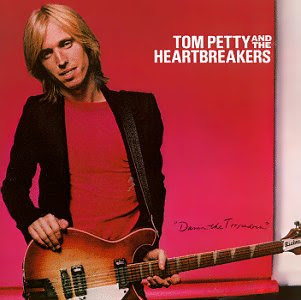
The 500 - #315 - Damn The Torpedoes - Tom Petty And The Heartbreakers

I was inspired by a podcast called The 500 hosted by Los Angeles-based comedian Josh Adam Meyers. His goal, and mine, is to explore Rolling Stone Magazine's 2012 edition of The 500 Greatest Albums of All Time. 


Album: # 315

Album Title: Damn The Torpedoes

Artist: Tom Petty And The Heartbreakers

Genre: Rock

Recorded: Sound City & Cherokee Studios, California

Released: October, 1979

My age at release: 14

How familiar was I with it before this week: Very

Is it on the 2020 list? Yes, #231 - moving up 84 spots

Song I am putting on my Spotify Playlist: Here Comes My Girl


On a chilly December afternoon in 1979, my family and I made our annual trip to Devonshire Mall in Windsor, Ontario, to do Christmas shopping. For the first time, I had my own money tucked into my jeans pockets -- about twenty dollars I had cobbled together from babysitting jobs and working the snack-bar at my high-school.


Before the family station wagon had come to a complete stop in the mall parking lot, I was already clambering out of my seat in a frantic effort to dash to the mall's record store. Sure, I was going to buy a token gift to put under the tree for my parents and siblings, but I had vinyl records on my mind.


Devonshire Mall (1970s)

Although I didn't have a turntable of my own, I was already building a record collection. My window on popular music was defined by two sources – the music guests on Saturday Night Live and Detroit FM radio stations. I had narrowed my Christmas choices to four fairly recent releases – The Pleasure Principle by Gary Numan; Candy-O by The Cars; Eat To The Beat by Blondie; and Damn The Torpedoes from Tom Petty And The Heartbreakers. After much deliberation, and a trip to the record department at the Sears store to compare prices, I settled on Candy-O. I can't remember the reason but I was 14, so I suspect the Alberto Vargas cover art had something to do with it.

I  eventually bought Damn The Torpedoes , and I remain a fan of Tom Petty (and those four other bands) to this day. The title is taken from a famous quote made by U.S. Civil War Admiral David Farragut at The Battle of Mobile Bay, "Damn the torpedoes, full steam ahead!"

Admiral Farragut

Formed in Gainesville, Florida, in 1976, the band originally comprised lead vocalist and guitarist Petty; lead guitarist Mike Campbell; bassist Rob Blair; drummer Stan Lynch; and keyboardist Benmont Tench. It was the third of thirteen records made by The Heartbreakers. Petty also released an additional three solos, but members of The Heartbreakers also contributed to those. In addition, Petty was part of the supergroup, The Traveling Wilburys, which included Roy Orbison, Bob Dylan, Jeff Lynne and George Harrison.


(l-r) Campbell, Blair, Petty, Lynch and Tench 

Over time, I've learned a lot about Petty and his bandmates. A few years ago I was writing a script for a stage production about his life and music in collaboration with my friend, musician Cam Grant. Cam and I have known each other for decades and he is a mainstay in the arts and entertainment scene in London, Ontario. He portrays the front-man (Tom) in an award-winning Tom Petty Tribute band called Full Petty Fever.

Cam, center, with his band Full Petty Fever (May, 2022)

The storyline of our musical theatre show would open with a spotlight on the left side of the stage in the studio of a Los Angeles rock radio station. The narrator, William Berry, a paunchy, balding man in his mid-sixties approaches the broadcast microphone to announce the news of Petty's death on the evening October 2, 2017. We learn that Berry is the CEO of a network of radio stations over which the death announcement is being broadcast. He gave the bad news thusly:

"It's been many years since I've been a broadcaster, but today, on this sad day, I feel compelled to share this news with you, our listeners. Musician, composer, philanthropist, artistic force and (his voice shakes) my friend, Tom Petty, has died."
As Berry moves away from the microphone, pausing to gather his thoughts, the lights come up on centre stage to reveal Cam and his band who open the musical portion of the show with a performance of Breakdown, the first single from Petty's debut record.
As the song fades, the lights return to stage left. We have shifted to a time when Berry was much younger, slimmer and working as a college DJ. He has long hair and sideburns, decked out in bell-bottom jeans and a fringe jacket.

"That's Breakdown, the first single from Gainsville's own Tom Petty and the Heartbreakers and I'm William Berry. You're listening to WUFQ-FM directly from the campus of The University of Florida. We are Central Florida's home for rock."
As the musical progresses, we follow the career of Petty and his band through the eyes of Berry who shares each story through anecdotes and radio banter, cutting away to centre stage frequently for performances by Cam's tribute band. If you are a Petty fan, you'll admit, the set-list of songs is impressive.
The goal of our script-writing project. was to approach small, summer theatres in Southwestern Ontario and try to book a single night's performance in each as we workshopped this concept. Eventually, we hoped to secure a two-week engagement at a larger venue. We even applied, unsuccessfully, for two art grants.

Cam and his group continue to perform Petty material in bars, but the success of our theatrical production was hindered by the copyright difficulties.

However, all is not lost. When I contacted Cam the other day for his approval to share this story, he responded with the following optimistic message.


Stay tuned, there may be more to say about our efforts to tell the story of Tom Petty and the Heartbreakers.