Showing posts with label Greatest Albums. Show all posts

Sunday, 27 September 2020

The 500 - #403 - "Pronounced 'Lĕh-'nérd 'Skin-'nérd" - Lynyrd Skynyrd

I was inspired by a podcast called The 500 hosted by Los Angeles-based comedian Josh Adam Meyers. His goal, and mine, is to explore Rolling Stone's 2012 edition of The 500 Greatest Albums of All Time. 

Album # 403

Album Title: Pronounced 'Lĕh-'nérd 'Skin-'nérd
Artist: Lynyrd Skynyrd
Genre: Southern Rock, Hard Rock, Blues Rock
Recorded: Studio One, Doraville, Georgia
Released: August, 1973
My age at release: 8
How familiar was I with it before this week: Very
Song I am putting on my Spotify Mix: Tuesday's Gone
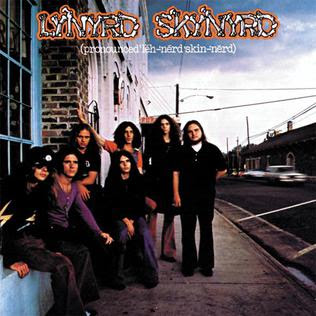
Pronounced 'Lĕh-'nérd 'Skin-'nérd by Lynyrd Skynyrd
This decision to buy this record, in the spring of 1985, was one I distinctly remember. I had eyed it for some time at my favourite record shop, Dr. Disc, in downtown London, but was reluctant to make the purchase. I was deep in my Progressive Rock phase and 
Lynyrd Skynyrd, a southern rock group, was a great departure from my tastes. I was also under the misguided impression that the band might be racist.
Movie Poster from The Blues Brothers
I suspect this thinking could be traced back to the movie The Blues Brothers which has been a favourite since my youth. In it, the protagonists Jake and Elwood Blues are travelling across the state in an effort to save their childhood orphanage by reuniting their band to play a fundraiser. En route, and broke, they secure a gig at a rural honky-tonk saloon under false pretenses. When they ask the bartender what kind of music is played in the bar, she replies: "Oh, we got both kinds. We got country and western."
In the film, the Blues Brothers Band would go on to perform their gig on a small stage behind chicken wire -- set up to shield the performers from the beer bottles that were hurled from the drunk and raucous crowd. 

This served to reinforce an opinion I had cultivated from television and film in the 1970s -- most people from the south, especially those who liked country and western music, were simple, violent and racist. They were, after all, the people who had gone to war in order to maintain slavery and who harranged Kwai Chang Caine weekly on Kung Fu. I suppose I should have been more troubled that the Chinese character was played by an Irish-American actor.
The 70s Television & Film that influenced
my opinion on The South
Sure, there were exceptions, the "good ol' boys" from Dukes of Hazzard and Burt Reynold's Bo Darville from the Smokey and the Bandit films. In both cases, charismatic protagonists were forced to battle the inherently corrupt lawmakers or establishment. They were, clearly, the exception.

Consequently, I was taken by surprise when I gave side one my first listen. I was familiar with Freebird, the album's epic final track, which featured the blistering guitar solo that had first drawn me to the band. However, the rest of the record was new territory.

I Ain't the One, the album's opening track was an absolute rocker and it was followed by the beautiful ballad, Tuesday's Gone. However, it was the the third track, Gimme Three Steps, that won me over. The lyrics, based on a true event lead singer Ronnie Van Zant experienced, weave a comedic tale about a young man who was... 

"cutting a rug in a place called The Jug with a girl named Linda Lou. When in walked a man with a gun in his hand and he was looking at you know who." 

Upon realizing it is Linda's boyfriend, the startled narrator pleads for a three-step head start toward the door, hoping to escape the situation. In some ways, the songwriter was embracing the stereotypes I had about people in the south -- where you could get shot for accidently dancing with the wrong girl. However, cleverly, he had turned the story into a comedic romp where no one actually gets hurt.

I was wowed and the record worked its way into my playing rotation frequently after. As I've matured, my inherent bias toward folk from the southern U.S. has softened. At the very least, I recognize it is there and I've become more accepting of everyone -- even if they only listen to Country and Western music.  


Tuesday, 28 July 2020

The 500 - #411 - Eric Clapton - 461 Ocean Boulevard

I was inspired by a podcast called The 500 hosted by Los Angeles-based comedian Josh Adam Meyers. His goal, and mine, is to explore Rolling Stone's 2012 edition of The 500 Greatest Albums of All Time. 

Album # 411

Album Title: 461 Ocean Boulevard
Artist: Eric Clapton
Genre: Blues Rock, Funk, Reggae Rock
Recorded: Criteria Studios, Miami, Florida
Released: July, 1974
My age at release: 8
How familiar was I with it before this week: Somewhat
Song I am putting on my Spotify Mix: Mainline Florida

461 Ocean Boulevard is the second studio record released by English guitarist, singer and songwriter Eric Clapton. However, more importantly, the record marked Clapton's return to the studio after a three-year hiatus due to heroin addiction. 461 Ocean Boulevard is also the Golden Beach, Florida, address where Clapton lived while he recorded the album at the nearby Criteria Studios.  
461 Ocean Boulevard Album Cover

Addiction is a brutal disease that impacts us all, societally and individually. For much of my youth, I saw addiction as both a choice and a weakness. However, my first hand experiences of the impact and tragic consequences have made me far more empathetic to those I know personally and even celebrities or strangers on Twitter. I rejoice at whatever progress they make at overcoming their addiction. In fact, many of the podcasters I enjoy (including Josh Adam Meyers of The 500 Podcast) have experienced tremendous success while in recovery. I thought about this a lot as I enjoyed Eric Clapton's record. 

Clapton is the only person to be inducted into the Rock and Roll Hall of Fame three times -- as a solo artist and as a member of Cream and The Yardbirds. However, his journey to musical superstardom had its challenges.

Clapton was born in 1945 to Patricia Molly Clapton who was 16. His biological father, a visiting Canadian soldier, shipped off to war before Eric was born and did not return to England. Clapton was raised by his grandmother, Rose, and her second husband. Clapton believed they were his parents and was told that Patricia, who married a another soldier and moved to Germany, was an older sister. When he learned the truth, he was devastated by this betrayal and it impacted him for years, ultimately leading to his addiction and personal issues.
Clapton as a teen
In the documentary, Life in 12 Bars, which chronicles his life, he states: "I was always full of such hatred and anger". This record marks the point when he began to let go of some of that hostility. Producer Robert Stigwood, best known for his work on the Saturday Night Fever soundtrack, paid the rent for Clapton to stay at the 461 Ocean Boulevard, and was instrumental in helping Eric artistically and emotionally.
Open gatefold version of the album 
It certainly seems fitting, and possibly therapeutic, that the opening track on 461 Ocean Boulevard is a gospel-blues standard called Motherless Children. The song was originally recorded in 1927 by Blind Willie Johnson whose mother died when he was very young and who, shortly after, was blinded when his step-mother threw a caustic solution in his eyes. 
Blues legend Blind Willie Johnson
The thing that stood out to me was that Clapton's arrangement of this tragic and sombre song is uncharacteristically upbeat. I couldn't find any evidence to support my theory, but my belief was that this choice was intentional. Perhaps as a way of exorcising the betrayals of his past and moving on to a new chapter.

Clapton began a new chapter with the release of 461 Ocean Boulevard. He has maintained his sobriety and his career flourished through the next four decades. He has, to date, released 21 records as a solo artist and is considered one of the greatest blues guitarists of all time. In 2011, Rolling Stone Magazine ranked him second in their list of The 100 Greatest Guitar Players of All Time, surpassed only by Jimi Hendrix.
Addiction is brutal -- but there can be triumph in recovery.


Monday, 15 June 2020

The 500 - #421 Best of the Girl Groups - Volumes 1 & 2

I was inspired by a podcast called The 500 hosted by Los Angeles-based comedian Josh Adam Meyers. His goal, and mine, is to explore Rolling Stone's 2012 edition of The 500 Greatest Albums of All Time. 

Album # 421

Album Title: The Best of the Girl Groups - Volumes 1 & 2
Artist: Various Artists
Genre: Pop, Rhythm & Blues (R&B)
Recorded: 1960s
Released: 1990
My age at release: 34
How familiar was I with it before this week: Quite Familiar (These are Classics)
Song I am putting on my Spotify Mix: The Shoop Song - Betty Everett

The Best of the Girl Groups - Volumes 1 & 2 was a two-CD compilation released by Rhino Records in 1990. These discs contains 36 well known tracks by the "girl groups" of the 1960s, including seven songs that hit number one and another 14 tracks that made it to the Top Ten. A decision was made to include 15 additional tracks to provide context for the genre and, according to the AllMusic website, "keep the collection interesting for serious fans of girl group pop."
A "girl group" is defined as a musical group composed of several female singers who harmonize together. It is also a term that denotes a wave of American female pop singers who were influenced by doo-wop music. Their heyday occurred in the time between early Rock and Roll and The British Invasion (approximately 1955-1965).

Recently, after publishing my post about The Supremes: Anthology, a friend cautioned me about using the term "girl group". He wondered if, in the cultural climate of 2020, referencing adult female artists as "girls" might be unwise. This gave me pause and I have been considering it for several days.

I'm an open-minded and socially conscious person. However, I recognize that I probably have hidden, learned biases that I should take into account. Ultimately, I viewed this as an opportunity to check for stereotyping, prejudices and any discrimination on my part.

Is it okay to use the term "girl group"? 

INTENTION AND CONTEXT

Words in isolation are powerless. It is context and intention that give them power. Consider the word "honey". Honey is a sweet, sticky, yellowish-brown fluid made by bees from the nectar of flowers. It is often used in a different context as a term of endearment or affection. My friend's mom, whom I have known for over 40 years, calls me "honey" and I take no offence. In fact, it always makes me smile when she does. However, I would never use the word "honey" when addressing someone I have just met. 

The term "girl group" was never intended to have a negative or pejorative context. In fact, the term "girl" is frequently embraced in positive context by many, including women, over the past 30+ years.
  • In the 90s, The Spice Girls rocked female tenacity with their call for Girl Power which was, to some extent, co-opted from the Riot Grrrl feminist punk movement of the late 80s.
  • "The Girls" was a moniker that fans used to identify the main cast of the popular HBO series Sex and The City. Granted, that program had some problematic moments, as detailed here. But, the intention was to celebrate the comically complicated lives of modern, self-sufficient thirty-something "girls" living in New York City in the 2000s. 
  • 2013 brought us another HBO program, Girls, created by feminist and activist Lena Dunham. This series following the lives of twenty-something millennials living in New York City. 
  • Finally, the refrain "Hey girl" is regularly used in casual conversation by female friends -- not to mention the popularity of the Hey Girl meme featuring Ryan Gosling which has been circulating since 2008. Its history can be found here.
An example of the "Hey Girl" meme

COMPARATIVE CONTEXT

There is a male equivalent to "girl group" and it is, of course, the "boy band".  The term boy band began with The Beatles but many would argue that The Beatles were a rock group and not a boy band. When examining the current definition of a "boy band", it is clear that The Beatles do not fit that mold. 
The term "Boy Band" refers to a musical group of several male singers (but sometimes musicians) who are typically teenagers or in their early twenties. Unlike girl groups, who appeal to a wider audience, boy bands perform songs that are marketed toward young women. Often, choreographed dance sequences are part of their performance. The most popular examples include The Jackson Five, New Kids on the Block, Boys II Men, Backstreet Boys, N'SYNC, One Direction and, most recently, the Korean pop (KPop) group BTS. 
Popular Boy Bands from Five Decades
Twenty four years as a Grade 4-8 educator has helped me become a bit of an expert on "boy bands". I have graded essays, poems, art work, stories, poster boards, websites, blogs and presentations dedicated to nearly every popular boy band since 1996. 

IN CONCLUSION
  • The word "girl group" was never intended to be used negatively to describe the women who performed in these bands.
  • No member of any "girl group" has ever raised a concern about that description.
  • As detailed above, the word "girl" has plenty of positive connotations when used to describe a female over the age of 18.
  • Although the word "girl" can be used disparagingly, that is not the case here.
  • Boy Band is the male equivalent and it is used nearly identically with similar, positive connotations.
So, what does it mean to me? 

That's easy.  When I use, or hear, the words "girl group" I think of a group of talented, harmonizing females making awesome music. My mind goes to The Supremes, The Ronettes, The Chiffons, Bananarama, The Spice Girls, Destiny's Child and TLC. In every case, my reaction is complimentary. All of that music is terrific and so are the 36 songs you will find on these two companion records: Best of the Girl Groups Volumes 1 & 2. 

A FINAL NOTE 

I dismiss any argument that male singing groups are advantaged because they are called "bands" - the suggestion being that they are taken more seriously as musicians.

Clearly, "boy band" and "girl group" have their roots in alliteration. Additionally, the voice is an instrument -- all of these artists are musicians.